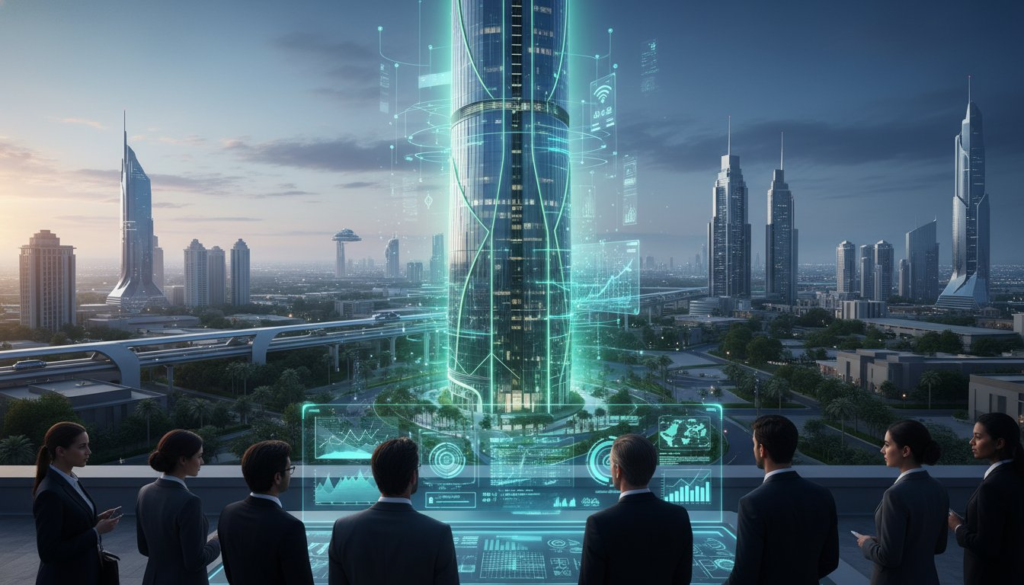
In the forward-thinking landscape of the United Arab Emirates, constructing a building is about more than just architecture; it’s about creating a legacy of efficiency, luxury, and responsibility. For developers, architects, and property managers, achieving Leadership in Energy and Environmental Design (LEED) certification is the ultimate benchmark of this commitment. Yet, the path to certification can seem complex, filled with technical requirements and uncertainty about the return on investment. This guide is designed to demystify the process. Discover how integrated smart building technologies directly contribute to LEED credits, reduce operational costs, and enhance your property’s value for years to come.
The Intersection of Smart Technology and Green Building in Dubai
LEED certification has become a globally recognized symbol of excellence, and in the competitive UAE market, it’s a powerful differentiator. However, true sustainability moves beyond the materials used in construction and into the very lifeblood of the building: its daily operations. This is where smart technology transforms a static structure into a dynamic, responsive environment. An integrated Building Management System (BMS) acts as the central nervous system, intelligently coordinating everything from climate control to lighting and security to achieve peak performance and unparalleled efficiency.
What is Technology-Enabled Sustainability?
At its core, technology-enabled sustainability is about using data to make intelligent, automated decisions that optimize resource consumption. It involves deploying a network of Internet of Things (IoT) sensors that gather real-time information about the building’s environment and usage patterns. This data is then used to automate systems—like air conditioning and lighting—to operate only when and where they are needed. The result is a building that not only minimizes waste but also provides actionable insights for continuous improvement, ensuring it operates at maximum efficiency throughout its lifecycle.
Mapping Smart Building Services to LEED v4.1 Credits
Achieving LEED certification is a points-based system, and smart technology is one of the most effective tools for earning credits across multiple categories. This section provides a practical guide to the most impactful technology integrations that can elevate your project from standard to LEED-certified.
Energy & Atmosphere (EA): Optimizing Energy Performance
This category offers the most significant opportunity to earn points through technology. By intelligently managing energy consumption, you can drastically reduce your building’s carbon footprint.
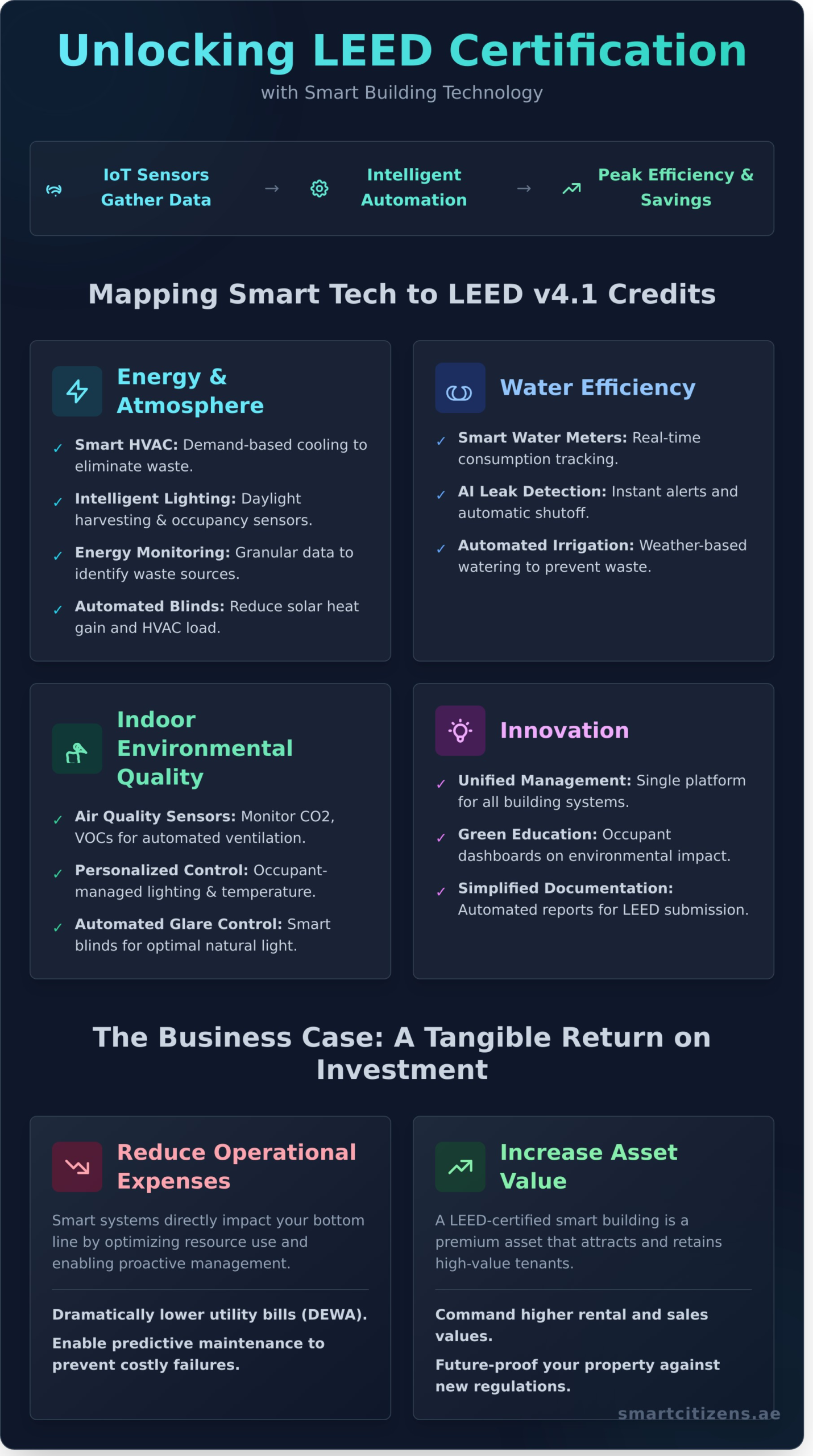
- Smart HVAC Control: Deploy systems that use sensors to provide demand-based cooling, ensuring energy isn’t wasted on empty rooms or during cooler parts of the day.
- Intelligent Lighting Systems: Integrate daylight harvesting sensors that automatically dim artificial lights when natural light is sufficient, and occupancy sensors that turn lights off in unused areas.
- Real-Time Energy Monitoring: Install sub-metering solutions that provide granular data on energy usage, allowing you to identify and eliminate sources of waste.
- Automated Blinds and Shades: Program window treatments to automatically adjust based on the sun’s position, reducing solar heat gain and lowering the load on your HVAC system.
Water Efficiency (WE): Advanced Conservation and Monitoring
In an arid climate, water conservation is paramount. Smart technology provides precise control and immediate alerts to prevent waste.
- Smart Water Meters: Track consumption patterns in real-time to understand usage and set conservation targets.
- AI-Powered Leak Detection: Implement systems that can instantly detect leaks—often before they become visible—and automatically shut off water flow to prevent catastrophic waste and damage.
- Automated Irrigation Control: Connect landscape irrigation to weather data and soil moisture sensors to ensure plants receive exactly the water they need, and not a drop more.
Indoor Environmental Quality (IEQ): Enhancing Occupant Wellbeing
A green building is also a healthy building. Technology plays a crucial role in creating spaces that enhance the comfort, health, and productivity of occupants.
- Air Quality Sensors: Continuously monitor levels of CO2, Volatile Organic Compounds (VOCs), and other pollutants to automatically manage ventilation and ensure fresh, clean air.
- Personalized Lighting and Temperature Control: Give occupants the ability to adjust their immediate environment, improving comfort and satisfaction.
- Automated Glare Control: Use smart blinds to maximize the use of natural daylight while automatically preventing uncomfortable glare for occupants.
Innovation (IN): The Power of an Integrated Platform
LEED rewards forward-thinking and comprehensive strategies. A unified smart building platform that consolidates all systems into a single interface is a powerful tool for earning innovation credits.
- Unified Building Management: A single, intelligent app for managing all building systems demonstrates a holistic approach to sustainability.
- Green Education Programs: Use performance data from your smart system to create dashboards that educate occupants about their environmental impact.
- Simplified LEED Documentation: Generate comprehensive reports on energy, water, and air quality directly from your BMS to streamline the LEED submission process. See how our projects achieve LEED certification.
The Business Case: Beyond Certification to Tangible ROI
Implementing smart technology should not be viewed as a cost, but rather as a strategic investment in your building’s long-term performance and value. Beyond the prestige of a LEED plaque, these systems deliver measurable financial returns that make a compelling business case for any stakeholder.
Reducing Operational Expenses
The most immediate return comes from a dramatic reduction in overheads. By optimizing resource use, a smart building directly impacts your bottom line. You can significantly lower your monthly DEWA utility bills through efficient energy and water management. Furthermore, the system enables predictive maintenance by monitoring equipment health, allowing you to address issues before they lead to costly failures and downtime, while also optimizing staffing needs for building management.
Increasing Asset Value and Tenant Attraction
A smart, LEED-certified building is a premium asset. These properties consistently command higher rental and sales values because they are less expensive to operate and offer a superior occupant experience. In a competitive market, sustainability is a key differentiator that helps attract and retain high-value corporate and residential tenants who prioritize environmental responsibility and wellbeing. Investing in this technology future-proofs your property against evolving regulations and ensures it remains a desirable, high-performing asset for decades.
Smart Citizens: Your Partner in LEED Enablement
Achieving your sustainability goals requires more than just technology; it requires a partner with the expertise to design and implement a cohesive strategy. At Smart Citizens, we provide the end-to-end solutions needed to transform your vision into a LEED-certified reality, from initial consultation and system design to flawless implementation and ongoing support.
Our Integrated Approach to Smart Buildings
We believe in the power of seamless integration. Our solutions are built on a unified platform that brings every building system—climate, lighting, security, and energy—under one intelligent control interface. By leveraging our partnerships with world-class technology providers and our extensive expertise in both new construction and retrofitting projects, we deliver systems that are robust, scalable, and perfectly tailored to your project’s unique requirements.
Begin Your Sustainability Journey Today
Your path to a smarter, more sustainable building starts with a conversation. Let’s begin by assessing your project’s potential for LEED certification and identifying the most impactful technology solutions. Our team will design a custom technology roadmap that aligns with your goals and budget. Experience the power of seamless integration and professional support every step of the way. Book a Free LEED Technology Assessment for your project.
Frequently Asked Questions
Which LEED credits can be most impacted by smart technology?
The Energy & Atmosphere (EA) category is most significantly impacted, as smart HVAC, lighting, and energy monitoring systems are primary drivers of points. However, technology also heavily influences Water Efficiency (WE), Indoor Environmental Quality (IEQ), and can earn points in the Innovation (IN) category.
Can you retrofit an existing building with technology to achieve LEED certification?
Absolutely. Many smart technologies, especially wireless solutions, are ideal for retrofitting older buildings. An automation upgrade is one of the most effective ways for an existing building to improve its performance and qualify for LEED for Existing Buildings: Operations & Maintenance (O+M) certification.
How does a Building Management System (BMS) help with LEED?
A BMS is the central brain that automates and optimizes building functions. It directly enables energy and water savings, monitors indoor air quality, and provides the data and reporting necessary to document performance for LEED submissions, making it a critical tool in the certification process.
What is the typical ROI on a smart building technology investment?
While it varies by project, the ROI is often realized quickly through significant reductions in utility bills—sometimes as much as 30% or more. When factoring in increased asset value and higher rental income, the long-term financial benefits are substantial.
How does Smart Citizens’ approach differ from other automation companies?
Our focus is on creating a truly integrated, unified system. Instead of providing standalone solutions, we ensure all technologies work together seamlessly on a single platform. This holistic approach maximizes efficiency, simplifies management, and provides deeper insights for continuous improvement.
Do you provide the necessary documentation for LEED submission?
Yes. Our smart building platforms are designed to generate detailed performance reports on energy consumption, water usage, and air quality. This data simplifies the documentation process, providing the verifiable proof needed for your LEED application.
Ready to build a smarter, more sustainable future for your property? As a TDRA-authorized and ISO 9001 certified company with a proven project portfolio in Dubai’s most prestigious luxury villas and commercial towers, Smart Citizens is the expert partner you need. We translate complex technology into tangible results. Schedule Your Free LEED Technology Consultation today and let our experts design a tailored strategy to help you achieve your certification goals and unlock the full potential of your asset.