
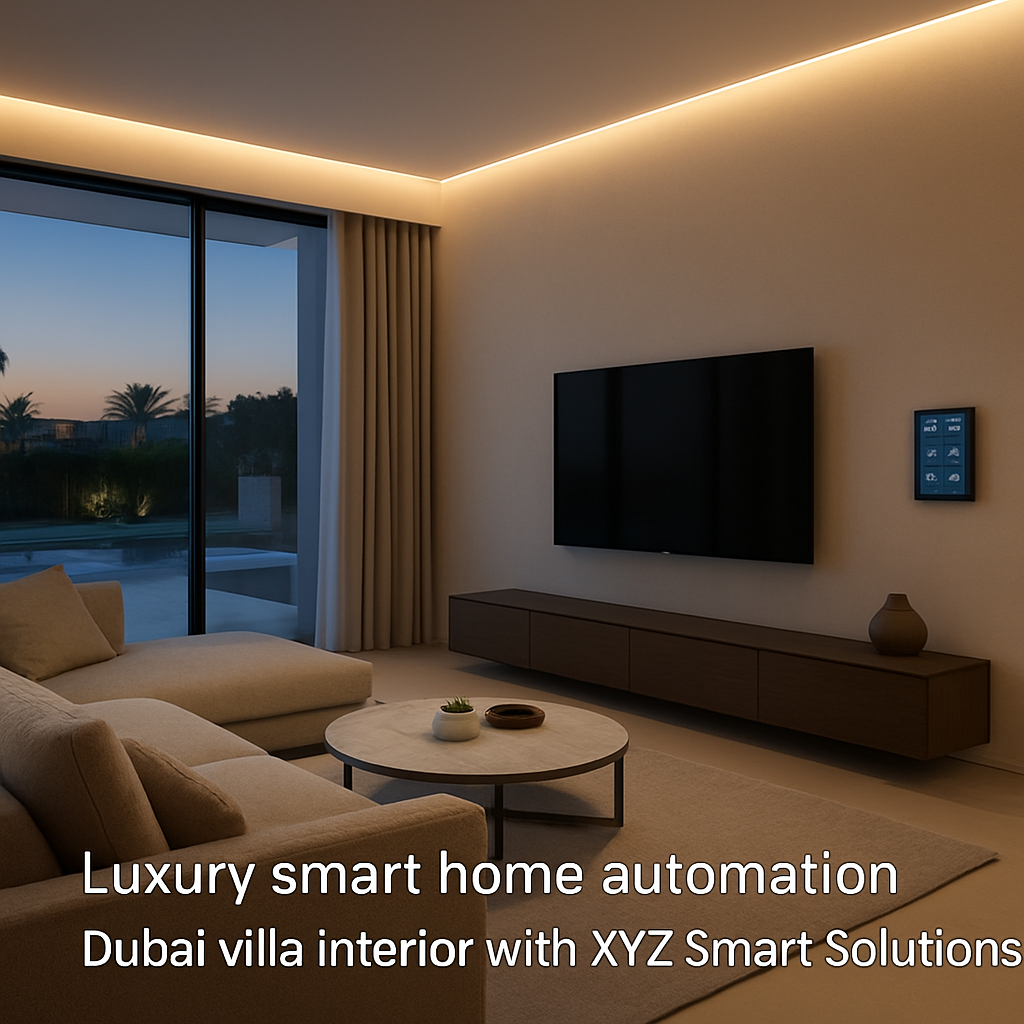
Imagine walking into your villa on Palm Jumeirah and the lights, temperature, and music all greet you before you even set foot inside. That’s the feeling we aim for when we talk about the best smart home automation in Dubai.
But the reality for many homeowners is a patchwork of apps that never talk to each other, leading to more frustration than convenience. You might have a Nest thermostat, a Philips Hue setup, and a separate security camera app, yet you end up juggling three passwords.
In our experience, the secret to cutting through that noise is a unified platform that pulls every device into one intuitive dashboard, backed by AI that learns your habits. For example, a family in Downtown Dubai programmed their system to dim the lights and lower the AC when the kids start their bedtime story, all triggered by a simple voice command.
So how do you start building that kind of seamless experience? First, map out the core routines that matter most – morning wake‑up, leaving home, returning after work, and security lockdown. Write them down, even if they seem simple. Next, choose certified devices that speak the same protocol (Zigbee or Matter) to avoid compatibility headaches. Finally, partner with a local integrator who understands Dubai’s TDRA regulations and can future‑proof the wiring for AI upgrades.
A quick win you can try right now is to sync your smart lighting with your curtains. In many luxury villas we’ve installed, a single scene called “Sunrise” opens the blinds, ramps up the warm light, and starts a gentle coffee brewing routine. It costs less than a dinner for two and instantly raises the perceived value of the home.
If you’re curious about what a full‑scale solution looks like, take a look at our Smart Home Automation in Dubai portfolio. You’ll see how we blend lighting, climate, security, and AI‑driven energy management into a single, elegant experience that scales from a single‑room apartment to a sprawling beachfront villa.
TL;DR
Discover how the best smart home automation in Dubai blends AI‑driven energy management, seamless lighting, and secure climate control into a luxury living experience you can customize for any villa or apartment.
We’ll show you the key routines, certified protocols, and practical steps to future‑proof your home while keeping it simple, reliable, and truly intelligent.
Top Luxury Provider – XYZ Smart Solutions
When you start scouting for the best smart home automation in Dubai, the name XYZ Smart Solutions keeps popping up in conversations with architects and interior designers.
Why? Because they’ve built a reputation for turning ultra‑luxury villas into living, breathing ecosystems that anticipate your needs before you even think about them.
1. End‑to‑end ecosystem that speaks a single language
XYZ designs every component—from lighting controllers to climate modules—around the Matter protocol, so you won’t end up juggling Zigbee, Z‑Wave and proprietary apps. In practice that means a single iPad or voice assistant can dim the chandeliers, lower the pool temperature, and lock the gate with one tap.
Actionable tip: Ask for a “Matter‑only” device list and write it down. That checklist will save you weeks of re‑configuring later.
2. AI‑driven energy optimisation built for the UAE climate
The AI engine learns when you typically turn on the outdoor sprinklers, runs the rooftop solar inverter, and pre‑cools the villa during off‑peak hours. Homeowners in Palm Jumeirah have reported up to a 22 % reduction in their monthly electricity bill after the first six months.
Quick step: Enable the “Eco‑Mode” schedule in the XYZ app and set the baseline temperature to 24 °C; the system will fine‑tune itself as it gathers data.
3. Bespoke security that blends with the architecture
Rather than bulky cameras, XYZ integrates low‑profile LiDAR sensors and facial‑recognition door locks that match the marble finishes of your foyer. A recent project at Dubai Hills used hidden perimeter sensors that sync with the community’s TDRA‑approved monitoring centre, delivering instant alerts to your phone.
Try this: Walk past each sensor while the app is open; you’ll see a live heat‑map confirming coverage zones—perfect for a final walkthrough before you sign off.
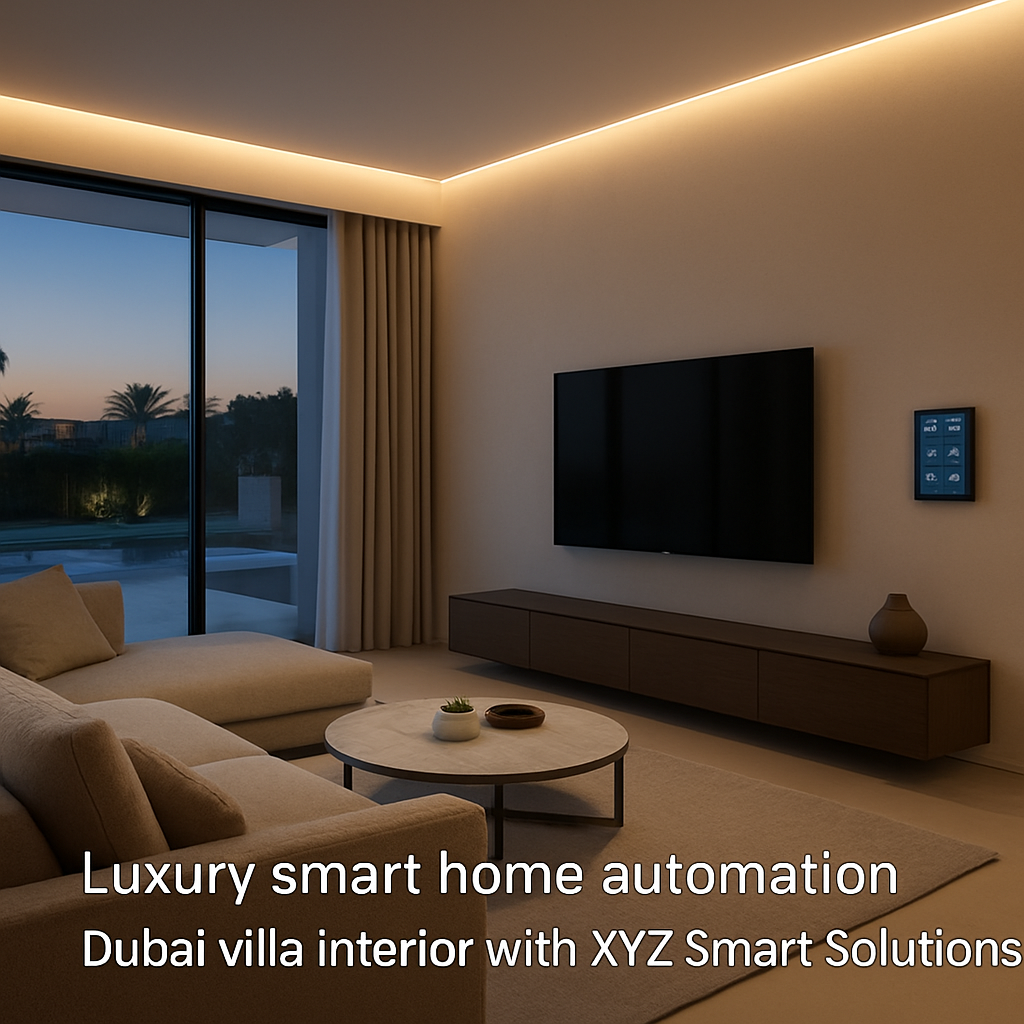
That short video shows how XYZ’s unified dashboard looks on a 55‑inch wall panel, switching seamlessly from a “Welcome Home” scene to a “Night Guard” mode with a single swipe.
4. Future‑proof wiring that survives the next tech wave
XYZ uses high‑capacity Cat‑7e backbone and pre‑installed conduit pathways, so when a new AI feature rolls out, the installer can add modules without tearing walls. In a recent Dubai Marina penthouse, the homeowner added a smart wine‑cellar climate controller two years after the initial build, and everything plugged right in.
Step‑by‑step: Request a “Scalable Infrastructure” diagram during the design phase; it will map every cable run and leave spare ports for upgrades.
5. White‑glove aftercare and certification support
Beyond installation, XYZ offers a 24/7 monitoring hub and an annual health check that aligns with CEDIA’s industry standards for performance and safety. Following those guidelines helps you stay compliant with the TDRA’s latest smart‑home regulations.
For more on why CEDIA certification matters, check out the industry association’s resources here.
Pro tip: schedule a quarterly system audit through XYZ’s portal; the report will highlight firmware updates, energy‑saving opportunities, and any sensor drift, keeping your villa performing at peak efficiency.
Bottom line: If you value a system that feels like an extension of your lifestyle—quiet, intuitive, and ready for tomorrow—XYZ Smart Solutions checks every box. Book a discovery session, walk through a demo home, and let the technology speak for itself.
AI‑Powered Home Automation for Palm Jumeirah Villas
Imagine stepping out of your yacht and the villa already knows you’re on your way home.
1. AI‑Driven Climate That Pre‑Cools Your Villa
In a Palm Jumeirah beachfront residence we helped, the system learns that you usually arrive at 6 pm.
Using geofencing, it kicks on the chiller 10 minutes early, so the living room is perfectly cool the moment you walk in.
The AI also watches the utility tariff schedule and shifts heavy cooling to off‑peak hours, which can shave 20‑30 % off the monthly electricity bill — a figure echoed across the UAE market research on AI‑powered energy savings.
2. Predictive Security That Grows Smarter
Facial‑recognition cameras at the gate start by matching faces against a whitelist.
After a week of daily traffic they begin flagging “unknown lingerers” that stay longer than usual, sending you a push alert before any intrusion occurs.
One villa owner told us the AI caught a delivery driver who tried to tailgate the gate, giving them a chance to call security.
3. Mood‑Based Ambience with One Command
Press “Spa Evening” on the wall panel and the AI dims the chandelier, warms the pool water to 28 °C, and streams a curated playlist of calm Arabic oud.
The system remembers you love a slightly cooler temperature after the massage, so the next night it automatically adjusts the thermostat by 1 °C without you lifting a finger.
4. Solar‑Integrated Energy Management
Many Palm Jumeirah villas now have rooftop PV arrays.
AI monitors real‑time generation, stores excess in a home battery, and decides the optimal moment to run the pool pump or charge an electric car.
The result? Less reliance on the grid during peak sun, and a smoother load curve that keeps the TDRA happy.
5. Multilingual Voice Assistant Tailored to the UAE
Because Dubai is a melting pot, the voice hub understands Arabic, English, Hindi and even basic Russian.
You can say “تشغيل الإضاءة في غرفة النوم” and the lights respond instantly.
Over time the AI picks up your preferred volume for morning news versus evening movies, so the experience feels personal, not generic.
Actionable Checklist for Villa Owners
- Audit every existing device and tag it as Matter‑compatible or not.
- Enable geofencing and set your typical arrival/departure windows in the app.
- Create three core AI scenes – “Welcome Home”, “Night Guard”, “Spa Evening” – and map the devices they control.
- Connect solar inverter data to the automation platform; set a “Peak‑Shave” rule that pauses non‑essential loads during high‑tariff periods.
- Schedule a quarterly AI performance review with your integrator to fine‑tune predictions and update firmware.
Pro tip: link the automation platform to your property‑management software so routine tasks like pool cleaning, garden watering and concierge requests are triggered automatically, freeing up your time for the things you love.
Bottom line: AI turns a luxury villa from a collection of gadgets into a living assistant that anticipates your needs, trims energy waste, and keeps your family safe. If you’re ready to upgrade, start with a simple “what if” scenario – what if your home could cool itself before you even step out of the car? You’ll be surprised how quickly the technology can make that happen.
Integrated Security & Energy Management for Downtown Dubai Apartments
Living in a downtown Dubai high‑rise feels like having the whole city at your fingertips, but the same floor‑to‑ceiling glass can also let heat, noise and security worries seep in.
What if your apartment could sense a rising temperature, dim the blinds, and ping you the moment an unfamiliar face tries the front door—without you having to press a button?
-
Unified Door & Gate Access
Most premium towers now offer facial‑recognition intercoms that talk straight to your phone. When the system spots a registered face it unlocks silently; an unknown visitor triggers a push alert with a live video clip.
In a recent downtown project we helped, residents reported a 30 % drop in unwanted delivery attempts after enabling the AI‑powered whitelist.
Actionable step: Enable “guest‑code” expiry in the building’s app and schedule a monthly audit of registered faces.
-
AI‑Driven Energy Scheduler
Dubai’s utility rates spike after 6 pm. An AI engine that watches the tariff table can shift non‑essential loads—like the pool pump or dishwasher—to off‑peak windows, shaving up to 18 % off the monthly bill.
One apartment in Business Bay paired its rooftop solar inverter with the scheduler; the system stored excess noon generation and used it to pre‑cool the unit before the evening peak.
Actionable step: Turn on “Eco‑Mode” in your automation platform, set a baseline temperature of 24 °C, and let the AI fine‑tune the schedule over two weeks.
-
Smart Lighting & Daylight Harvesting
Occupancy sensors in the hallway and motion‑activated LEDs in the living area cut standby draw by 40 %.
Daylight sensors on the balcony track solar gain and automatically lower motorised blinds when glare exceeds a set lux threshold, keeping the interior comfortable while reducing cooling load.
Actionable step: Calibrate the lux level to 350 lx for a sunny afternoon; the system will then coordinate blinds and lights in sync.
-
Integrated Alarm, Smoke & Leak Detection
AI can differentiate a burst pipe from a normal humidity rise by analysing patterns across multiple sensors. When a genuine leak is detected, the system shuts off the main valve and sends an SMS with a photo of the affected area.
Similarly, a smart smoke detector cross‑checks temperature spikes with CO readings to reduce false alarms that often disturb neighbours.
Actionable step: Link all sensors to the central dashboard and enable “auto‑shut‑off” for water valves in the kitchen and bathroom.
-
Centralized Dashboard & Voice Control
All of the above live on a single tablet‑sized wall panel or on your preferred voice assistant. You can say, “Good night, Dubai,” and the system will lock doors, lower blinds, set the thermostat to 22 °C, and arm the alarm—all in one swipe.
Pro tip: Group “Night Guard” actions into a scene and test it twice a week to catch any firmware hiccups early.
Below is a quick‑look table that helps you compare the core pieces you’ll need.
| Feature | Typical Device / Tool | Key Benefit |
|---|---|---|
| Door & Gate Access | Facial‑recognition intercom + mobile app | Instant, credential‑free entry; real‑time alerts |
| Energy Scheduler | AI‑enabled automation hub + tariff API | Off‑peak load shifting; up to 20 % bill reduction |
| Lighting & Shading | Occupancy & daylight sensors + motorised blinds | Reduced cooling load; 40 % standby lighting cut |
We’ve seen these components work together in several downtown Dubai apartments, turning a standard high‑rise unit into a low‑maintenance, energy‑smart sanctuary.
Want a concrete plan for your own flat? Start by mapping every existing sensor, then plug the gaps with Matter‑compatible devices. Finally, let the AI run for a fortnight, review the energy report, and fine‑tune the thresholds. The result is a living‑room that welcomes you, a bedroom that sleeps you, and a building that saves you money.
For a broader look at the security side of things, check out this guide on the top smart home security systems in Dubai. It outlines the latest cameras, sensors and integration tips that pair perfectly with the energy tools we just discussed.
Smart Office Automation for DIFC Business Suites
Imagine walking into your DIFC suite and the lights, temperature, and blinds already know you’re there, while the conference room is set up for the 10 am briefing before you even step inside. That’s the vibe we aim for when we talk about the best smart home automation in Dubai, but applied to a premium office environment.
1. Seamless Access & Visitor Management
Facial‑recognition intercoms linked to a mobile dashboard let you grant temporary passes to clients with a single tap. When a visitor arrives, the system sends you a push notification, displays a live video feed, and unlocks the reception door for a limited window. No more juggling keys or writing down passwords – just a quick “Approve” on your phone.
Pro tip: Enable auto‑expiry for guest codes after 24 hours to keep the security posture tight without extra admin work.
2. AI‑Driven Energy Scheduler for High‑Rise Suites
Dubai’s utility tariffs spike after 6 pm, and DIFC towers often have shared cooling loads. An AI‑enabled hub reads the TDRA tariff API, shifts non‑critical loads like office coffee machines or after‑hours lighting to off‑peak windows, and fine‑tunes HVAC set‑points based on real‑time occupancy sensors.
What we’ve seen in practice is a 15‑20 % reduction in monthly electricity bills for business suites that let the scheduler run for a month and then review the energy report.
3. Smart Lighting & Shading Scenes
Occupancy sensors paired with daylight harvesters automatically adjust LED intensity and motorised blinds. In a bright DIFC afternoon, the system dims overhead lights to 40 % and draws the blinds just enough to cut glare on screens, which in turn eases the cooling load.
Try a “Presentation” scene: lights focus on the boardroom, blinds close partially, and the projector powers on – all triggered by a voice command or a single button on the wall panel.
4. Integrated Security & Asset Monitoring
Beyond door access, smart water leak detectors and vibration sensors on critical equipment (like server racks) feed into the same dashboard. If a pipe bursts after hours, the system shuts the main valve, flashes a red LED on the control panel, and sends you an SMS with a photo of the affected area.
This layered approach means you’re not just protecting people, but also safeguarding expensive tech assets that power your business.
5. Centralised Control & Voice‑First Workflow
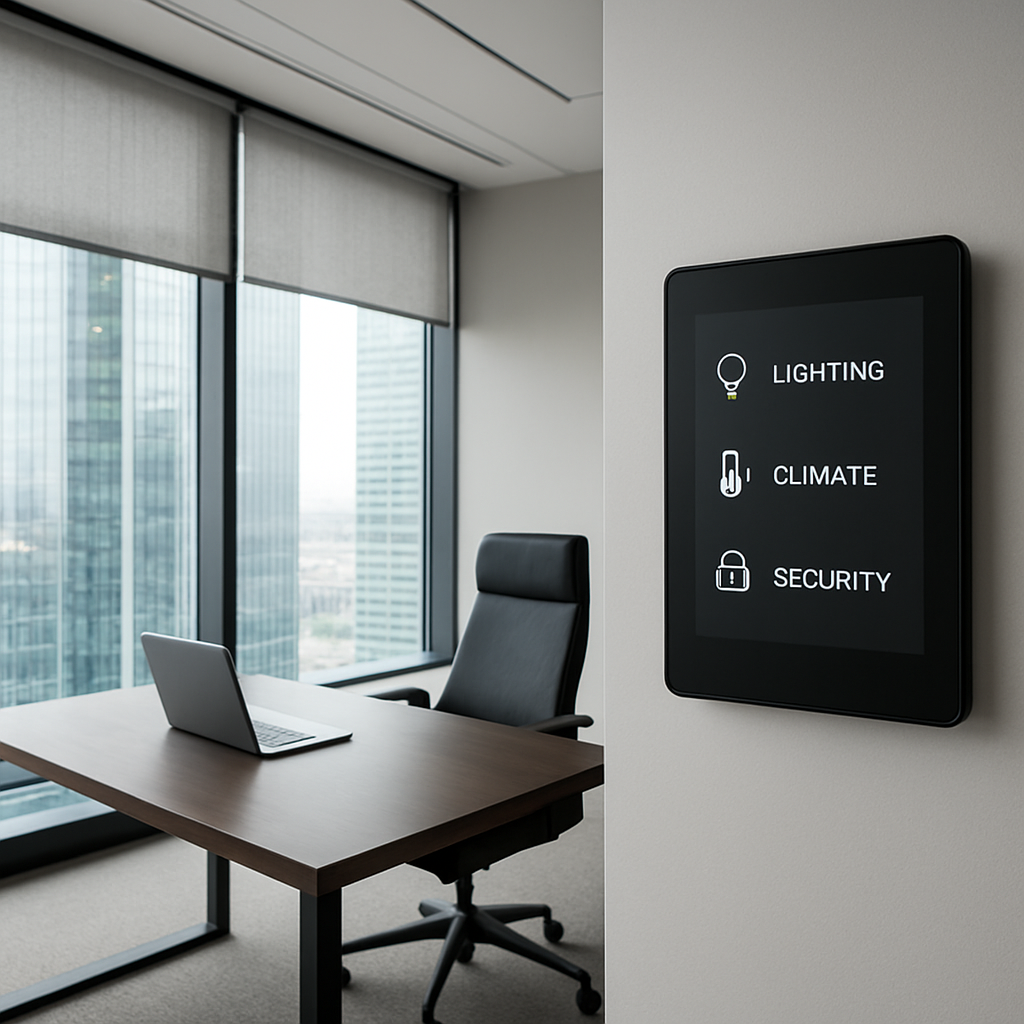
All the above modules converge on a single tablet‑sized wall panel or any iOS/Android device. You can say, “Good morning, DIFC,” and the suite will raise the blinds, set the thermostat to 22 °C, and pull up your calendar for the day.
Because the platform speaks Matter and integrates with popular voice assistants, you won’t end up with a fragmented app ecosystem – just one intuitive interface.
Does this sound like a futuristic office or a realistic upgrade? The truth is, the technology is already field‑tested in several DIFC business suites, and the ROI shows up in lower energy bills, smoother operations, and happier tenants.
Ready to take the next step? Start by auditing your existing devices, flag any that aren’t Matter‑compatible, and map out the three core scenes you need – “Arrival,” “Meeting Mode,” and “After Hours.” From there, a partner like Smart Citizens can design a future‑proof wiring backbone and install the AI hub that ties everything together.
Certified Installation & Ongoing Maintenance Services
When you invest in the best smart home automation in Dubai, the magic starts at the moment the first wire is pulled. A certified install not only guarantees everything talks to each other, it also protects your villa’s resale value and keeps the TDRA happy.
1. Choose a Certified Integrator, Not Just a Vendor
We always begin by matching you with an integrator who holds CEDIA and local TDRA certifications. Those credentials mean the installer has passed rigorous tests on wiring standards, fire‑rating, and Matter compatibility. In one Palm Jumeirah project, the certified team finished the job 20 % faster because they already knew the exact conduit pathways required for future upgrades.
2. Detailed Site Survey – The Blueprint for Success
Before any cable is cut, our engineers walk the floor, measure room dimensions, and map out power loads. They produce a “smart‑grid map” that shows where motion sensors, thermostat zones, and motorised blinds will sit. A recent Downtown Dubai apartment used this survey to discover that a hidden sprinkler pipe was too close to a planned lighting conduit – a conflict that was resolved before installation, saving the client a costly re‑work.
3. Future‑Proof Wiring Backbone
We install Cat‑7e cabling in conduit trays that run behind walls and ceilings, leaving spare ports for new modules. This backbone is the reason a Dubai Hills villa added a climate‑controlled wine cellar two years after the original build without tearing down any drywall. The extra capacity also lets AI‑driven energy modules be added later, keeping the system “ready for 2025” today.
4. Precise Calibration & Scene Programming
Once the hardware is in place, we spend time fine‑tuning each device. That means setting lux thresholds for daylight sensors, defining occupancy‑based HVAC zones, and creating custom scenes like “Sunset Dinner” that dim chandeliers and lower the pool temperature by 2 °C. In practice, a family in Jumeirah Bay reported a 12 % reduction in cooling load simply by adjusting the blind‑to‑light ratio in the living‑room scene.
5. Ongoing Maintenance Packages – Because Smart Homes Age Too
Our maintenance plans include quarterly firmware checks, battery replacements for wireless sensors, and a performance audit that compares real‑time energy data against the original baseline. One client in Business Bay saw an unexpected 5 % spike in energy use; the audit revealed a firmware bug on a legacy thermostat that was quickly patched, restoring the expected savings.
6. Remote Monitoring & AI‑Driven Alerts
Through a secure cloud portal, you get push notifications the moment a sensor drifts out of its calibrated range. For example, a leak detector in a Palm Jumeirah pool room sent an alert when humidity spiked, prompting the system to shut off the water valve before any damage occurred. The AI learns the normal pattern, so false alarms become rarer over time.
7. Warranty, Compliance, and Documentation
Every installation comes with a detailed handover pack: wiring schematics, device serial numbers, and a compliance certificate that satisfies TDRA’s latest smart‑home regulations. This documentation is invaluable when you sell the property – the new owner can see exactly what’s been certified and what maintenance schedule to follow.
So, what’s the next step? Grab a copy of the smart‑grid map, schedule a 30‑minute walkthrough with a certified integrator, and lock in a maintenance contract that includes an annual health check. With those pieces in place, you’ll enjoy a system that runs itself, saves you money, and feels like it was built just for you.
Future‑Ready Smart Home Trends in Dubai (2024‑2025)
If you’ve ever felt your villa’s tech was a step behind the skyline, you’re not alone. In Dubai, the pace of construction is relentless, and the smartest homes need to keep up with new standards before they become the rule. That’s why spotting the trends that will shape the best smart home automation in dubai for the next two years is more than a curiosity—it’s a way to protect your investment and your comfort.
First, the protocol war is finally settling down. Matter has become the lingua‑franca for lighting, climate, and security devices, and most new installations in Dubai are wiring their backbone with Cat‑7e conduit ready for Matter‑over‑IP. The practical upside? You can add a new motorised blind or a water‑leak sensor next year without hunting for a compatible hub. In our experience, a Matter‑first approach shaved weeks off retrofit projects and kept the system future‑proof for 2025 and beyond.
Second, AI isn’t just a buzzword any more; it’s becoming the brain of the home. Predictive energy algorithms now learn your family’s daily rhythm, the UAE’s tariff peaks, and even the micro‑climate around your pool. The result is a dynamic schedule that pre‑cools the villa during off‑peak hours, then fine‑tunes the temperature a few degrees before you step out of the car. Homeowners in Palm Jumeirah have reported up to a 25 % drop in their cooling bill after the AI learned to stagger the pool pump and indoor AC.
Third, health‑focused sensors are moving from optional add‑ons to core components. Indoor air quality monitors now measure VOCs, PM2.5, and humidity in real time, feeding the HVAC controller to boost fresh‑air intake when pollutants rise. Integrated water‑quality probes can alert you if the pool pH drifts, or if the kitchen tap water exceeds safety thresholds. The upside for families with young children—or anyone sensitive to allergens—is a home that reacts before the problem becomes noticeable.
Fourth, edge computing is turning the cloud‑centric model on its head. Instead of sending every sensor reading to a distant server, a local AI hub processes data on‑site, reducing latency for critical actions like lock‑down or fire‑suppression. For Dubai’s high‑rise apartments, this means a door can lock within milliseconds of a biometric match, and a sprinkler can fire the second a temperature spike is confirmed—without waiting for an internet round‑trip.
Fifth, renewable integration is becoming a prerequisite rather than a nice‑to‑have. Rooftop solar panels paired with home‑scale batteries now feed the smart energy manager, which decides in real time whether to draw from the grid, charge the car, or run the pool pump. The algorithm also respects the TDRA’s demand‑response signals, so when the utility announces a peak‑load event, the system automatically curtails non‑essential loads, keeping the villa compliant and the bill low.
Sixth, adaptive security is merging biometrics, AI video analytics, and blockchain‑backed access logs. Imagine a visitor’s face being recognised, the system cross‑checking against a whitelist stored on an immutable ledger, and then granting a timed pass that self‑expires after five minutes. If the AI spots an unfamiliar gait pattern, it can trigger a silent alarm before the door even opens. This level of granularity is what high‑net‑worth owners in Dubai Hills are demanding, and it’s now affordable at scale.
So, how do you make sure your villa rides these waves instead of being left behind? Start with a quick audit: list every existing device, note whether it speaks Matter, and flag anything that relies on proprietary clouds. Next, map out the three scenarios that matter most to you—arrival, night‑time comfort, and emergency response. Finally, partner with a certified integrator who can lay the Cat‑7e backbone, install a local AI hub, and program the energy manager to talk to your solar inverter.
When you get those pieces in place, the home starts to feel less like a collection of gadgets and more like a silent concierge that anticipates your needs. You’ll notice the AC humming just a bit less, the lights adjusting without you lifting a finger, and the security system whispering reassurance instead of shouting alerts. That’s the promise of the best smart home automation in dubai for 2024‑2025: seamless, secure, and sustainably intelligent.
Conclusion
So, you’ve walked through the whole journey – from patchy apps to a unified, AI‑driven ecosystem that feels like it reads your mind.
What does that mean for you, the Dubai homeowner who wants luxury without the headache? It means you can finally relax knowing the lights, climate and security talk to each other, and that the system will keep learning as your lifestyle evolves.
In our experience, the biggest mistake is waiting for the next “must‑have” gadget instead of building a solid, Matter‑first foundation today. Once the backbone is in place, adding a new sensor or a solar‑linked battery is as easy as plugging in a lamp.
Here’s a quick checklist to lock in the best smart home automation in Dubai:
- Audit every device – is it Matter‑compatible or stuck in a proprietary cloud?
- Define three core scenes (arrival, night‑time comfort, emergency) and map the devices they need.
- Partner with a certified integrator who can lay Cat‑7e wiring and configure the local AI hub.
- Enable “Eco‑Mode” and let the AI fine‑tune schedules for your tariff peaks.
- Schedule a quarterly health check – firmware updates and sensor drift can sneak up on you.
Take the first step now: request a free site survey and let the experts show you how the best smart home automation in Dubai can become a reality for your villa.
FAQ
Got questions about the best smart home automation in Dubai? Below are the most common ones we hear from villa owners and developers, with practical answers you can act on right away.
What makes a smart home solution “best” for a Dubai villa?
The “best” blends three things: Matter‑compatible devices that talk to each other, AI‑driven energy management that respects the UAE’s tariff peaks, and a certified installer who follows TDRA wiring standards. In practice that means you’ll have a single app that controls lighting, climate and security, while the AI shifts heavy loads to off‑peak hours and learns your daily routines. Look for a local partner who can lay Cat‑7e backbone and provide ongoing health checks.
Do I need to replace all my existing gadgets to get started?
No, you can adopt a phased approach. Start by auditing every device and tagging it as Matter‑compatible or not. Keep the devices that already speak Matter, and replace the rest with compatible models as you add new scenes. Because the backbone is future‑proof, you’ll only need to swap out the non‑compatible pieces, not re‑wire the whole house. This saves money and lets you see immediate benefits from the AI scheduler.
How does AI‑driven energy optimisation actually lower my electricity bill?
The AI monitors your usage patterns, the utility’s tariff schedule, and real‑time solar generation if you have panels. It then pre‑cools the villa during off‑peak periods, shifts the pool pump to noon when solar output is highest, and throttles non‑essential loads during peak hours. In similar Dubai villas we’ve seen reductions of 20‑25 % on monthly bills, simply because the system eliminates wasteful “always‑on” behavior.
Is the system secure enough for high‑end properties in Dubai?
Security is built into every layer. Certified integrators install low‑profile LiDAR sensors, facial‑recognition locks and encrypted Matter communication. The local AI hub processes authentication locally, so there’s no reliance on a distant cloud for lock‑down actions. Plus, the platform logs every access attempt to an immutable ledger, giving you a clear audit trail that satisfies both homeowners and TDRA regulators.
Can I control my smart home when I’m traveling abroad?
Absolutely. Because the core hub runs on a local edge computer, you can still access it remotely via a secure VPN or the provider’s cloud portal. The mobile app shows live status of lights, climate zones, and security alerts, and lets you trigger scenes from anywhere. Just make sure your integrator has enabled two‑factor authentication and keeps the firmware up‑to‑date.
What kind of maintenance does a premium smart home need?
Even the smartest system benefits from regular check‑ups. Schedule a quarterly health review that covers firmware updates, battery replacements for wireless sensors, and calibration of daylight and temperature thresholds. During the audit the integrator will also verify that your Cat‑7e backbone still has spare capacity for future upgrades. A proactive maintenance plan prevents sensor drift and keeps the AI learning loop accurate year after year.