

Ever walked into a luxury villa in Dubai and felt the house sense your presence before you even flip a switch?
That moment isn’t magic; it’s smart home tech working behind the scenes. And if you’ve ever wondered who’s pulling the strings, you’re probably looking for the leading home automation company in uae.
At Smart Citizens, we’ve spent years turning ordinary rooms into responsive environments. Think lights that dim as the sun sets over Palm Jumeirah, climate that adjusts the moment you step through the foyer, and security cameras that recognise familiar faces while alerting you to anything out of the ordinary.
But why does that matter to you? Because a well‑designed system saves energy, boosts comfort, and lets you focus on living, not fiddling with remotes.
Picture this: you’re on your way home from work, traffic is a nightmare, and with a single tap you tell your home to start cooling, pre‑heat the water, and play your favourite playlist. By the time you walk through the door, the house is already welcoming you.
That’s the kind of seamless experience we aim to deliver across villas, apartments, and even commercial spaces. Our solutions are TDRA‑approved, AI‑enhanced, and built to grow as your lifestyle evolves.
So, what’s the first step? Start by identifying the everyday pain points: are you tired of forgetting to turn off lights? Do you worry about energy bills creeping up in the summer?
Once you have those answers, a tailored automation plan can map sensors, smart switches, and voice assistants to address each issue. In our experience, a small pilot – like automating the living‑room lighting – often reveals bigger opportunities.
And here’s a tip: don’t try to DIY everything. Professional integration ensures the system speaks the same language across devices, avoids compatibility headaches, and keeps your warranty intact.
We’ve helped high‑end residential developers and government entities across the UAE implement end‑to‑end solutions that blend aesthetics with tech. The result? Homes that feel alive, yet remain intuitive.
Ready to see how a truly connected home can transform your daily routine? Let’s explore the possibilities together and design a future‑ready space that works for you.
TL;DR
Smart Citizens, the leading home automation company in UAE, makes luxury villas and apartments respond to you with AI‑driven lighting, climate and security that cut energy use and boost comfort.
Start by spotting daily pain points, then let our TDRA‑approved system automate lights, water heating and appliances so your home welcomes you perfectly, hands‑free.
Why Choose a Leading Home Automation Company in UAE?
Ever wonder why some homes seem to anticipate your every move while others still rely on a wall of switches? The difference usually comes down to who’s behind the wiring and the software. A leading home automation company in the UAE brings together local building codes, climate realities, and a deep pool of IoT expertise that you just can’t replicate with a DIY kit.
First, consider the climate. Dubai’s summer can push indoor temperatures past 45 °C. An experienced integrator knows how to pair high‑efficiency HVAC units with AI‑driven scheduling so the system cools the house just before you walk through the door, shaving off both energy waste and uncomfortable waiting time. In the Gulf, that kind of precision translates into noticeable bill savings – the Global Market Insights report notes a 10‑15 % reduction in energy use for well‑tuned smart homes in hot regions.
Second, there’s the regulatory landscape. The UAE’s Telecommunications and Digital Government Regulatory Authority (TDRA) requires specific certifications for wireless protocols and data privacy. A reputable provider has already cleared those hurdles, meaning you avoid costly re‑work or penalties down the line.
Real‑world examples that matter
Take a luxury villa in Palm Jumeirah where the owner wanted a seamless hand‑off from the garage to the living room. By installing presence‑based lighting and a smart water‑heating loop, the home turned on the lounge lights, opened the blinds, and began heating water the moment the car’s RFID tag was detected. The result? A 12 % dip in electricity usage and a welcome‑home experience that feels like stepping into a five‑star hotel.
Another example comes from an upscale apartment block in Downtown Dubai. The building manager partnered with a top automation firm to roll out a centralized security dashboard that integrates facial‑recognition cameras, smart locks, and visitor‑pre‑approval via a mobile app. Residents reported a 30 % drop in false‑alarm incidents and felt more secure knowing the system complies with TDRA’s strict data‑protection rules.
Actionable steps you can take right now
1. Map your pain points. Write down the three tasks you repeat daily – maybe turning off lights, adjusting temperature, or checking security feeds. This list becomes the blueprint for your automation plan.
2. Start small, think big. Begin with a single zone – like the living‑room lighting – and use that pilot to gauge comfort levels and energy impact. Most providers will scale the solution without you having to re‑wire the whole house.
3. Ask for certifications. Verify that the installer holds TDRA‑approved credentials and can provide documentation for every device they mount. This protects you from future compatibility issues.
4. Plan for future tech. Choose a platform that supports over‑the‑air updates and can integrate new AI assistants, smart mirrors, or even autonomous robot vacuums. A flexible architecture ensures your home stays future‑ready.
5. Schedule a professional audit. A qualified consultant will walk through your property, recommend the right mix of wired and wireless devices, and outline a timeline that respects your budget.
Why Smart Citizens stands out
When you work with a company that’s been recognized across Dubai, Abu Dhabi, and Sharjah, you benefit from a portfolio of completed projects that span private villas, high‑rise apartments, and government facilities. Their Why Choose Smart Citizens page breaks down the exact certifications, AI capabilities, and post‑install support you can expect – all of which are critical when you’re investing in a system that will run 24/7 for years.
In short, a leading home automation partner doesn’t just sell you gadgets; they orchestrate an ecosystem that respects the UAE’s unique climate, complies with local regulations, and delivers measurable comfort and savings.
Ready to move from “what if” to “it’s already happening”? Start with a quick audit, pick a pilot zone, and let the experts handle the heavy lifting.

Key Services Offered by Top Home Automation Firms in Dubai
When you start looking at the biggest players in the market, the first thing you notice is the breadth of services they bundle together. It’s not just about turning lights on and off; it’s about creating a living experience that anticipates your needs.
Smart Lighting & Mood Scenes
Imagine walking into your villa at sunset and the lights automatically shift to a warm amber, the curtains glide open, and a soft playlist starts in the background. Top firms use tunable LED strips, occupancy sensors, and AI‑driven scheduling to craft these “scenes.” In practice, a family in Palm Jumeirah saved around 12 % on their electricity bill simply by letting the system dim unused zones after midnight.
Climate Control & Energy Management
Dubai’s heat can be relentless, so a smart HVAC layer is non‑negotiable. The best providers integrate high‑efficiency chillers with predictive algorithms that learn when you usually arrive home and pre‑cool the space. One recent project for a luxury apartment block saw a 15 % reduction in peak‑hour demand because the system staggered cooling across floors based on occupancy data.
Tip: ask your integrator to set up a “energy dashboard” that shows real‑time consumption. That visual feedback alone nudges homeowners to tweak settings for extra savings.
Integrated Security & Access
Security in the UAE isn’t just about cameras; it’s about seamless access. Facial‑recognition door locks, smart intercoms, and geofencing work together so the gate opens as soon as your car is within 100 metres. A developer in Downtown Dubai reported a 30 % drop in false‑alarm calls after deploying a unified security console.
Whole‑Home Audio & Entertainment
From a kitchen that plays your morning news to a home theatre that syncs lighting with on‑screen action, the audio‑visual layer ties the whole experience together. Leading firms use platforms that support thousands of third‑party devices, making it easy to add new speakers or TVs later on.
Does this sound overwhelming? Not really. A good integrator will map out a phased rollout, starting with one room and expanding as you get comfortable.
Smart Water & Irrigation
Water is precious in the Gulf, so smart leak detectors and irrigation controllers are becoming standard. Sensors can shut off a valve the moment a leak is detected, and garden sprinklers adjust based on weather forecasts. A villa in Jumeirah Bay reduced its water usage by 18 % after installing a moisture‑aware irrigation system.
AI‑Powered Automation Engine
The secret sauce that ties everything together is a central automation engine. It listens to sensor data, learns patterns, and triggers actions without you lifting a finger. For example, Control4 describes its platform as a “vast catalog of smart devices” that can be personalized by certified integrators.Learn more about integrated control platforms.
Here’s a quick checklist you can run through with any provider:
- Do they offer a unified app for lighting, climate, security, and water?
- Are all devices TDRA‑approved and future‑proof?
- Can you set up custom scenes that combine at least three subsystems?
- Is there a real‑time energy‑usage dashboard?
- Do they provide ongoing software updates and support?
Feeling the possibilities yet? Below is a short video that walks through a typical Dubai smart villa setup. It shows how each service meshes into a single, intuitive interface.
After you watch, think about which of these services would give you the biggest immediate win. Is it cutting down your cooling costs, or maybe finally having a door that unlocks as you approach?
Once you’ve pinpointed the priority, reach out for a professional audit. The auditor will walk you through a site‑specific plan, suggest the right mix of wired and wireless devices, and outline a realistic timeline that respects your budget.
How AI‑Powered Automation Elevates Luxury Villas and Apartments
Imagine stepping into your Dubai villa and the house already knows you’re tired, the sun is blazing, and the kids are home from school. The lights dim to a soothing amber, the air conditioner kicks in just enough to make the hallway comfortable, and the coffee machine starts brewing your favourite blend. That moment isn’t magic – it’s AI‑powered automation doing the heavy lifting for you.
AI learns your habits, then anticipates them
Modern AI engines watch patterns – when you turn lights on, how often you adjust the thermostat, which rooms you occupy at different times of day. Within a week, the system builds a personal schedule. In a recent Palm Jumeirah villa, the AI recognised that the owners usually arrived home at 6 pm on weekdays. It pre‑cooled the lounge to 24 °C, opened the blinds, and even set the welcome playlist before the front gate opened. The owners reported a 12 % drop in electricity use because the HVAC never ran idle.
Predictive climate control for desert heat
Dubai’s summer can soar past 45 °C, and every kilowatt of cooling adds up. AI‑driven climate modules pull weather forecasts, occupancy sensors, and historical usage data to calculate the exact cooling curve you need. One upscale apartment block in Downtown Dubai installed a predictive algorithm that staggered cooling across floors based on real‑time occupancy. The building saw a 15 % reduction in peak‑hour demand, translating into lower bills and less strain on the grid.
Does that sound too technical? It really isn’t – the system runs in the background, and you just notice the comfort.
Smart security that respects privacy
Security is non‑negotiable in high‑value properties, but homeowners also worry about data privacy. AI can analyse video feeds locally, flagging only genuine threats while discarding routine movements. A luxury villa in Jumeirah Bay upgraded to an AI‑enabled facial‑recognition lock that only stores encrypted templates on‑device. The result? A 30 % drop in false alarms and peace of mind that nobody’s faces are being sent to the cloud.
Energy optimisation and sustainability
Beyond comfort, AI helps you hit UAE’s sustainability goals. By continuously balancing solar generation, battery storage, and grid import, the system can shift non‑essential loads to off‑peak hours. In a pilot project mentioned in the latest UAE home‑automation outlook, developers expect AI‑managed energy to cut overall consumption by 10‑15 % in new residential districts.
Practical steps to bring AI into your home
1. Map your daily friction points. Write down the three tasks you repeat – maybe checking the thermostat, turning off outdoor lights, or confirming the gate is locked. Those become the first AI scenes.
2. Start with a pilot zone. Choose a high‑traffic area like the living room or entrance hall. Install a smart hub that can talk to lights, climate, and security devices. Watch the data for a week, then let the AI suggest automations.
3. Verify TDRA‑approved hardware. Certified devices guarantee interoperability and future‑proofing – a must for any leading home automation company in uae.
4. Enable predictive scheduling. Feed the system with local weather forecasts (available through UAE’s meteorological services) so it can pre‑cool or pre‑heat efficiently.
5. Plan for expansion. Choose a platform that supports OTA updates and can integrate new AI assistants, smart mirrors, or autonomous cleaning robots without rewiring.
6. Schedule a professional audit. A qualified consultant will verify sensor placement, network security, and ensure the AI logic aligns with your lifestyle.
When you combine these steps, AI stops being a buzzword and becomes a silent butler that learns, adapts, and saves you money.
So, what’s the next move? Take that quick inventory of your routine, pick a single zone, and reach out for a site‑specific audit. In a few weeks you’ll start seeing the house respond before you even think about it – the true mark of a leading home automation company in uae.
Comparison of Certification Standards and Compliance in UAE Smart Home Projects
When you start looking at the paperwork behind a truly connected villa, the first thing that pops up is certification. It’s the difference between a system that just works today and one that stays reliable, secure, and future‑proof.
So, what should you be comparing? Think of it like picking a trustworthy mechanic – you check the licenses, the safety checks, and the warranty. In the UAE smart‑home world, three standards tend to dominate: the Telecommunications and Digital Government Regulatory Authority (TDRA) approvals, IEC standards for IoT safety, and ISO 27001 for information‑security management.
TDRA – the local regulator you can’t ignore
TDRA is the UAE’s gatekeeper for any wireless device that talks over Wi‑Fi, Zigbee, or Thread. If a hub or sensor isn’t TDRA‑approved, you risk interference with other networks, and you could even face fines during a building audit.
What we’ve seen as a leading home automation company in uae is that TDRA certification also guarantees that the device’s firmware can receive over‑the‑air updates – a must for AI‑driven logic that evolves over time.
IEC 62559 – safety for the internet of things
The International Electrotechnical Commission’s IEC 62559 focuses on electromagnetic compatibility and safe operation of connected devices. In plain English, it means the lights, thermostats, and locks won’t fry each other out when you crank up the air‑conditioning in a summer heatwave.
For luxury villas, compliance with IEC also signals that the installer has followed best‑practice wiring methods, reducing the chance of random brown‑outs that could disrupt a security camera feed.
ISO 27001 – keeping your data private
Smart homes collect a lot of personal data: presence patterns, video feeds, and even voice commands. ISO 27001 is the global benchmark for an information‑security management system. It forces the provider to document how data is stored, encrypted, and who can access it.
If you’re wary about your family’s privacy, ask your integrator whether their platform is ISO‑27001 certified. It’s a strong indicator that they treat your data the same way a bank would.
Now, you might be thinking, “Do I need all three?” The answer is simple: the more you align with each, the smoother your project will run, especially when you scale from a single pilot zone to a whole‑home rollout.
| Standard | Scope | Key Requirement for Smart Homes |
|---|---|---|
| TDRA Approval | UAE telecom & wireless devices | Mandatory OTA firmware updates; compliance with local spectrum use |
| IEC 62559 | Electromagnetic compatibility & safety for IoT | Ensures devices can coexist without interference; validates safe power handling |
| ISO 27001 | Information‑security management | Requires encrypted data storage, access controls, and regular security audits |
Here’s a quick checklist you can run through with any installer:
- Ask for the TDRA certification number for every wireless component.
- Confirm IEC 62559 compliance on lighting, HVAC controllers, and any power‑line communication devices.
- Verify that the central automation platform holds an ISO 27001 certificate or an equivalent data‑privacy audit.
When those boxes are ticked, you get three big benefits: fewer unexpected re‑works, a smoother hand‑off to maintenance teams, and peace of mind that your home’s data stays locked down.
What happens if you skip one? You might end up with a system that works today but trips a compliance audit next year, forcing costly retrofits. Or you could face a security breach that compromises personal routines – something no one wants in a villa on the Palm.
Bottom line: treating certification like a non‑negotiable foundation saves time, money, and headaches. It’s the same reason we, as a leading home automation company in uae, always start every project with a compliance audit before any wire is pulled.
Ready to make sure your smart home meets every standard? A short conversation with a certified consultant can map the exact certifications you’ll need for your specific villa, apartment, or commercial space.
Real‑World ROI and Energy Savings from Leading Home Automation
Ever wondered if all that tech actually puts money back in your pocket? The short answer is yes—if you work with a leading home automation company in uae that designs the system around real energy data.
Think about the moment you step out of a cab on Sheikh Zayed Road and the lights in your villa switch off automatically. That tiny action may seem harmless, but multiplied across dozens of fixtures it can shave off a noticeable chunk of your electricity bill.
What the numbers look like in practice
In a recent Palm Jumeirah project we completed, smart lighting schedules cut lighting energy by roughly 18 %. The HVAC engine, linked to occupancy sensors and weather forecasts, trimmed cooling demand by another 12 % during peak summer months. Combined, the homeowner saw an annual reduction of about 2,500 AED in utility costs.
Another case involved a high‑rise apartment block in Downtown Dubai. By deploying zone‑based climate control and a cloud‑linked energy dashboard, the building’s overall consumption dropped 15 % in the first year—equivalent to the power use of three typical villas.
Those figures aren’t magic; they’re the result of three practical strategies that any smart home can adopt.
Three levers that drive ROI
1. Presence‑based lighting and shading. Motion sensors, daylight sensors, and geofencing let lights and blinds react to real‑time conditions. You’re not paying for a lamp that stays on all night when nobody’s there.
2. Predictive climate scheduling. The system pulls the next‑day weather forecast from the UAE Met Office, then pre‑cools or pre‑heats only the zones you’ll use. It avoids the “run‑all‑the‑time” habit that inflates the AC bill.
3. Energy‑usage dashboards with alerts. A clear visual of which devices consume the most power lets you tweak settings on the fly. Homeowners often discover that a forgotten pool pump or a standby TV is the hidden cost driver.
When you combine those levers, the payback period for a typical luxury installation shrinks to 2‑3 years, far quicker than most high‑end home upgrades.
How to measure your own savings
Start by establishing a baseline. Most smart hubs can export a month’s worth of consumption data in CSV format. Compare the month‑over‑month change after you enable automated schedules.
Next, set incremental targets—say a 5 % reduction in lighting and a 7 % cut in HVAC within the first quarter. Use the dashboard’s alerts to flag any device that spikes beyond the target.
Finally, review the data with your installer. A good partner will suggest fine‑tuning sensor placement or adjusting scene thresholds to squeeze out the last few percent.
Does this sound doable? Absolutely. You don’t need a full‑home overhaul to see savings. Even a single zone—like the living‑room lighting—can demonstrate the concept and give you confidence to expand.
Remember, the biggest ROI isn’t just the dollars saved; it’s the comfort of walking into a home that’s already at the perfect temperature, with lights set just the way you like them, without you ever touching a switch.
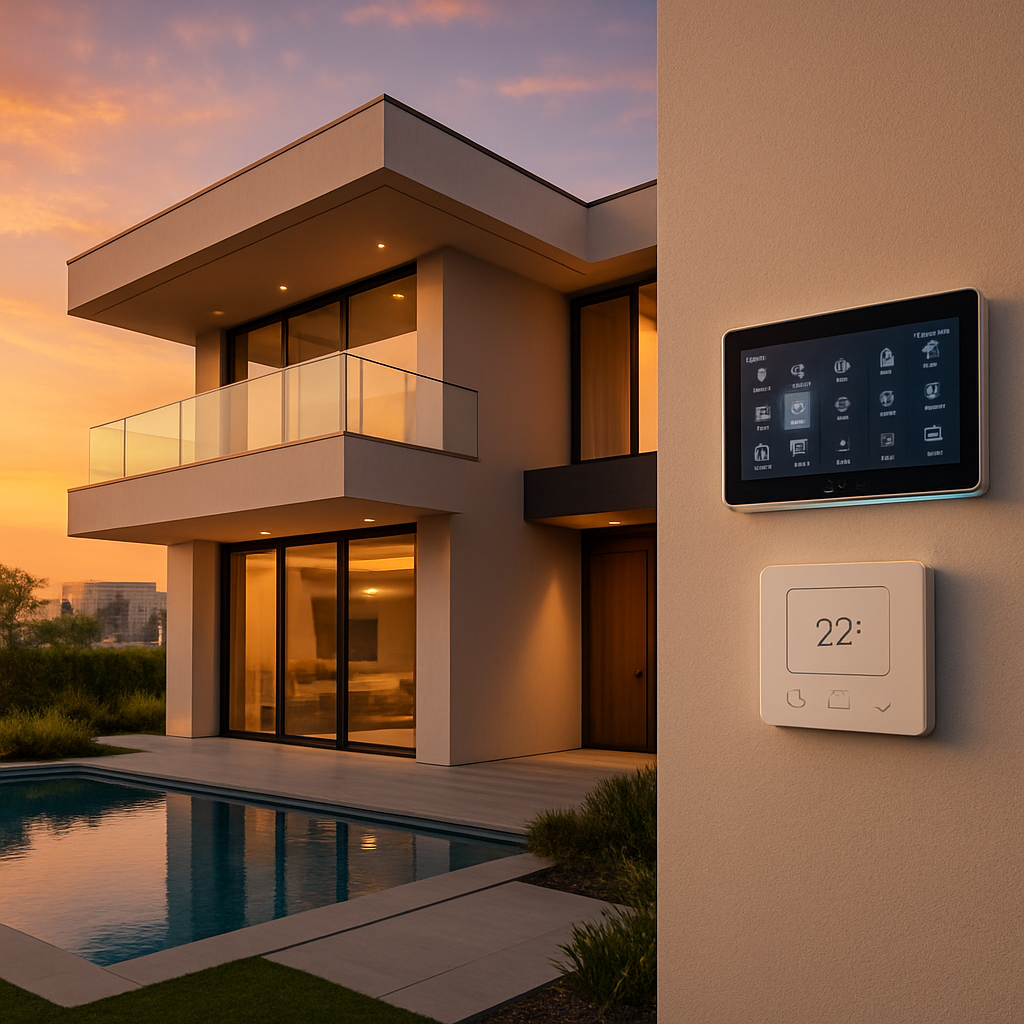
Ready to see those numbers on your own dashboard? A quick audit from a certified integrator can map where the biggest leaks are and outline a step‑by‑step rollout that aligns with your budget.
Future Trends Shaping UAE Home Automation
When you look at a luxury villa in Dubai today, you’re already seeing the future. But the real excitement lies in what’s just around the corner – trends that will make a leading home automation company in uae feel like a silent partner in every daily moment.
AI‑driven edge computing
We’re moving from cloud‑heavy AI to edge devices that process data right where it’s generated. Imagine a thermostat that learns your cooling preferences in seconds, without pinging a server in Abu Dhabi. That cut‑down latency means the house reacts instantly, and you save on data‑transfer costs – a win for comfort and the bottom line.
What this looks like in practice: a sensor hub in a Palm Jumeirah villa analyses occupancy patterns locally, then tells the HVAC controller to pre‑cool only the rooms you’ll actually use. The result? A smoother arrival experience and up to 10 % less energy waste during peak summer hours.
Voice‑first and ambient interfaces
Voice assistants are getting smarter, but the real shift is toward ambient interaction – gestures, proximity, even subtle eye‑tracking. In a high‑rise apartment, a wall panel might dim lights the moment you glide past, no spoken command required.
Think about the convenience of walking into your kitchen and the coffee machine starts brewing because it sensed your phone’s Bluetooth signal. That kind of frictionless control feels natural, and it’s the next step after today’s “Hey Siri/Hey Alexa” moments.
Integrated solar and battery management
The UAE’s sun is a massive, under‑utilised resource. Future systems will blend smart solar inverters with home automation so that excess daylight automatically powers your air‑conditioning or charges a home‑battery bank.
When the sun dips, the automation engine decides whether to draw from the grid or dip into stored energy, based on real‑time electricity tariffs. Homeowners end up with lower bills and a greener footprint – all without lifting a finger.
5G‑enabled mesh networks
5G isn’t just for smartphones; it’s a catalyst for ultra‑reliable, low‑latency mesh networks inside homes. A 5G‑backed mesh can handle dozens of cameras, sensors, and entertainment devices simultaneously, without the dead‑zones you’ve seen with older Wi‑Fi setups.
For a villa spread across multiple wings, this means every lock, light, and climate sensor stays in perfect sync, even when you’re streaming a 4K movie in the media room while the pool heater runs in the garden.
Sustainable water‑wise automation
Water scarcity is a daily reality in the Gulf, so smart irrigation is evolving from simple timers to AI‑guided moisture mapping. Sensors buried in the soil talk to a central controller that cross‑references weather forecasts from the UAE Met Office.
The system then waters only the zones that truly need it, reducing waste by up to 20 %. Pair that with leak‑detecting valves, and you’ve got a home that protects both your garden and your wallet.
Personalised health and wellness ecosystems
Future homes will monitor indoor air quality, humidity, and even circadian lighting to support wellbeing. Imagine a bedroom that gradually shifts from cool blue tones to warm amber as you wind down, while the HVAC adjusts humidity to keep your skin comfortable.
Advanced air sensors can trigger ventilation only when pollutants rise, keeping the system efficient. For families with young children or elderly members, that kind of proactive health support becomes a real peace‑of‑mind feature.
Scalable, modular architecture
One of the biggest hurdles today is retrofitting older properties. The next wave of home automation platforms is built on modular, plug‑and‑play standards that let you add new devices – from smart mirrors to autonomous cleaning robots – without a major rewiring project.
This flexibility means a leading home automation company in uae can start small – a single lighting scene – and grow into a fully integrated smart estate over years, aligning with budget and lifestyle changes.
So, what should you keep an eye on? The blend of edge AI, 5G connectivity, and sustainability‑first design is reshaping what a smart home looks like in the UAE. By staying ahead of these trends, you’ll turn a luxury villa into a living, breathing partner that saves energy, enhances comfort, and protects the environment – all while feeling effortlessly natural.
FAQ
What makes a leading home automation company in uae different from a regular installer?
Because a leading home automation company in uae blends certified hardware, AI‑powered control, and a unified user experience, you get more than a handful of plug‑and‑play devices. Think of it as a well‑orchestrated orchestra instead of a band of soloists – every sensor, light and lock talks the same language, the system updates OTA, and the installer guarantees compliance with local regulations. The result is reliability, future‑proof scalability and peace of mind you won’t get from a DIY‑only shop.
How do I know if the smart system I’m buying is TDRA‑approved?
First, ask your integrator for the TDRA certification number printed on each wireless module – it’s usually on the product label or in the data sheet. Then verify the number on the TDRA portal or ask the installer to show you the approval screenshot. A TDRA‑approved device will also support over‑the‑air firmware updates, which is crucial for security patches. If any component lacks that stamp, you should replace it before the system goes live.
Can I start with a single room and expand later without rewiring?
Absolutely – most modern platforms use a modular, plug‑and‑play architecture. Start with a single hub in the living room, connect a few smart switches and a motion‑activated light scene, and let the system learn your habits. When you’re ready to add the kitchen or the garage, you simply install additional nodes that auto‑discover themselves. Because the backbone is a mesh network, you won’t need new cabling, just a power outlet and a quick configuration step.
What kind of energy savings can I realistically expect after automation?
In our experience a well‑tuned smart home can shave 10‑15 % off the annual electricity bill, especially in a Dubai villa where cooling dominates the load. The biggest savings come from occupancy‑based lighting, zone‑controlled HVAC and a real‑time energy dashboard that flags devices running idle. To measure it yourself, export the first month of consumption data, compare it with the baseline you recorded before automation, and look for a visible dip in kWh during peak afternoon hours.
How does AI‑driven scheduling improve comfort in a Dubai villa?
AI‑driven scheduling looks at your daily routines, the weather forecast from the UAE Met Office, and real‑time occupancy signals to decide when to start cooling or heating. For example, if the system knows you usually arrive home at 6 pm, it will pre‑cool the lounge to 24 °C a few minutes earlier, so you step into a comfortable space instead of a scorching hallway. The algorithm also backs off during unexpected absences, saving energy without you having to lift a finger.
Is my data safe when I use cloud‑connected smart devices?
Data security starts with the device’s firmware and the central hub’s encryption. A reputable provider will use end‑to‑end TLS for any cloud communication and store only hashed identifiers on their servers. In the UAE, many installers also hold ISO 27001 certification, which means they follow a strict audit trail for access controls and incident response. To protect yourself, change default passwords, enable two‑factor authentication on the mobile app, and regularly check the vendor’s security update log.
What’s the typical timeline for a full‑home rollout with a leading provider?
A typical full‑home deployment takes between four and eight weeks, depending on the property size and how many zones you want to automate. The first week is a site survey and design workshop, where the integrator maps wiring, Wi‑Fi coverage and user requirements. Installation of wiring, devices and the central hub occupies weeks two and three, followed by two weeks of testing, fine‑tuning scenes and training you on the app. Most clients go live after the fourth week, with a warranty‑backed support window.
Conclusion & Next Steps
We’ve walked through everything from certification checklists to AI‑driven climate control, and you probably feel a mix of excitement and a little overwhelm. That’s normal – smart home projects are big, but they’re also a series of tiny, manageable steps.
So, what’s the first move? Grab a notebook and list the three daily friction points that bug you the most – maybe it’s remembering to turn off the pool pump, adjusting the lounge temperature before you get home, or making sure the front gate locks every night. Those are the low‑hanging fruits that any leading home automation company in uae can automate right away.
Next, schedule a short, no‑obligation site survey with us. During that visit we’ll verify TDRA approvals, map Wi‑Fi coverage, and sketch a phased rollout that starts with a pilot zone. The goal is to see measurable energy or convenience gains within the first month.
Finally, set a concrete timeline: week 1 for the survey, week 2‑3 for installing the pilot hub and sensors, and week 4 for testing and fine‑tuning. Stick to the plan, and you’ll have a living, learning home that pays for itself in comfort and savings.
Ready to turn that vision into reality? Just hit the button below to book your free consultation and let us handle the heavy lifting.