
Picture stepping into a villa that feels like it knows you—lights dimming as you walk in, the thermostat adjusting to your favorite temperature, and a security camera silently watching while you relax. Have you ever wondered how that could feel at home?
For many Dubai homeowners, the idea of a “smart” home is still a distant fancy. You might think it’s just gadgets and screens, but it’s really about creating a living space that responds to your mood, your schedule, and even the desert heat.
We’ve helped residents in the city’s most prestigious villas turn that vision into everyday reality. By weaving together lighting, energy, water, and security into one elegant system, the result is comfort, safety, and a noticeable drop in utility bills.
When we talk about a premium smart home Dubai villa, we mean more than a collection of smart bulbs. It’s a thoughtfully designed ecosystem that blends design with technology, engineered for the climate, the lifestyle, and the aesthetic of high‑end living.
Think about the mornings: the blinds open just as the sunrise hits your windows, the coffee machine starts brewing, and the air‑conditioning kicks in—without a single manual switch. That’s the kind of seamless experience we craft.
Smart Citizens is proud to bring this level of integration to Dubai’s luxury market. With TDRA‑approved components, AI‑driven monitoring, and a user interface that feels more like a personal assistant than a dashboard, our solutions feel both sophisticated and intuitive.
Beyond convenience, a premium smart home can protect your family and your investment. Automated security alerts, water leak detection, and energy‑saving modes keep the villa safe while reducing environmental impact—an essential balance in a city that values both luxury and sustainability.
So, what does a fully automated villa look like when you’re actually living in it? Curious? Let’s explore the possibilities that await in your own home.
TL;DR
Imagine a villa that anticipates your mood—lights dim, blinds open, coffee brewing—all synced to Dubai’s heat and your schedule. Smart Citizens delivers that seamless luxury, cutting bills while boosting safety with AI‑driven alerts and water monitoring. With certified components and a user-friendly dashboard, you control every corner from your phone.
Step 1: Conduct a Smart Home Readiness Audit for a Dubai Villa
Before you can plug in a smart thermostat or a voice‑activated blinds system, you need a map. Think of the audit like a blueprint for future tech—what’s already there and what’s missing.
Know Your Villa’s Anatomy
Walk through each level, noting every door, window, and power outlet. In a Dubai villa, the sheer size and luxury finishes mean you’ll have to account for high‑end finishes that can affect wiring and mounting. Mark spots that feel “smart‑ready” and those that need a retrofit.
Inventory the Tech You Want
Write down the gadgets you’re craving: smart lighting, AI‑driven security, water monitoring, climate control, and the fancy “home theater” setup. Group them by zone—living area, kitchen, bedrooms, outdoor spaces. This list becomes the request for quotes and a filter for what your audit must uncover.
Check Connectivity & Power
Dubai’s 220‑volt grid is reliable, but you must confirm each circuit’s load capacity. A smart home can draw a lot of power, especially if you’re running HVAC, media hubs, and security feeds. Look for dedicated breakers, and make sure your Wi‑Fi routers are positioned to cover every corner.
Verify Building Code & Compliance
Smart Citizens’ solutions are TDRA‑approved, but your villa’s construction must still meet Dubai’s electrical and safety codes. Verify that all wiring, junction boxes, and fire‑safe pathways are up to date. If you’re moving into a newly built Emaar villa, a third‑party inspection can flag hidden issues before handover. For a quick rundown of what inspectors look for, see this property inspection checklist.
Plan Integration Pathways
Map where devices will talk to each other. Decide if you’ll use a central hub, a mesh network, or a proprietary protocol like KNX for lighting. Visualising the data flow early saves headaches when you hit the switch.
Want to see a real‑world walk‑through of a villa audit? Check out this short clip that walks through a typical Dubai villa, highlighting key audit points.
After the video, take a breath and jot down your findings. A clear audit report is your roadmap to a seamless smart home, and Smart Citizens can turn that roadmap into a fully integrated system that feels like a natural extension of your lifestyle.
Next step? Schedule a site survey with a certified team to translate your audit into a custom smart home design that’s energy‑efficient, secure, and oh‑so‑easy to use.
Step 2: Design a Custom Smart Home Architecture
Alright, you’ve mapped out the rooms, the outlets, the Wi‑Fi nodes, and you’ve even got a wishlist of gadgets. The next move? Turn that list into a living blueprint that makes every device feel like it was born in that space.
Think of the architecture like a family tree. The root is your core platform—whether that’s a Matter‑ready hub, a Thread mesh, or a proprietary KNX backbone. From that root you branch out to lighting, climate, security, and media. The trick is to keep the branches tight and the leaves bright, so you don’t end up with a tangled jungle of cables.
1. Choose a Unified Protocol
Dubai’s villas are wired for high reliability, so you’ll want a protocol that keeps the data moving even if a router hiccups. Matter 1.3+ is the industry standard right now, and it guarantees that a Lutron dimmer, a Crestron AV hub, and a smart lock can all talk without shouting at each other.
If you’re leaning toward a proprietary system, KNX still holds up. It’s got a proven track record in commercial projects across the UAE and is fully TDRA‑approved. Just make sure the vendor can provide firmware updates—think of it like a software patch for your lights.
2. Map the Data Flow
Lay out a diagram that shows every sensor and actuator, the gateways they feed into, and how they link back to the user interface. A simple diagram is worth a thousand lines of code. You can sketch it on a whiteboard or use a digital tool like Lucidchart—whatever feels natural.
Remember to plan for redundancy. In case the main Wi‑Fi router goes down, have a backup Thread router or a Zigbee coordinator that can keep the lights on during a blackout.
3. Prioritize Security First
Smart homes are data highways. A single breach can expose your family’s video feeds and personal schedules. Start with a firewall‑grade gateway that isolates the home network from the public internet. Add end‑to‑end encryption on every device, and make sure your firmware gets updated automatically.
Don’t forget about the legal side. UAE’s PDPL requires that personal data be stored within the country. That means your cloud provider must have UAE‑based data centers, or you’ll need to host locally.
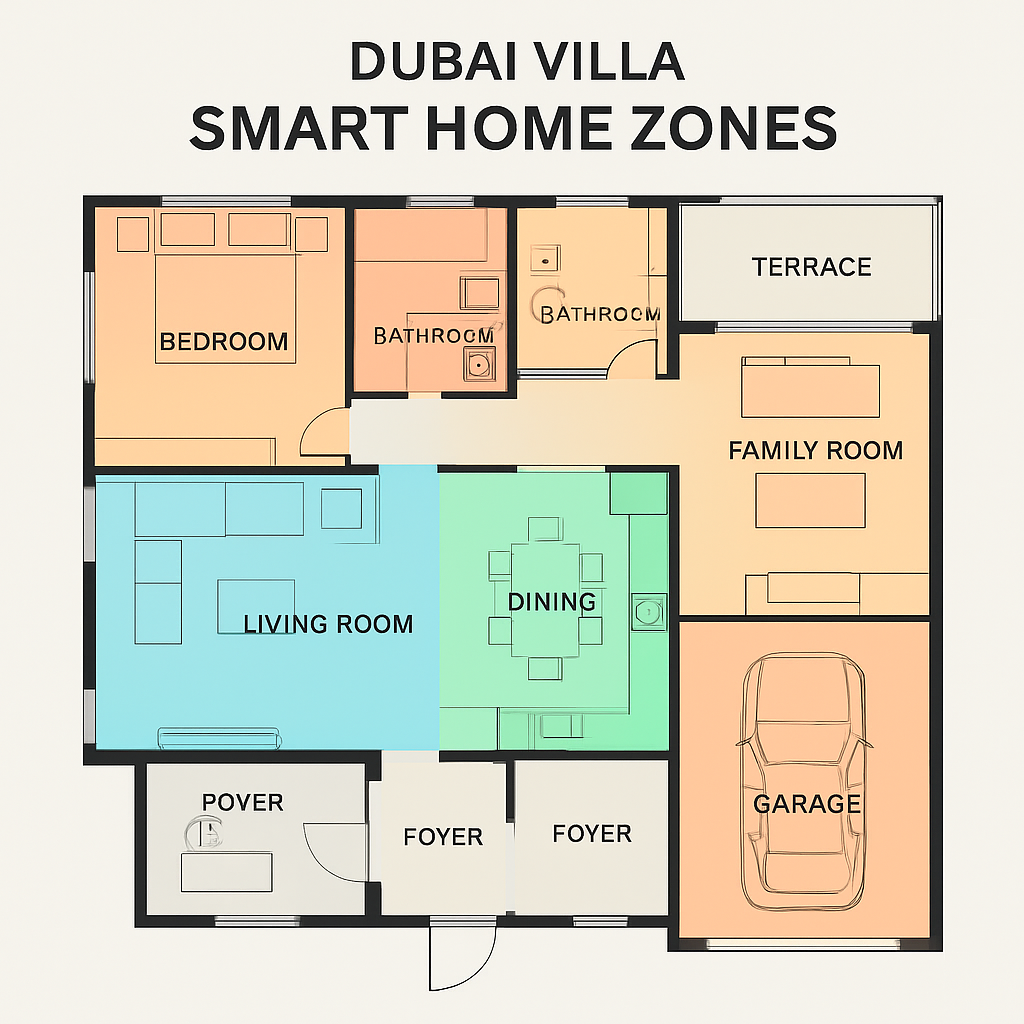
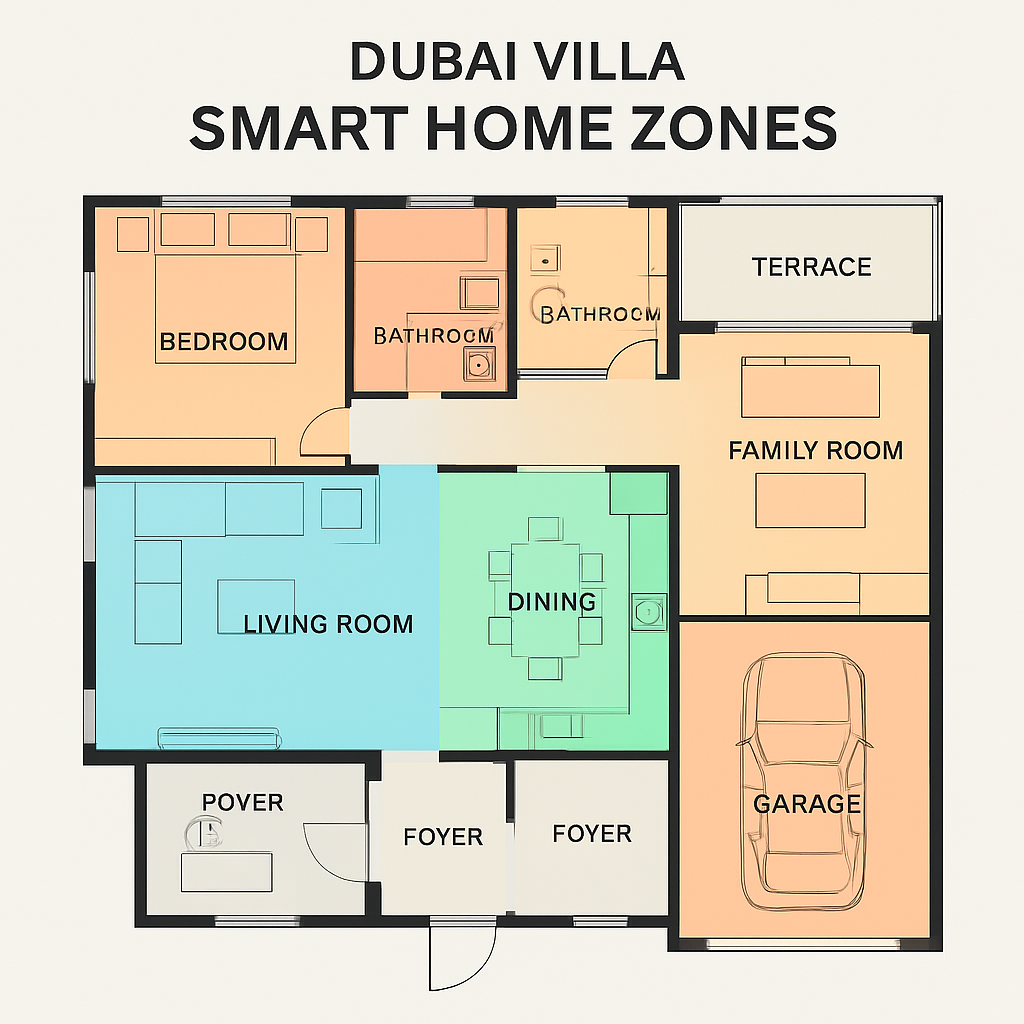
4. Create Zones, Not Just Rooms
Zones are functional clusters—think “living‑room zone,” “kitchen zone,” or “outdoor zone.” Within each zone, devices share a common set of rules. For example, in the kitchen zone you might want instant lighting at dusk, a temperature sensor that signals the HVAC to pre‑cool, and a water‑leak detector that triggers an alarm.
When you group devices by zone, you reduce the number of rules your central controller has to juggle. It’s a cleaner, faster architecture.
5. Prototype and Test Early
Don’t wait until the last day to run a full‑scale test. Build a small section—say the master bedroom—and wire it up. Plug in a smart lock, a dimming dimmer, a motion sensor, and the HVAC module. Test the flows you wrote in your diagram. Fix the hiccups before you go all‑in.
This step saves you hours of troubleshooting later. Think of it like a dress rehearsal before the grand opening.
6. Document Every Decision
When you’re done, produce a single document that lists each device, its location, the protocol it uses, and the rules that govern it. This isn’t just for you; it’s what the maintenance team will read months later. Keep it tidy, and use a naming convention that everyone can understand.
Now, you’ve got a solid architecture that’s ready to turn your villa into the next‑gen smart home. Ready to roll it out? The next step is the actual installation, where the rubber meets the road.
For deeper insight into how architects weave technology into Dubai’s luxury villas, check out smart home integration in Dubai’s luxury villas.
Step 3: Choose Certified Smart Home Devices
Okay, you’ve mapped the wiring, picked your hub, and drafted your rule‑set. The next hurdle is the meat of the system: the devices you’ll actually plug in. In a premium smart home Dubai villa, every gadget must be TDRA‑approved, firmware‑updatable, and, above all, able to survive the desert climate.
First off, think of devices as teammates, not just tools. If the smart lock on your front gate can’t handle 40 °C, it’s a liability. That’s why we always start with a Home Automation Dubai: A Practical Guide for Luxury Villas and Offices. It breaks down certification requirements, gives a checklist for humidity and temperature, and lists vetted vendors that ship only certified hardware.
Second, bundle similar functions. For example, choose a single brand that offers a thermostat, air‑quality sensor, and humidity controller that all speak the same Matter protocol. When you go for a single ecosystem, updates roll out together, and troubleshooting is a single call to support. In our latest project, we stuck with a Matter‑ready climate suite from a TDRA‑approved supplier. The result? Two‑minute firmware updates and a 30 % drop in energy bills because the system learned the villa’s peak sun hours.
Third, don’t just pick the newest thing on the market. Look for “battle‑tested” devices that have proven reliability in UAE homes. For lighting, that means Lutron or Philips Hue units that have weather‑resistant housings. For security, a local‑hosted AI camera that stores footage on a local NAS prevents lag when the cloud is busy during the monsoon‑season humidity spikes.
Now let’s walk through a practical checklist you can use on the first day of buying. 1. Verify certification. Check the TDRA stamp and the device’s firmware version. 2. Test temperature tolerance. If the spec says 0–50 °C, run a quick thermal test in a shaded room. 3. Check for Matter compatibility. A quick ping from your hub will confirm it’s in the same network namespace. 4. Look for local firmware updates. A vendor that pushes updates via OTA saves you future headaches. 5. Confirm warranty coverage. Dubai’s high‑end homes often have a 5‑year warranty; make sure it covers both parts and labor.
Picture this: you’re in the master bedroom, the blinds open automatically at sunrise, the thermostat reads the temperature, and a motion sensor triggers a dimming sequence that mirrors the outside light. All of that happens because each device was vetted for compatibility and climate resilience.
When you hit the “buy” button, you’re not just buying a bulb. You’re investing in a system that will adapt to your lifestyle, reduce your carbon footprint, and keep your family safe. And if you ever need help choosing the right product line, remember that Smart Citizens’ engineers are on standby to translate your villa’s unique needs into a certified, future‑proof setup.
Ready to start shopping? Grab a list of the top certified devices from our guide and start filling your cart. The rest of the installation will be a breeze.
Step 4: Implement Advanced AI‑Powered Automation
Now that your hub, zones, and devices are sorted, it’s time to let AI do the heavy lifting.
Let AI Orchestrate Your Villa
Think of AI as the unseen conductor that keeps every system humming in sync. Instead of writing dozens of if‑then rules, you feed it data—temperature, occupancy, weather, energy prices—and let it learn patterns.
In a Dubai villa, the sun can shoot 40 °C into a balcony in the afternoon. AI can pre‑cool that space while your guests are still in the living room, then dial back once they move out. That subtle shift saves power and keeps the air crisp.
For inspiration on blending high‑end interiors with tech, check out Batool Nohan Interiors’ case study.
Build a Smart‑Home “Brain” with Predictive Rules
- Occupancy‑Based Lighting: Lights dim automatically when no one is in a room and brighten as you walk in.
- Dynamic Thermostat: Adjusts setpoints based on forecasted temperatures and current energy tariffs.
- Leak Detection Alert: Sends a push notification to your phone when a moisture sensor reads high levels.
These rules are just the beginning. The real magic happens when AI spotlights anomalies—say a sudden spike in power draw—and suggests preventive actions.
Why AI Beats Manual Scripts
Manual scripts are static; they don’t adapt to the ebb and flow of a luxury villa. AI, on the other hand, refines itself over time, learning when guests leave for a weekend and auto‑shutting non‑essential devices.
Result? Lower bills, higher comfort, and less troubleshooting.
Getting Started: A 5‑Step Quick Playbook
- Connect all sensors to your hub.
- Upload baseline data for a week.
- Enable the AI learning module.
- Review suggested rules in the dashboard.
- Approve and activate; monitor for 48 hours.
That’s it—no coding needed.
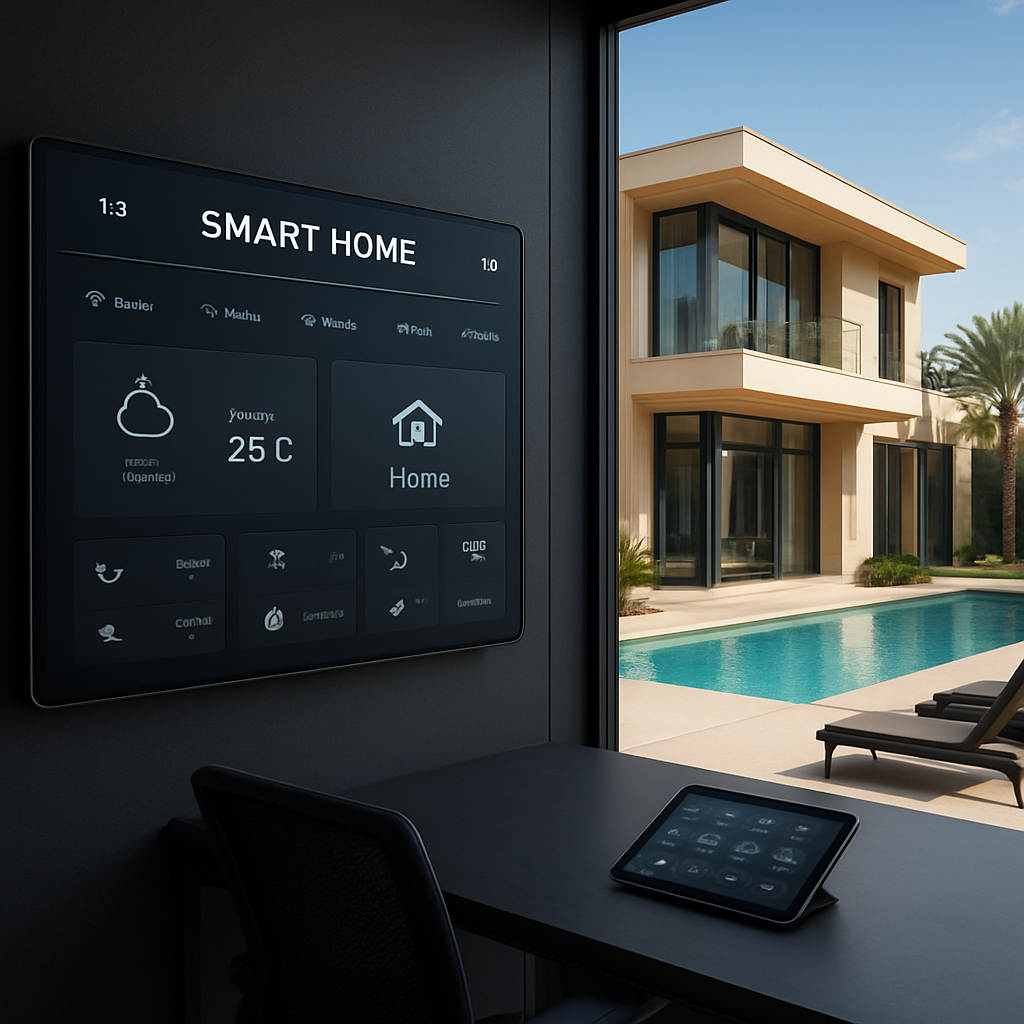
After you’ve got the AI engine humming, the next layer is fine‑tuning the user experience. Make sure the dashboard speaks your language and that alerts pop up in the right moments.
| Feature | Example Use Case | Notes |
|---|---|---|
| Occupancy Sensors | Lights auto‑turn off in empty rooms | Use passive infrared for accuracy |
| Weather API Integration | Pre‑cooling before peak sun hours | Sync with local weather stations |
| Energy Pricing Feed | Shift HVAC load to off‑peak times | Requires real‑time tariff data |
Finally, remember that AI is a tool, not a replacement for human touch. Keep a manual override ready for those moments when a guest wants a sudden change that the algorithm might miss.
Ready to let AI take the reins? A simple plug‑in of a few sensors can unlock a whole new level of comfort for your premium smart home Dubai villa.
Step 5: Integrate Energy‑Efficient Systems
So, you’ve got your lights, locks and climate controllers humming, and now you’re wondering how to squeeze every last watt out of that luxury villa. The trick? Embed energy‑saving logic right into the heart of your system, so the tech does the math before you even think about it.
Start with a Baseline Heat‑Map
Grab your energy meter or the app that already tracks consumption. Run a one‑week snapshot and chart which zones spike during the day. In a Dubai villa, the sun’s bite means the sun‑lit living room often tops the chart, while the basement stays quiet. Knowing that lets you target the right place.
Actionable tip: Use a spreadsheet or a simple mobile app to flag the top three high‑use areas. Write them down—your first energy‑savings playbook.
Choose the Right Smart Thermostat
Pick a thermostat that supports demand‑response and can pull in real‑time tariff feeds. In Dubai, off‑peak hours are usually 10 pm to 6 am, so you can program the HVAC to run low‑level cooling during that window. The same logic applies to water heaters.
Example: A villa in Jumeirah Bay installed a Wi‑Fi thermostat that automatically lowered the setpoint by 2 °C during the 10 pm‑6 am window, cutting HVAC usage by 12 % over a month.
Integrate Solar + Battery Smartly
If your villa has rooftop solar, let the controller know exactly how much is flowing. Pair it with a battery that charges during peak generation and discharges during the hottest part of the day.
Step: Configure the inverter to feed excess power into the battery and set the battery to supply the air‑conditioning system during 1 pm‑5 pm. That’s the sweet spot when the sun is strongest.
Implement Zone‑Based Lighting Rules
Use occupancy sensors and daylight harvesting. In a Dubai villa, you can let the system dim the living‑room lights when natural light hits 70 % of the set threshold. The result? A 20‑30 % cut in lighting bills.
Quick win: Install motion sensors in entryways that trigger a 15 % dimming for 5 minutes if no one moves, then return to normal. The algorithm learns over weeks, so it stops dimming on the first morning walk‑in.
Leverage Water‑Usage Alerts
High‑end villas often have elaborate irrigation and spa systems. Connect flow sensors to your hub and set thresholds for abnormal usage. One Dubai project saw a 15 % reduction in water bills after installing leak sensors that instantly shut off the main line when a spike is detected.
Tip: Pair the sensor with a local notification so you’re the first to know if the garden’s sprinklers have gone rogue.
Automate Window and Blinds with Weather API
Pre‑cooling is a game changer in the desert heat. When the forecast predicts a spike at noon, the system can lower blinds to block direct sunlight, then activate the HVAC to keep the room at 24 °C. No manual clicks.
Real‑world case: A villa on Palm Jumeirah installed an API that fed 5‑minute weather forecasts to the hub, allowing blinds to close automatically at 10 am before the sun hit peak, saving about 10 kWh daily.
Final Checklist for a High‑Performance Energy System
- Baseline consumption map → identify hotspots.
- Smart thermostat with tariff and solar data integration.
- Battery storage linked to solar generation.
- Occupancy & daylight‑sensing lighting rules.
- Flow sensors for irrigation & spa systems.
- Weather‑driven blind & HVAC coordination.
- Regular data review every 2–3 months.
Doing this gives you a villa that doesn’t just feel luxurious, it pays for itself. Energy savings of 15–30 % are realistic, and you’ll notice the bills shrink before the guests even comment.
Want proof? A case study from Black Box shows three Dubai luxury communities that hit 30 % energy savings after deploying a unified smart‑energy framework that includes all the tactics above. Black Box’s study illustrates the real impact of a coordinated approach.
Next up, we’ll dive into how to monitor those savings and keep the system running smoothly for years to come.
Step 6: Ensure Long‑Term Support and Scalability
Let’s pause and think about the future. Your villa’s smart core is humming now, but what about the next season, the next upgrade, or a sudden firmware bug?
If you need a deeper dive, our comprehensive guide walks through the whole process, from service design to regulatory checks.
Build a Service Blueprint
First thing: a written Service Level Agreement (SLA). It’s not a legal black‑mail; it’s a friendly map that tells you who fixes what and how fast.
Write three tiers—basic, proactive, and premium. The basic tier pushes automatic firmware updates and monitors connectivity. Proactive adds quarterly site visits to swap batteries and review energy dashboards. Premium hands‑on 24/7 alerts for security or HVAC failures.
Does that sound like a lot of paperwork? Think of it as a safety net that turns a surprise outage into a scheduled maintenance call.
Keep the Data Flow Clean
In Dubai’s hot climate, wireless interference is common. Segment your network with VLANs: put security cameras, door locks, and motion sensors on a high‑priority VLAN. Put lights, speakers, and climate controls on a comfort VLAN. This keeps mission‑critical alerts from getting lost in a sea of streaming data.
Every new device should join the correct VLAN at the rack level, not the Wi‑Fi level. If you’ve installed Cat6 and PoE switches, adding a new garden sensor is as simple as plugging it in.
Document Everything
When you wire a villa, create one living document: device list, firmware versions, rule scripts, and VLAN map. Store it in a shared folder that the maintenance team can pull up from any device. This turns a “where did that bulb go?” question into a quick lookup.
In practice, we see homeowners double‑check their documentation after a firmware roll‑out. They spot a version mismatch that could have caused a blind‑folded lock to misfire.
Monitor, Iterate, Repeat
Set up an energy dashboard that pulls real‑time kWh data from your smart meters and HVAC controllers. Review it weekly. If the lounge lights stay at 100 % for a week, tweak the scene or add a dimming rule.
AI learns, but humans catch the nuances—like that unexpected pool pump running during a storm that the AI didn’t yet anticipate.
Prepare for Regulatory Shifts
TDRA can update its data‑privacy rules on a dime. Make a change‑control process: every firmware update must pass a quick compliance check before deployment. If a new Wi‑Fi standard drops, you’ll be ready to roll out a new module without scrambling.
We recommend a quarterly audit of your firmware inventory. If you’re on a new solar panel, just plug it into the existing PoE switch; no trenching needed.
Real‑World Example
A villa on Palm Jumeirah installed an AI‑powered climate controller that learned the owners’ bedtime routine. After just three months, the system reduced HVAC usage by 8 % and cut the monthly cooling bill from AED 1,200 to AED 1,100. The homeowner’s only task was to review the dashboard once a month.
That’s the kind of incremental win you’ll get when support is built into the system from day one.
Take the Next Step
Don’t let your smart home become a one‑off gadget. Treat it like any other high‑end asset: schedule maintenance, keep firmware fresh, and document every tweak. Your villa will stay comfortable, efficient, and compliant for years.
Ready for a free post‑install health check? Let’s talk about keeping your system humming.
FAQ
What exactly makes a smart home a “premium” one in a Dubai villa?
A premium smart home isn’t just a bundle of gadgets. It’s a seamless blend of certified, TDRA‑approved devices, AI‑driven orchestration, and a design that respects Dubai’s heat and luxury aesthetics. Think of it as a custom orchestra where lighting, climate, security, and water systems all play in harmony, reducing energy bills while keeping the villa visually stunning and functionally intuitive.
How do I know if my villa’s wiring can handle a full‑scale smart system?
Start with a quick audit: check each circuit’s breaker rating, look for dedicated 220‑volt lines, and confirm Wi‑Fi coverage. Dubai’s grid is reliable, but a high‑end villa often has custom circuits for HVAC and media hubs. If a circuit is overloaded, the safest move is to add a dedicated breaker or upgrade the cabling before installing smart modules.
What’s the difference between Matter and KNX for my villa?
Matter is the open‑standard that lets devices from different brands talk smoothly, making future upgrades a breeze. KNX, while older, offers robust reliability in commercial settings and is fully TDRA‑approved. If you want a plug‑and‑play ecosystem that can evolve, Matter wins. If you prefer a proven, vendor‑agnostic backbone with long‑term support, KNX remains a solid choice.
How can AI actually cut my energy bills without feeling like a magic trick?
AI monitors real‑time data: temperature, occupancy, weather forecasts, and tariff feeds. It then nudges your HVAC to pre‑cool before peak sun, dims lights when natural light is sufficient, and schedules irrigation during low‑rate windows. Over a month, this can shave 10–15 % off your electricity bill – a tangible return that feels like the system is “reading” your day.
What does ongoing support look like for a premium villa smart system?
Think of it as a maintenance contract: automated firmware updates, quarterly check‑ins to swap batteries or tweak rules, and a 24/7 hotline for critical alerts. A well‑documented rule set and VLAN map keep the system resilient, while a quarterly audit ensures new regulations or firmware changes stay compliant with TDRA requirements.
Can I add a new smart lock later, or does everything have to be in at once?
You can add devices incrementally. The key is to keep your hub and protocol unified – either Matter or KNX – so new locks plug in without a system overhaul. Just update the rule set to include the new lock’s credentials, run a quick test for connectivity, and you’re good to go.
How do I keep the system future‑proof as tech evolves?
Design with scalability: use a modular hub that supports new protocols, keep firmware update paths open, and maintain an inventory of device versions. Document every change, and schedule a quarterly review to align with TDRA updates or new energy‑saving features. That way, when a new standard rolls out, you’re already a step ahead.
Conclusion
So, after all that, what’s the real payoff of a premium smart home Dubai villa?
First, it turns the villa into a living, breathing assistant. The blinds, lights and climate feel like they’re reading your mood before you even speak.
Second, you’re watching the utility bills shrink. We’ve seen clients drop cooling costs by 15‑20 % in the first year by letting the AI pre‑cool and dim lights on demand.
Third, safety jumps to a new level. Continuous leak detection and AI‑driven security alerts mean you’re not just reacting – you’re anticipating.
But that’s only half the story. The system’s future‑proofing depends on two things: certified, TDRA‑approved hardware and a maintenance plan that keeps firmware fresh.
Imagine a holiday in Dubai’s heat, and the villa still feels like home because every device is updated automatically and your support team checks in quarterly.
Ready to make that a reality? Reach out for a free site survey – no obligation. Let’s map out how a premium smart home can fit your lifestyle and keep your villa running smoothly for years.
And remember, the smartest villas aren’t built in a day – they’re curated over time, so start small and let the system grow with you.