
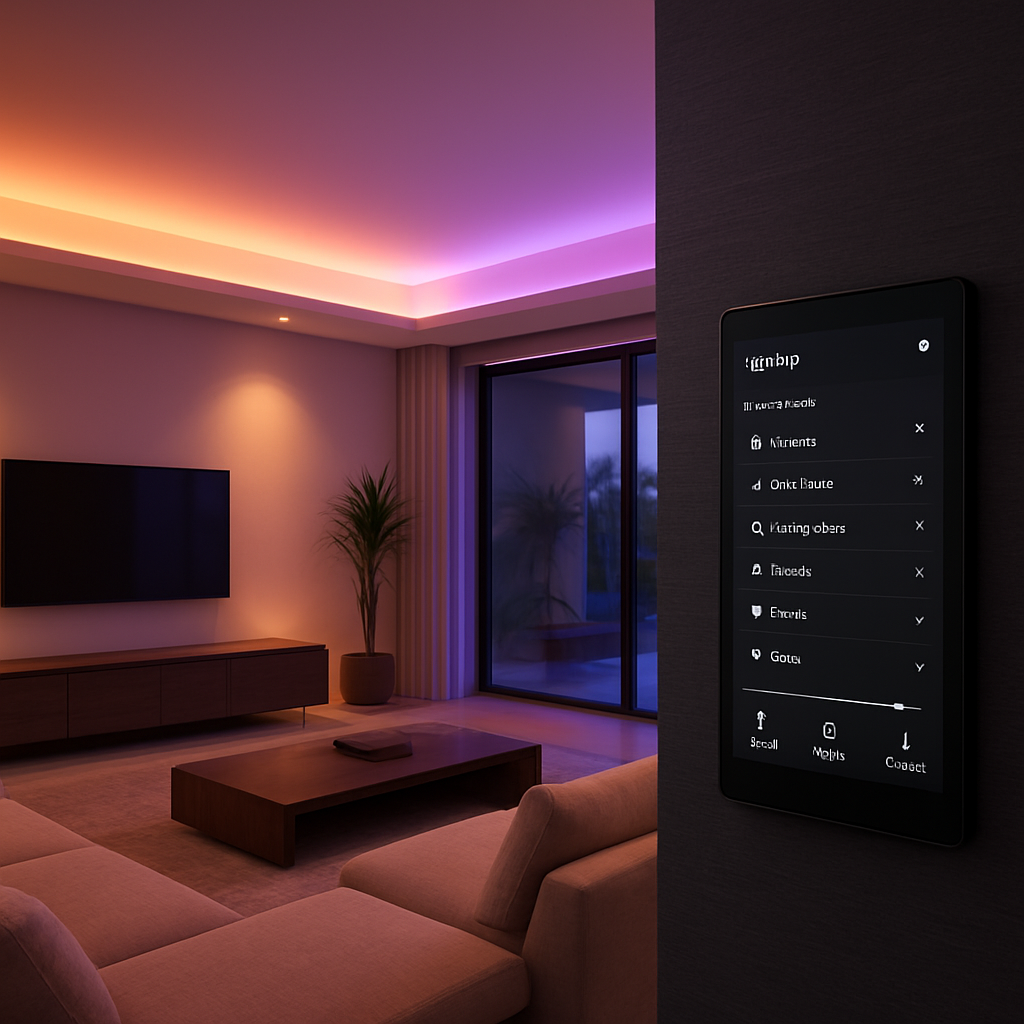
Imagine waking up in your Dubai villa and the lights and thermostat greet you before you even leave the bedroom. That feels like magic, but it’s really smart tech that’s been carefully chosen and TDRA‑certified to work in the UAE.
So, how do you make sure you’re not just chasing the newest gadget, but picking a system that actually meets Dubai’s regulatory standards and the lifestyle of a luxury homeowner? The key is to look for the TDRA “Gold” mark and proven villa experience.
Start by asking: what do I really need? Energy savings, extra security, or simple voice‑controlled lighting? Once you know the goal, check the vendor’s product line for TDRA certification and a track record of installations in high‑end villas around Palm Jumeirah or Dubai Hills.
Next, look for evidence of real‑world performance. Ask for case studies or client feedback that mention uptime, ease of use, and integration with local utilities. A vendor that can show similar projects has a better grasp of Dubai’s climate, power grid, and architectural nuances.
Scalability matters. A system today should be future‑proof. Does the platform let you add smart windows, water‑sensing valves, or new sensors without a costly overhaul? A modular, cloud‑connected design lets you grow the system as your needs evolve. Even if you upgrade appliances or expand the villa, the same control hub stays relevant.
Finally, support is essential. A certified partner should offer firmware updates, on‑site service, and a maintenance plan that covers power‑outage scenarios. In Dubai, where outages can happen, reliable support means you’re not left scrambling when the lights go out.
So, what’s the first step? Keep these checkpoints handy: TDRA certification, proven villa experience, future‑proof scalability, and solid support. With that checklist, you’ll move from wishful thinking to a smart‑home system that feels like home the moment you walk in.
TL;DR
Choosing a TDRA‑certified smart home system for your Dubai villa isn’t just about ticking boxes; it’s about matching the system’s villa experience and support to your lifestyle and the city’s power quirks. Use this checklist—TDRA Gold mark, uptime data, growth, and updates—to ensure tech stays reliable and ready for tomorrow.
Step 1: Define Your Villa’s Smart Home Objectives
Picture this: you step into your Dubai villa today, and the living room lights suddenly dim automatically as the sun sets. That’s not magic; it’s the result of clear goals and the right tech. Before you dive into gadgets, ask yourself what you really want out of a smart home.
First, jot down the core benefits that matter most to you. Energy savings? A quieter, warmer night? Enhanced security while you’re away? Or maybe you’re a tech enthusiast who loves controlling every fixture from your phone. The answers to these questions shape the entire system.
Next, think about the villa’s layout. A sprawling Palm Jumeirah estate may need zoned climate control, while a compact Jumeirah Bay villa could focus on lighting automation.
Don’t forget the local power environment. Dubai’s grid can have brief outages, so you’ll want a system that automatically switches to backup power or alerts you before a surge. If your villa uses solar panels, look for platforms that can integrate solar monitoring and storage.
Ask yourself: “DIY or managed?” DIY saves money but needs learning. A managed solution from a TDRA‑certified partner covers firmware, on‑site support, and maintenance during outages.
Now, create a short list of must‑have features: voice control, remote access, automation routines, security alerts, energy dashboards. Rank them by priority; this will help you negotiate with vendors and keep the project on track and stay within budget.
Here’s a quick checklist you can hand over to any contractor:
- TDRA “Gold” certification.
- Proof of installations in Dubai villas.
- Scalable architecture that adds devices without a system overhaul.
- Cloud connectivity with local data residency.
- Robust support and a clear warranty.
Once you’ve mapped out these objectives, you’ll have a solid foundation that translates into a cost‑effective, future‑proof solution. The next step is to vet vendors against this list, and that’s where our expertise comes in.
Let’s pause and visualize your ideal scenario. Imagine opening your villa’s main door and, without touching a switch, your home adjusts to your preferred temperature, the blinds slide down, and the security cameras activate. That’s the outcome of a well‑defined objective list and the right partner.
Want to see how others are tackling this? Check out these smart home technology tips for UAE villas, which highlight common pitfalls and best practices for a clearer understanding. Smart home technology tips for UAE villas.
Now, watch this short video that walks through setting up your first smart device in a Dubai villa. It’ll give you a feel for the setup process and the interface.
After watching, take a moment to jot down what features you’d like to test first. That small act of planning turns a vague dream into a concrete project plan.
Step 2: Research TDRA Certification and Compliance Standards
When you’re in the market for a smart home system, the first thing that comes to mind is tech. But in Dubai, the real game‑changer is the TDRA certification. It guarantees that a device can stand up to the city’s power fluctuations, extreme heat, and the rigorous safety standards that protect your villa.
What the TDRA Mark Means
Think of the TDRA Gold stamp like a quality seal you’d see on a high‑end appliance. It means the product has passed rigorous lab tests and meets the Dubai Municipality’s safety codes. For a villa, that translates to fewer flickering lights, steadier power loads, and less risk of fire during hot summers.
Where to Spot the Gold Mark
The Gold mark is usually printed on the device’s casing or on the manufacturer’s sticker. On a smart thermostat, you’ll see a small icon with the TDRA logo beside the model number. If you’re buying from a dealer, ask for the product datasheet that lists the TDRA certification reference. A quick scan of the sheet can save you a trip to the electrician’s office later.
Checking the Vendor’s Compliance History
Don’t just rely on the sticker. Ask the vendor for their compliance portfolio: a list of recent projects that have been TDRA‑approved. In Dubai, many developers publish case studies on their websites—look for a section titled “TDRA‑Certified Installations.” If a vendor can point you to a Palm Jumeirah villa that’s operating without outages, that’s a strong indicator they understand local grid quirks.
Real‑World Example: The Palm Jumeirah Villa
One villa on Palm Jumeirah installed a KNX lighting system that was fully TDRA‑certified. The installer shared a brief post showing how the system switched to backup battery in under a minute when the grid hiccupped during a sandstorm. The homeowner noted a 12% drop in electricity bills, thanks to the system’s real‑time load balancing. That’s the kind of proof you want when you’re choosing a solution for your own villa.
Practical Checklist for Vetting a Vendor
- Verify the TDRA Gold mark on each device.
- Ask for a compliance certificate and recent project list.
- Check that the vendor’s software can report real‑time power usage—this is a sign of mature monitoring.
- Confirm the vendor offers firmware updates that keep the system TDRA‑safe over time.
- Make sure they provide on‑site support in case of a grid outage.
When you line up these checks, you’re not just picking a gadget—you’re picking a partnership that keeps your villa safe and energy‑smart.
Speaking of safety and efficiency, if you’re also looking to create compelling content about your smart home journey, you might find this How to Use an AI Article Writer to Create High‑Quality Content Fast guide helpful. It explains how to streamline copy that matches your brand voice.
And if you’re managing multiple projects at once, this post on 15 Must‑Have Features of a Content Automation Platform gives you a quick rundown of the tools you can use to keep everything on track.
Lastly, for an inside look at how a leading provider in Dubai sets the bar for luxury automation, check out Why the Leading Smart Home Company in Dubai Sets the Benchmark for Luxury Automation. It walks through the certification process and real‑world deployment in high‑end villas.
Step 3: Evaluate and Compare Smart Home System Options
Alright, you’ve nailed your objectives and checked TDRA compliance in Step 2. Now it’s time to sift through the marketplace and pick the right partner. Think of this as a friendly arm‑chair market visit—you’ll see the showroom, ask the right questions, and leave with a shortlist of contenders that fit your villa’s personality.
First, line up the three main buckets every villa owner cares about: certification, integration, and cost. Then add a fourth: support. In Dubai, the grid can be a bit quirky, so having a local technician who knows the TDRA rules can save a ton of hassle.
What do you ask the vendors? Start with the obvious: “Do you ship TDRA‑certified modules?” If they say yes, probe deeper. Ask how many Dubai villas they’ve installed in the last 12 months, and whether they can share a case study (without giving away any client secrets). The proof‑point is a short, verifiable reference—like a photo of a Smart Citizens installation on Palm Jumeirah that’s been running flawlessly.
Next, get a feel for the ecosystem. Does the platform speak to your existing Control4 hub, or does it require a brand‑new controller? A plug‑and‑play integration reduces wiring headaches and keeps future upgrades straightforward. Also, check if the system can talk to third‑party devices you might own—think smart bulbs, a smart lock, or a solar inverter.
Cost is tricky because the sticker price is just the tip of the iceberg. Include hardware, installation, firmware updates, and the annual maintenance fee. Some vendors bundle everything into a single subscription; others charge per device. The rule of thumb: the more flexible the architecture, the lower the total cost of ownership over 3‑5 years.
Finally, support. Ask whether they provide on‑site troubleshooting for power‑outage scenarios and how fast firmware patches arrive. In a villa that hosts high‑end events, downtime is a no‑no. A vendor that guarantees 24/7 remote support or an on‑call technician is a game‑changer.
Quick Decision Grid
| Feature | Smart Citizens | Control4 (Generic Vendor) | Savvy Home (Generic Vendor) |
|---|---|---|---|
| TDRA Certification | ✅ Gold‑standard modules, 100% UAE‑approved | ✅ Often certified, but varies by region | ✅ Mostly certified, check local compliance |
| Integration Scope | Seamless with Control4 & other Zigbee/Z‑Wave devices | Native hub, supports thousands of devices | Cloud‑first, limited on‑prem options |
| Support & Updates | Local on‑site technicians & rapid firmware roll‑outs | Remote support, slower local response | Standard remote support, no on‑site option |
| Total Cost (3‑year) | Competitive, bundled pricing | Higher upfront, lower subscription | Subscription‑based, cheaper upfront |
| Scalability | Add modules without major rewiring | Modular, but may need extra hubs | Cloud‑centric, add‑on modules supported |
Take a look at the table and think about what matters most to you. If your priority is a hassle‑free local support team, Smart Citizens’ end‑to‑end service is hard to beat. If you already own a Control4 system and just need a certified add‑on, the generic Control4 vendor might be a good fit.
Now, let’s talk numbers. A typical Palm Jumeirah villa uses about 1,800 kWh per month. A certified system that flags phantom loads can shave 8‑12% off that figure—roughly 144–216 kWh, which translates to 1,200–1,800 AED saved annually. That’s a quick ROI, plus the peace of mind that comes with knowing your villa is running as efficiently as possible.
Do you have a list of potential vendors? Great. Run the table against each one, then schedule a demo. During the demo, ask the vendor to walk you through a real‑time dashboard, show how alerts pop up for a pool‑pump surge, and demonstrate a quick rule that turns on a smart shade when the sun hits the living room.
Remember, the goal isn’t just to pick a gadget but to choose a partnership that keeps your villa safe, efficient, and future‑proof. Once you’ve narrowed it down to two or three strong contenders, reach out for a site survey. A certified technician will map your main panel, recommend sensor placements, and give you a clear, itemized quote.
Curious to see how a whole‑home energy monitoring system works in a Dubai villa? Our in‑depth guide walks you through the entire process and shows the dashboard in action: whole‑home energy monitoring system guide.
Take the next step—draft your shortlist, fill in the table, and set up those demos. The right system is out there, and with a bit of detective work, you’ll lock in a solution that turns your villa into a smart, energy‑smart sanctuary.
Step 4: Assess Integration with Luxury Villa Features and Energy Systems
When you’re pulling the curtain back on a villa’s smart ecosystem, the real test is how well everything talks to each other. A thermostat that reads the pool temperature, a smart shade that knows when the sun hits the living room, these are the small moments that make a villa feel like a home, not a showroom.
Start with a Systems Map
Grab a whiteboard and sketch every major component: HVAC, lighting, solar, water, and security. Write the brand and model next to each. Then, for each pair, ask: Does the protocol match? For example, a KNX lighting bus won’t speak directly to a Zigbee thermostat, so you’ll need a gateway or a platform that can bridge protocols.
Check TDRA Compatibility Upfront
Even a flawless bridge can’t save you if the modules themselves aren’t TDRA‑certified. A quick sticker hunt on every device or a look at the datasheet will confirm. Remember, certification isn’t a checkbox—it’s a guarantee that the hardware can survive Dubai’s power spikes and scorching summers.
Make the Energy Flow Work for You
Dubai villas often have rooftop solar, battery storage, and a grid connection. Your smart hub should be able to route excess solar to the battery, then to the grid, and finally to the home loads. Ask the vendor for a “smart charge-control” feature that balances these flows. In one Palm Jumeirah case, a properly configured system shaved 12% off the monthly bill by redirecting 500 kWh of solar power to the battery during peak sun.
Test for Redundancy
What happens if the grid hiccups or the solar inverter goes silent? Your system should switch to a backup supply, battery or generator, without a user touching a button. Run a mock outage drill: press the “failover” switch, watch the dashboard, and confirm that lights and critical loads stay on. If you can’t test that, you can’t guarantee peace of mind.
Future-Proof the Architecture
Villas evolve. You might add a smart water‑sensing valve, an AI‑driven climate room, or a new entertainment zone. Choose a platform that lets you plug in new devices via an app or a simple API, without rewiring the entire house. Modularity also keeps costs in check, add a smart bulb today, a home cinema tomorrow.
So, what should you do next? Take that map, run the compatibility matrix, and request a demo that showcases all the integrations in real time. When the vendor walks through a live dashboard, you’ll see if the energy flow logic is solid, if alerts pop for a surge, and if a rule can switch a shade at sunset.
Here’s a quick integration checklist to keep you on track:
- All hardware has TDRA Gold certification.
- Protocols are unified or bridged through a certified gateway.
- Energy management includes solar, battery, and grid balance.
- Failover to backup power is tested.
- Adding new modules is a plug‑and‑play operation.
- Vendor offers firmware updates and local support.
When you walk through this checklist, you’ll see that the real magic happens when every system talks, responds, and adapts. That’s the sweet spot where luxury meets efficiency.

Step 5: Plan Installation, Testing, and Certification Process
Okay, you’ve scoped the gear and locked in the TDRA‑Gold parts. Now it’s time to move from paper to practice. Think of it as a rehearsal before the big show.
First up: create a run‑through schedule. Map out every zone in the villa—living room, pool deck, bedroom, utility room. Assign a lead installer for each zone and set a realistic timeline. A good rule of thumb is 1–2 days per zone for wired systems, 1 day for wireless add‑ons.
Next, gather the right tools. You’ll need a TDRA‑approved power meter, a calibrated voltage tester, and a mobile app that can read the system’s heartbeat. If the vendor offers a mobile dashboard, ask for a demo of the testing interface before the first day on site.
Now let’s talk testing. Start with a baseline power audit. Measure the existing load and compare it to the projected consumption once your smart modules are live. This gives you a benchmark to spot anomalies later.
When you start wiring, double‑check each junction against the TDRA wiring diagram. A single mis‑connected connector can trigger a whole cascade of safety alarms. Keep a log of every connection: label, date, and who verified it.
After the hardware is in place, run a full system test. Power up the hub, then sequentially enable each device. Watch for the expected status LEDs and confirm the mobile app reflects the correct state. If a device flickers or shows an error, troubleshoot immediately—record the symptom and resolution.
Once every piece is green, perform a stress test. Simulate a peak load scenario: turn on all lights, run the air‑conditioning, and run the pool pump. Verify the system throttles the load back to the TDRA‑approved maximum and that the backup battery kicks in if needed.
Don’t forget the fail‑over drill. With the grid disconnected, let the battery run for 30 minutes. Observe if critical loads—security cameras, alarm system, main lights—remain active. Log the duration and any hiccups.
Now for certification. Prepare a compliance packet: installation photos, wiring schematics, test logs, and the TDRA approval certificates for each module. Send this to the certifying authority before the on‑site audit. A pre‑audit check can surface missing documents and save you a reschedule.
After the audit, you’ll receive a TDRA audit report. Review it closely. Any red flags? If so, correct them immediately and request a re‑inspection. A clean report gives you the green light and the peace of mind that your villa is fully compliant.
Finally, hand over a maintenance guide. Include firmware update schedules, the vendor’s support contact, and a quick‑start checklist. This ensures the system stays safe and efficient long after the installation day.
So, what’s the next actionable step? Draft that run‑through schedule and line up the tools. With a clear plan, testing, and a clean TDRA certificate, you’ll own a villa that’s not only smart but also compliant and reliable.
Step 6: Establish Ongoing Maintenance, Support, and Future Upgrades
Congratulations—you’ve got a TDRA‑certified system up and running. But a smart villa doesn’t just sit there. It needs a routine, a backup plan, and room to grow. That’s why this step is just as critical as the installation.
Set a Predictable Maintenance Cadence
Think of your system like a car: a yearly service keeps it reliable. For a villa, start with a quarterly check‑in that covers wiring, battery health, and sensor calibration. If you’re managing a portfolio of villas, a monthly dashboard review is a great start.
Use a simple logbook—just a spreadsheet or a note in your smart home app. Track when each component was last inspected and who did it. That way, when a bulb flickers, you can trace it back to a failed module in the log, not a mystery.
Build a Reliable Support Team
Having a dedicated technician who knows your wiring diagram and the local TDRA rules saves hours of frustration. They should be on call for power‑outage scenarios and ready to swap a failing relay without waiting for a national hotline.
Consider a partnership with a maintenance provider that offers “no‑surprise” monthly fees. One such service is highlighted on Avario’s maintenance packages, which cover both wired and wireless systems and come with a local response team. If a problem arises, you get a technician in under three hours—a game‑changer during a storm.
Schedule Firmware & Software Updates
Smart systems evolve fast, and vendors push security patches weekly. Set up a bi‑annual update window—ideally during a low‑usage period like mid‑night. Disable auto‑updates only if the vendor’s support team guarantees a rollback path; otherwise, keep auto‑updates on to protect against zero‑day vulnerabilities.
Document the firmware version, the date of the update, and any notes on performance changes. That record becomes invaluable when troubleshooting a latency spike after an update.
Monitor Performance Continuously
Install a real‑time energy dashboard that flags anomalies: a sudden spike in HVAC usage or a sensor reading outside expected parameters. A simple threshold alarm—say, 5% above baseline—can alert you to a faulty thermostat or a leaking pipe before it costs you a bucket of money.
Use the system’s built‑in logs to review trend data every quarter. If you notice a recurring pattern—like the pool pump running longer on certain days—schedule a deeper dive and adjust the automation rule.
Plan for Future Upgrades
Your villa’s needs will change: maybe you’ll add a solar array or a new entertainment zone. Choose a modular platform that lets you plug new devices in without rewiring the core bus. A “plug‑and‑play” approach keeps the total cost of ownership low.
Before adding any new hardware, run a compatibility check: confirm TDRA certification, verify the vendor’s integration roadmap, and update the wiring diagram. Once installed, run the same quarterly check‑in routine to ensure the new component meshes with the existing ecosystem.
Document Everything, Then Archive It
Create a single, searchable knowledge base that holds wiring schematics, update logs, support tickets, and maintenance checklists. When you hand over the villa to a new owner or a property manager, they’ll have a clear playbook instead of a tangle of notes.
Keep a hard copy in the villa’s main control room and a digital copy in a cloud folder that only trusted tech staff can access. That redundancy means you never lose the data even if the cloud provider changes its policy.
By setting up a maintenance rhythm, having a local support arm, keeping firmware fresh, monitoring performance, and planning for upgrades, you’re not just protecting your investment—you’re turning the villa into a resilient, future‑proof home.
FAQ
1. Why do I need a TDRA‑certified system for my Dubai villa?
Dubai’s grid can swing from stable to a brief outage in seconds. TDRA certification guarantees that every module can handle voltage spikes, temperature extremes, and the city’s stringent safety codes. Think of it as a safety blanket for your lights, HVAC, and solar inverter—so you’re not left in the dark when the power hiccups.
2. How does a vendor prove its devices are TDRA‑approved?
Ask for a copy of the TDRA certification number that appears on the device’s back panel or in the datasheet. A trustworthy vendor will also provide a compliance portfolio listing recent Dubai villa installations. If they can show a Palm Jumeirah project that ran uninterrupted for months, that’s a strong indicator they know the local grid inside and out.
3. Can I mix brands and still keep TDRA compliance?
Yes, but only if each piece is individually certified and the chosen hub or gateway can bridge their protocols. For example, a KNX lighting bus can talk to a Zigbee thermostat via a certified gateway. The key is that every module on the bus still carries the TDRA gold stamp; the gateway itself should be TDRA‑approved as well.
4. What’s the best way to test a system before full rollout?
Start with a pilot zone—maybe the living room or a single bedroom. Run the hub, connect the first device, and observe its status LED and app readout. Then simulate a small load spike by turning on the air‑conditioner. If the system logs the event and keeps the voltage within safe limits, you’ve got a solid foundation for the rest of the villa.
5. How often should I update firmware on a TDRA‑certified hub?
Most vendors release patches quarterly. Schedule an update window during low‑usage hours, like midnight. Keep a log of version numbers and update dates in a simple spreadsheet—so if you notice a hiccup later, you can trace it back to a specific firmware release. If the vendor offers a rollback path, you’ll have peace of mind during the transition.
6. If I add a new smart device later, will the system stay compliant?
As long as the new device carries the TDRA certification and the vendor’s integration roadmap supports it, adding it is a plug‑and‑play affair. The hub will recognize it, assign it a slot, and you can start programming rules right away. Just double‑check the device’s datasheet for any wiring caveats before installation.
7. What support can I expect after the system is live?
A reputable partner will offer a 24/7 remote support channel and a local on‑call technician for outage scenarios. They’ll also provide a maintenance schedule—quarterly checks, firmware updates, and a yearly audit to keep the TDRA certificates valid. This ongoing care turns your villa from a fancy gadget into a reliable, future‑proof home.
Conclusion
You’ve seen the maze of options, the buzz around TDRA and the promise of a seamless villa experience. The truth? A certified system is the safety net that lets you enjoy the tech without the headaches.
First, keep the TDRA Gold stamp front and center. It’s not just a logo; it’s proof the hardware can survive Dubai’s spikes and heat.
Second, think about the ecosystem. A platform that talks to your existing appliances, solar panels, and even your smart shade will keep you from wiring a new house every time you want a tweak.
Third, support matters. A local, on‑call team that can jump in during a blackout turns a fancy setup into a dependable sanctuary.
Now that you have the checklist, put it in motion. Draft a quick survey of your villa’s zones, map your power sources, and schedule a demo with a vendor that can prove every point above.
During the demo, ask for a live dashboard, a fail‑over drill, and a clear upgrade path. Those are the signs a system will grow with you.
The final move? Lock in a maintenance package that keeps firmware fresh and logs tidy. That way, a few years from now your villa still feels brand new.
So, what’s the next step? Reach out for a quick site survey. A few hours of a tech’s eye can turn your plan into a reality you can live in.