
Have you ever stared at your villa’s gleaming façade at sunset and wondered if the world’s luxury is just about the glass and gold? It’s a common pause for owners in Dubai, especially when the idea of “smart home integration for Dubai villa” starts sounding more like a buzzword than a reality.
Let’s cut through the noise. Smart living isn’t about fancy gadgets piled on a shelf; it’s about how those gadgets converse with each other to make everyday life smoother, safer, and surprisingly effortless.
Picture this: you walk into your home after a long day, the lights dim automatically, the thermostat adjusts to your preferred temperature, and your security system quietly scans for any odd activity—all without you lifting a finger.
So, what makes this happen? The secret sauce is integration: weaving sensors, cameras, HVAC, lighting, and even water systems into one coherent network that reacts intelligently to your habits.
In practice, the most common pain point for villa owners is disjointed technology—each vendor offering a siloed product that doesn’t talk to the others. That fragmentation turns what should be a single experience into a juggling act.
Smart Citizens has spent years studying the Dubai market, learning that the best solutions are those that fit the local climate, building codes, and the aesthetic expectations of high‑end residents.
Our approach begins with a thorough assessment of your property’s layout, existing infrastructure, and your personal lifestyle needs. From there, we recommend a cohesive suite that keeps energy consumption in check while delivering the convenience and security you deserve.
It’s tempting to chase every new feature, but the smartest moves focus on reliability, certification, and future‑proofing. After all, a well‑integrated system should feel like an invisible partner that anticipates your needs, not a collection of gadgets that require constant updates.
Ready to see how a single, seamless ecosystem can transform your villa? Let’s dive into the possibilities and uncover the roadmap to a truly connected home.
TL;DR
Smart home integration for Dubai villa means turning every sensor, camera, and HVAC unit into one seamless, AI‑driven ecosystem that feels like a silent assistant. By choosing certified, future‑proof solutions, you’ll enjoy effortless comfort, energy savings, and peace of mind, all wrapped in the elegance your villa truly deserves today.
Understanding Smart Home Ecosystems in Dubai Villas
Imagine walking into a villa where the lights greet you, the temperature settles into your favourite setting, and the security cameras quietly scan the grounds—all without a single tap. That feeling isn’t a sci‑fi dream; it’s the everyday reality of a fully integrated smart ecosystem.
When we talk about a “smart home ecosystem,” we’re really talking about the brain behind the scenes: a single platform that can see, learn, and react to every device in your house. It’s a network of sensors, actuators, cameras, HVAC units, lighting controls, and even water meters that share data and make decisions together.
Why a single ecosystem matters
In Dubai villas, the problem most owners run into is a wall‑of‑products nightmare. One vendor sells the lights, another the security cameras, and a third the climate controls. The result? No one device talks to the next, and you’re stuck juggling multiple apps.
The advantage of a unified hub is obvious: you get one app, one voice assistant, one set of routines that can adjust lighting and temperature in sync with your arrival. It also gives you real‑time energy dashboards and alerts for leaks or intrusions.
Building blocks of a Dubai‑ready ecosystem
- Sensor suite: motion, door/window, humidity, temperature, water‑leak sensors.
- Actuator network: smart switches, dimmers, motorised blinds, HVAC controls.
- Security: IP cameras, facial recognition, smart door locks.
- Energy: smart meters, solar inverter integration, load‑balancing algorithms.
- Connectivity: 5G, fiber‑optic, Wi‑Fi mesh, Zigbee or Thread radios.
Every component must meet TDRA certification and be compatible with the chosen hub—be it a proprietary Smart Citizens platform or an open‑source solution that supports Alexa or Google Home.
Case in point: a Palm Jumeirah villa
Take a 5‑story villa with 3,200 m² of living space. The first step is a site survey that maps every power outlet and network jack. Next, install a central gateway on the ground floor that talks to 120 Zigbee nodes across the house. From there, you can create a “Night Mode” routine: dim all lights to 30 %, set the thermostat to 22 °C, lock all doors, and trigger the security cam loop.
That routine can be triggered by a single voice command, a proximity sensor, or an automated schedule. And if a leak sensor detects water near the pool, the system can automatically shut off the feed, send you a notification, and start the pool filtration cycle.
Steps to get started
- Audit your villa. List existing wiring, Wi‑Fi coverage, and any pre‑installed smart devices.
- Choose a hub. Pick a certified platform that supports the devices you want.
- Plan zones. Group rooms by function—living, guest, work, pool—to keep routines tidy.
- Install sensors. Start with motion and door/window sensors; add water and humidity later.
- Integrate cameras. Opt for IP cameras that can be fed into the same app and support night‑vision.
- Connect HVAC. Retrofit or replace thermostats with smart units that can be scheduled.
- Configure routines. Use the hub’s UI to set up simple or complex automations.
- Test and tweak. Run through each routine, observe lag or misfires, and adjust thresholds.
Doing this stepwise turns a chaotic stack of gadgets into a cohesive living assistant.
We’ve seen that villas with fully integrated systems see a 3–5 % bump in resale value, and the owners enjoy lower energy bills and fewer maintenance headaches.
For a deeper look at how the UAE market is expanding, check out this overview of smart home market growth in the UAE.
Want to see how it plays out in a real project? The next section walks through a full villa retrofit, so keep reading.
Now, let’s watch a quick walkthrough of a smart villa setup—just a few clicks away from yours.
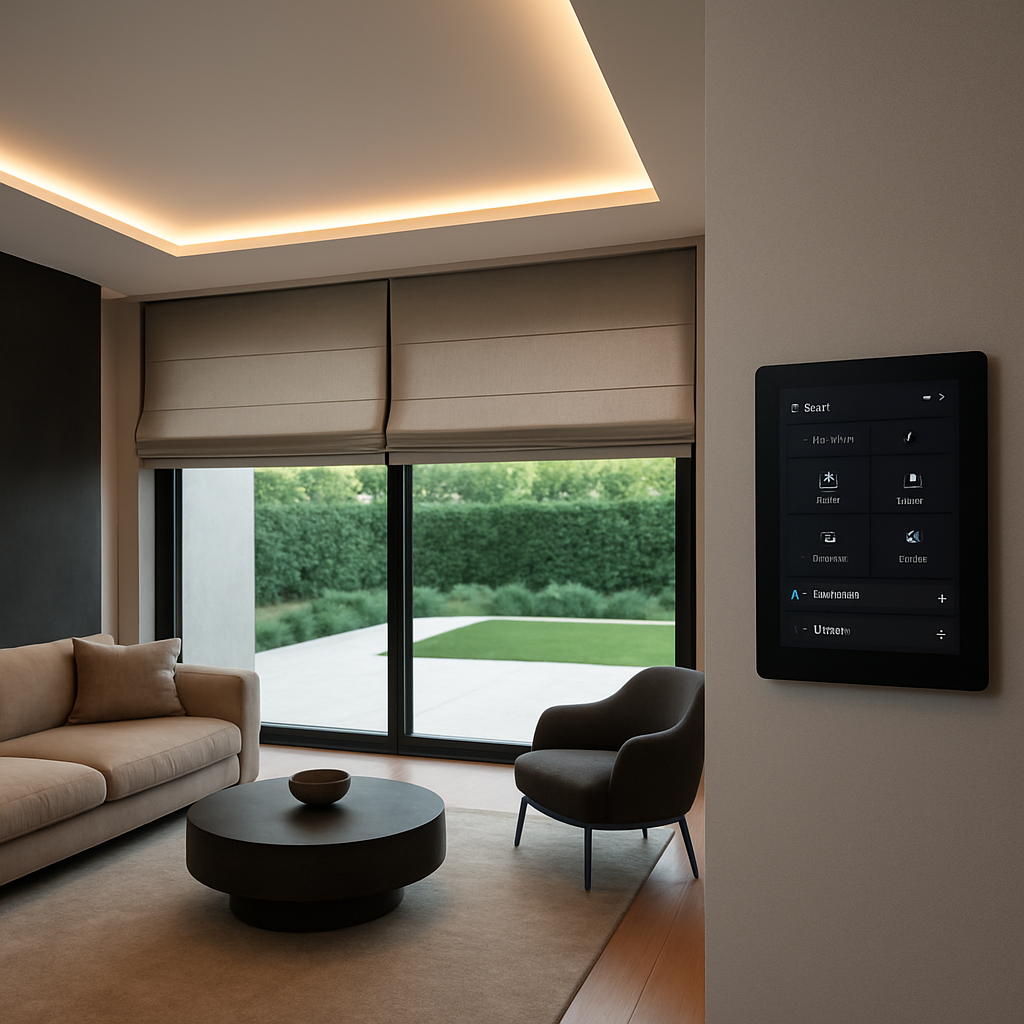
If you’re curious about the tech behind this setup, the following illustration shows a typical control panel layout.
Assessing Your Villa’s Current Infrastructure
Before you can dream about lights that follow you or thermostats that know your mood, you need to know what your villa already has. That first step feels a lot like the pre‑flight check for a plane – you’re not ready for take‑off until the systems are clear.
Think of the villa’s wiring as the nervous system. If you try to add a new nerve without checking the existing circuitry, you end up with a bad shock. The same goes for smart home integration for Dubai villa: every device has to fit into the existing electrical, network, and building envelope.
1. Map the Power and Data Layout
Start with a quick walk‑through. Grab a notepad and mark every outlet, switch, and data jack. Note the brand and age of each breaker and the type of cable running to the Wi‑Fi router. This isn’t just about electricity – you need to know if the network can handle Zigbee, Thread, or Wi‑Fi Mesh for your future sensors.
Tip: If the villa is older than 10 years, look for copper wiring that might need to be replaced with higher‑capacity copper or fiber. In Dubai, many villas still use 240 V circuits that can struggle with high‑power HVAC units unless upgraded.
2. Evaluate Existing Smart Devices
List every gadget you already own – smart bulbs, door locks, cameras. Write down the brand, model, and whether they connect via Bluetooth, Zigbee, or Wi‑Fi. The goal is to see if they can talk to a central hub. If not, you’ll either need a translator bridge or plan to phase them out.
Real‑world example: A villa owner in Palm Jumeirah had a Nest thermostat and a separate Lutron dimmer set. The Nest spoke to Google Home, while the dimmer only had its own app. By installing a Smart Citizens gateway, both devices sync under one voice command, reducing app clutter. smart home tech trends
3. Inspect the Network Backbone
Run a speed test at each corner of the villa. Note any dead spots where Wi‑Fi drops below 20 Mbps. In high‑rise luxury villas, the interference from neighboring towers can be significant. If you spot weak zones, consider adding mesh nodes or upgrading to 5 GHz routers.
Check the current ISP contract – some providers offer fibre‑optic, others just cable. Fibre gives you the bandwidth needed for 4K surveillance streams and real‑time climate control.
4. Verify Building Code and Certification Compliance
Verify Building Code and Certification Compliance. Smart home integration for Dubai villa must meet TDRA certification. This means the devices, wiring, and installation methods must pass local safety standards. Ask your electrician to verify that the breaker panel can handle the extra load of smart HVAC controls and that the wiring complies with the latest UAE building codes.
If you’re uncertain, a quick consult with a TDRA‑approved installer can save headaches down the line. In one case, a developer in Dubai Hills had to re‑wire a hallway to meet TDRA safety thresholds before adding a central air‑conditioning unit. property inspection checklist
5. Conduct a Utility Audit
Grab the recent utility bills for the past six months. Look for spikes during peak hours (usually 7–9 pm). Those spikes often reveal inefficient appliances or a lack of smart scheduling.
Action: Install a smart meter or connect to the utility provider’s API (many in Dubai offer real‑time usage data). This gives you a baseline to measure energy savings after automation.
6. Create a Zone Plan
Group rooms by function – living area, bedrooms, pool deck, office. Each zone will have its own set of sensors and controls. This keeps routines tidy and reduces the risk of a hallway light flickering when the pool heater kicks on.
Example: In a 4‑story villa, the living zone includes motion sensors, dimmers, and a climate controller. The pool zone gets a dedicated leak detector and solar inverter monitoring. This segmentation lets you automate “Night Mode” for the entire house without affecting the pool schedule.
7. Build a Checklist for the Retrofit
Use the following items to guide your installer:
- Confirm all existing outlets are grounded.
- Verify network coverage; add mesh nodes if gaps exist.
- Ensure TDRA certification for new devices.
- Plan for future expansion (e.g., adding a home cinema).
- Document baseline energy usage.
Keeping this list handy turns an abstract upgrade into a concrete roadmap. When the Smart Citizens team arrives, they’ll already know where to start.
8. Pilot a Small Routine
Before you go full‑scale, test one automation. Turn on the living room lights at sunset, set the thermostat to 22 °C, and lock the main door. If everything triggers as expected, you’re ready to expand.
Testing early catches hidden compatibility issues. In Dubai, a homeowner found that the motion sensor in the foyer misread the hallway’s reflective tiles, causing false triggers. Adjusting the sensor angle fixed the problem without buying a new unit.
By walking through each step, you’re not just adding gadgets; you’re building a living, breathing ecosystem that respects your villa’s unique architecture and your personal rhythm.
Ready to turn this assessment into action? Reach out for a free site survey – a quick walk‑through from the Smart Citizens team that pins down what you need before you buy.
Selecting Certified Smart Home Providers in Dubai
Choosing the right vendor is the first step that can make or break your villa’s smart future. The right provider will understand Dubai’s hot climate, local building codes, and the premium aesthetic your home demands. Conversely, a misstep can lead to costly rewiring, compatibility headaches, and a system that feels more like a toy than an extension of your lifestyle.
One of the most visible red flags is the absence of TDRA certification. This isn’t just a bureaucratic checkbox; it’s a guarantee that devices and installation methods meet the UAE’s rigorous safety standards. When you read about a provider’s TDRA credentials, you can skip the extra research and focus on the tech. If you’re still on the fence, dive into our Home Automation Dubai: A Practical Guide for Luxury Villas and Offices – it lays out exactly what TDRA approval should look like and why it matters for your villa’s longevity.
Beyond certification, ask vendors to demonstrate integration flexibility. Your villa likely hosts a mix of legacy appliances, bespoke fixtures, and future‑proof IoT devices. A provider that supports open standards like Thread or Zigbee, and that offers APIs for custom workflows, will let you grow without being locked into a single brand. In practice, this means you can add a new smart irrigation system later, or swap out a lighting brand without tearing down the whole network.
Another key factor is local support. Dubai’s climate can stress electronics, so you’ll need on‑site technicians who speak Arabic, understand the local grid, and can troubleshoot on a weekend when you’re hosting a dinner party. Ask each prospect for a service level agreement (SLA) that details response times, on‑site visits, and spare‑parts availability. A vendor that can send a technician within 24 hours will save you hours of downtime, and it will give you peace of mind when you’re hosting guests.
Cost is inevitable, but it’s not the sole metric. Many installers quote a flat fee that hides hidden charges for hardware, firmware updates, or future‑proofing add‑ons. Request a detailed breakdown: hardware cost, installation labor, software licensing, and a projected ROI based on energy savings and property value uplift. In Dubai, a well‑integrated system can raise resale value by 3‑5 % and cut utility bills by 10‑15 % over five years. Knowing the numbers ahead of time turns a luxury expense into an investment.
When you’re reviewing proposals, don’t be afraid to ask for a live demo. A reputable provider will walk you through a real‑time scenario: turning on the pool lights at sunset, adjusting the thermostat to a “vacation” mode, and locking the main door—all from a single interface. The demo should be reproducible on any device you own, whether it’s your iPhone, an Alexa Echo, or a custom dashboard. If they can’t provide that level of transparency, it’s a warning sign.
Consider the vendor’s ecosystem as a whole. Do they offer a proprietary platform or an open‑source hub? Proprietary systems often promise seamless integration but can be costly to upgrade. Open‑source or multi‑vendor hubs, like those supported by Smart Citizens, give you flexibility to mix and match products while keeping costs in check.
Look at the vendor’s track record with luxury projects. Ask for case studies of Dubai villas, especially those on the Palm or in Dubai Hills. Real‑world evidence of a provider’s ability to navigate the city’s unique electrical load and architectural nuances is a solid confidence boost.
Now, let’s talk productivity. Coordinating multiple installers, hardware deliveries, and testing phases can feel like juggling knives. Setting a Pomodoro timer on Windows can help you stay focused and prevent decision fatigue during the selection process. Read up on How to Set Up a Pomodoro Timer on Windows for Maximum Productivity for a quick, hands‑on guide that will keep you on track.
Once you’ve narrowed down the top three providers, request a side‑by‑side cost comparison and a timeline for each. A transparent schedule that maps out site survey, hardware procurement, installation, and final testing will let you align the project with your personal calendar and avoid surprise delays.
Don’t forget to confirm the warranty and post‑installation support. A 12‑month warranty on hardware coupled with a 24‑hour support hotline is the baseline for any premium smart home solution in Dubai.
In summary, selecting a certified provider isn’t just about picking the cheapest quote. It’s about verifying TDRA certification, evaluating integration flexibility, ensuring local support, scrutinizing costs, watching for a live demo, and confirming post‑installation support. With the right partner, your villa will transform from a static luxury to a living, breathing ecosystem that saves energy and adds value.
| Criteria | What to Look For | Why It Matters |
|---|---|---|
| TDRA Certification | Full compliance with UAE safety standards for all devices and wiring | Ensures long‑term safety, reduces risk of electrical faults, and satisfies future resale inspections |
| Integration Flexibility | Support for Thread, Zigbee, and open‑API access for custom workflows | Allows you to add new devices or swap brands without re‑architecting the system |
| Local Support & Warranty | 24/7 on‑site technician availability and a 12‑month hardware warranty | Minimizes downtime during critical events and protects your investment |
Designing a Customized Smart Home Blueprint
Imagine your villa as a living sketch, where every line of code is a brushstroke and each sensor a subtle shade. Building that sketch isn’t a mystery— it’s a series of honest questions and clear steps. Ready to draft a blueprint that feels like home, not a manual?
Step 1 – Capture Your Lifestyle Blueprint
Start with the everyday. Walk through your villa in the morning and note what you do, when you do it, and why you feel comfortable or annoyed. Do you want the lights to dim automatically when you read? Does the pool water cool precisely when the sun hits the terrace?
Listen to the Daily Rhythm
Write a simple diary for a week: jot down the times you enter the kitchen, the moments you sit on the balcony, the hours you sleep. Patterns will surface—like a 9‑to‑5 work rhythm or a sunset‑after‑dinner routine. These patterns become the heartbeats that your automation will follow.
Step 2 – Map the Physical Canvas
Turn that diary into a map. Mark every power outlet, network jack, and existing smart device. Spot weak Wi‑Fi spots, old copper wires, or hidden conduit that can carry fiber. In Dubai, where high‑performance HVAC and solar inverters are common, a reliable wired backbone can mean the difference between laggy automation and smooth performance.
Use a simple color‑coded spreadsheet: green for wired zones, yellow for wireless, red for gaps. This visual tool will guide where you add new nodes and where you might need a mesh upgrade.
Step 3 – Align Tech with Architecture
Next, match technology to the villa’s architecture. Heavy‑duty stone walls can dampen Wi‑Fi; use directional antennas or repeaters. For high‑rise villas with multiple floors, a mesh Wi‑Fi 6E system paired with Thread‑enabled devices keeps the network humming.
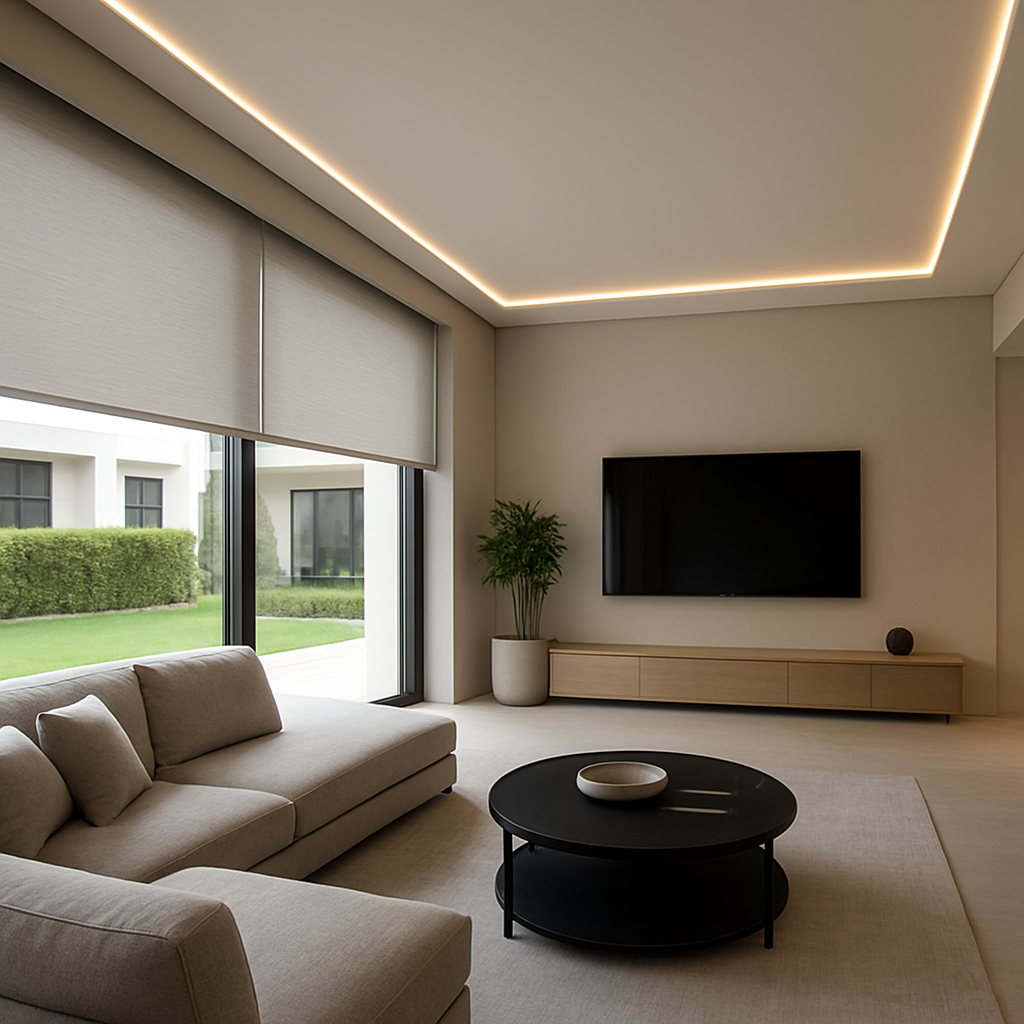
Choose materials that blend with your design: recessed LED profiles that match trim, or smart blinds that hide in the cabinetry. When tech looks like part of the décor, you lose the “gadget” feel and gain seamless living.
Step 4 – Build the Control Nervous System
Choose a Unified Hub
Select a hub that is TDRA certified, supports Matter 1.3+, and offers Thread + Wi‑Fi 6E. The hub is the brain; it should grow with you, not limit you. Avoid proprietary ecosystems that lock you into a single brand, unless you’re sure you’ll never change.
Set Zoning Logic
Define zones that mirror your day: living, guest, pool, office. For each zone, draft a “smart routine” template: “Morning Comfort” (lights, HVAC, music), “Night Guard” (security, lights dim, doors lock). Use conditional triggers—motion, time of day, or voice—to activate them. Remember, less is more; start with two core routines per zone and iterate.
Step 5 – Draft the Future‑Proof Roadmap
Lay out a phased rollout: Phase 1 for core automation (lighting, HVAC, security), Phase 2 for advanced features (smart irrigation, energy monitoring, AI‑driven climate). Include milestones: vendor selection, hardware procurement, installation, testing, and hand‑over.
Plan for scalability: keep open‑API access, support future firmware updates, and reserve a spare port on your gateway for new devices. In a luxury villa, the ability to add a new smart cinema or a pool‑side charging station without rewiring is priceless.
Finally, document every decision—wire paths, device IDs, routine logic—in a shared project folder. This reference will save you headaches when you need to troubleshoot or upgrade later.
By treating your smart home design as a living blueprint, you’re not just installing gadgets; you’re orchestrating an ecosystem that moves with you. The result? A villa that anticipates your needs, conserves energy, and feels unmistakably yours.
Curious how industry experts are pulling this off in Dubai’s luxury villas? Read the in‑depth exploration by Vellum & Forge on smart home integration in Dubai’s luxury villas and see how architecture meets technology in practice. Vellum & Forge’s guide offers real‑world examples that can inspire your own blueprint.
And if you want a concrete walkthrough of how a designer‑led project brought together smart lighting, climate control, and security in a Palm Jumeirah villa, check out DesignMaster’s recent blog post on smart home integrations. DesignMaster’s article showcases how thoughtful placement can elevate comfort and efficiency.
Now that you have a clear plan, it’s time to bring the blueprint to life. Reach out to Smart Citizens for a free consultation—let’s turn your villa into the quiet, intelligent sanctuary you deserve.
Implementing Energy Efficiency & Sustainability Features
When we talk about a smart villa, the first thing that pops into mind is convenience, not a carbon footprint. But in Dubai, where the sun never sets and the grid can be a bottleneck, smart living and sustainability actually go hand‑in‑hand. The goal? Low‑energy homes that still feel luxurious.
Start with Solar + Smart Load Management
Dubai’s sunny days are a gold mine. Pairing rooftop solar with a smart inverter lets you run your HVAC and pool pumps when the sun’s at peak, not at midnight. The inverter talks to the central hub, so when the battery bank is full, excess power can be fed back to the grid—turning your villa into a mini‑utility. In practice, many owners have seen a 15‑20 % drop in daytime electricity bills after installing a managed solar system.
Smart Metering & Real‑Time Dashboards
Without a real‑time view, you’re flying blind. A smart meter that streams usage data to your phone tells you which zone is the biggest energy hog. Imagine seeing the pool heater spike at 4 pm and instantly scheduling a “cool‑down” routine that shifts the load to the night shift. That’s what we call proactive efficiency.
Action Step: Plug in a cloud‑connected meter, set alerts for peaks, and review the data monthly.
So, what if you’re new to meters? No sweat. Many installers ship a single‑device meter that plugs straight into your existing main panel.
LED Lighting + Occupancy Sensors
LEDs are the baseline for any energy‑savvy design, but they’re even smarter when paired with motion and daylight sensors. The system dims or switches off lights automatically in a room that’s empty or already bright enough. In a typical villa, you can reduce lighting energy by up to 30 % with this combo.
Mini‑story: A Palm Jumeirah villa owner noticed her living room lights stayed on while she was out. After installing occupancy sensors, the lights went off after 10 minutes of inactivity, cutting her monthly bill by a few hundred dirhams.
Think about the whole building. If every room follows the same rule, you’ll see a noticeable drop in the aggregate consumption.
Smart HVAC Scheduling + Zoning
Instead of a blanket thermostat that keeps the whole house at 24 °C, zone the HVAC so only occupied rooms cool or heat. Combine that with a schedule that knows you’ll be home from 6 pm to 11 pm and let the system pre‑condition the lounge while you’re in the office.
Tip: Use the hub’s “Away Mode” to reduce temperature by 4 °C when you’re not home, then bring it back to comfort on the way back.
Data from the UAE’s electricity authority shows that smart HVAC can cut annual energy use by 10‑12 % on average.
Water Conservation: Leak Sensors & Greywater Systems
A hidden leak can drain your bill and damage the villa. Installing leak sensors near the pool, water‑line, and even the washing machine gives instant alerts. When a sensor triggers, the system can shut off the feed and start the pool filtration cycle to keep the water clear.
Greywater reuse is another game‑changer. Treating bathroom and kitchen wastewater for irrigation or toilet flushing can shave off 25‑30 % of potable water use. In Dubai, the water tariff is steep, so the savings quickly add up.
Checklist: 1️⃣ Place leak sensors in critical spots 2️⃣ Verify the central hub can trigger automatic shut‑off 3️⃣ Partner with a reputable greywater system installer.
Have you ever imagined the peace of mind knowing your villa is self‑sustaining? It’s not a pipe dream.
Energy‑Efficient Appliances + Smart Scheduling
Even the fridge and dishwasher can be made smarter. Use smart plugs that schedule operation during off‑peak hours. For example, run the dishwasher at midnight when rates are lower, and let the fridge run in eco‑mode.
When you pair appliance schedules with the solar output forecast, the villa runs on clean energy most of the time.
Actionable Step: Map all major appliances, set off‑peak timers, and monitor monthly usage changes.
By the end of this section, you’ll have a playbook that turns energy consumption from a hidden cost to an intentional, measurable metric.
Want a deeper dive into how to wire a villa’s solar system into a smart home hub? Check out Lexa Lifestyle’s guide to smart home installation services, which walks through the hardware choices and integration steps specific to UAE homes.
Maintenance, Support, and Future‑Proofing
Think of your villa’s smart ecosystem like a high‑tech garden: it needs watering, weeding, and a bit of pruning to stay healthy. Explore a security maintenance guide here.
Regular System Audits
Start with a quarterly walk‑through. Open the hub dashboard, pull the last 30‑day log, and check for any failed triggers or missed alerts. A quick check of your irrigation, HVAC, and lighting routines will catch drift before it turns into a billable headache.
When you spot a lagged sensor, replace it. Old batteries in motion detectors are a silent thief of uptime—replacing them saves you from phantom alarms.
Firmware & Software Updates
Your hub, cameras, and smart plugs are like smartphones: they need updates to keep bugs at bay and add new features. Set an auto‑update flag and let the system patch itself overnight.
Don’t ignore a patch note that mentions a security fix. In 2024, a firmware update for several popular camera models closed a vulnerability that could let anyone view live streams. Read about EZVIZ’s AI‑powered security showcase at GITEX. Staying current means you’re not the next headline.
Vendor Support & SLAs
Ask every supplier for a Service Level Agreement that spells out response times, on‑site visit windows, and spare‑part turnaround. A 24‑hour hotline isn’t a perk; it’s a safety net when the pool pump stops at 10 pm.
When you contract a support plan, look for a tier that offers quarterly on‑site health checks. A technician who walks the wiring and checks the mesh nodes every season can spot issues before they snowball.
Proactive Monitoring & Predictive Maintenance
Leverage the analytics layer your hub provides. Set thresholds for temperature, humidity, and power draw. If the HVAC draws 1.5 kW above baseline for more than 30 minutes, you will get an alert— so you can tweak the compressor before it burns out.
Many villas with solar inverters now run a predictive model that flags inverter temperature spikes. Early detection can push maintenance from a costly repair to a simple coolant refill.
Scaling & Adding New Features
Future‑proofing means leaving room for growth. Keep an unused Ethernet or fiber port on your main gateway; that slot is a ticket to a new smart irrigation system or a high‑bandwidth media server.
When you add a new device, integrate it into the existing routine set. For example, install a smart thermostat, then link it to the pool lighting routine so the pool lights dim when the water temperature rises past 28 °C.
Budgeting for Longevity
Set 10 % of your initial installation cost for ongoing maintenance. That covers battery replacements, firmware updates, and the occasional spare‑part order. It also cushions you against the inevitable “upgrade wave” when new standards roll out. In practice, a 5‑year maintenance fund can save a villa owner up to 30 % on total cost of ownership, according to industry studies on smart home longevity.
Wrap Up
Maintenance isn’t a one‑off task; it’s the rhythm that keeps your smart villa humming. Think of updates as fresh coffee, audits as a morning stretch, and support as the trusted friend who knows the back‑up key to every door.
When you plan for the future, you turn your villa from a static showcase into an evolving, energy‑savvy sanctuary. Ready to roll out your own maintenance playbook? Reach out for a free site survey and let us help you map out the path to a worry‑free, future‑ready home.
Conclusion
Smart home integration for Dubai villa isn’t just a tech upgrade; it’s a lifestyle shift. You’ve seen how a single, TDRA‑certified hub can turn scattered gadgets into a seamless voice‑controlled environment. That harmony frees you to enjoy the villa without juggling apps or worrying about hidden costs.
Maintenance becomes a rhythm, not a chore. Schedule quarterly firmware pushes, set alerts for battery levels, and keep spare parts ready. A quick quarterly audit can spot sensor drift before it turns into a bill‑drainer, giving you peace of mind and keeping the system humming for years.
Future‑proofing comes from choosing open standards and a partner who treats you as a collaborator. Because the network stays scalable, you can swap a lighting fixture or add a solar inverter without a full rewrite. That flexibility protects your investment and keeps the villa ready for tomorrow’s tech.
So, what’s your next move? Reach out for a free site survey, share your villa’s quirks, and let the experts craft a tailor‑made plan that feels like home, not a showroom. The first call is free, and you’ll walk away with a realistic timeline and a clear cost estimate. Because your villa deserves technology that grows with you.
FAQ
What is the first step to start a smart home integration for my Dubai villa?
Begin with a simple audit: walk the house, note every outlet, Wi‑Fi hotspot, and existing smart device. Write down brand, model, and connection type. This map tells you where the hub can sit, which zones need extra mesh nodes, and whether the wiring can handle high‑power HVAC or solar inverters. It’s a quick, low‑cost checklist that saves you a lot of headaches later.
Do I need a TDRA‑certified hub to get everything working together?
Yes, TDRA certification is non‑negotiable in Dubai. It guarantees that the hub, wiring, and all connected devices meet local safety standards. A certified hub also makes future inspections painless and keeps your villa ready for resale. Think of it as the safety badge that lets the rest of the system run smoothly without surprises.
How do I keep my smart villa’s energy usage in check?
Layer a smart meter that streams real‑time data into your dashboard. Pair that with occupancy and daylight sensors on each zone. The system can then dim lights, close blinds, or turn off HVAC when rooms are empty or naturally bright. In practice, that setup can cut a villa’s lighting bill by up to 30 % and reduce overall consumption by 10‑15 % annually.
Will a new solar array mess up my existing smart setup?
Not if you integrate the inverter with the central hub first. The inverter talks to the hub, allowing the system to shift loads to solar during peak sun and feed excess power back to the grid. This dance keeps your HVAC and pool pumps running when the sun is strongest, lowering daytime bills by 15‑20 % without any extra wiring work.
What if a device stops working or the firmware lags?
Set automatic firmware updates on all connected gear. If a patch drops, the system will install it overnight, keeping security tight. Keep an eye on the hub’s log for any failed triggers. Replace aging batteries on motion sensors promptly; a dead battery is the silent thief that can turn an alert into a missed event.
How do I add new smart devices without a full system rewrite?
Choose an open‑standard hub that supports Thread, Zigbee, or Wi‑Fi 6E. When you add a new light or thermostat, simply plug it in, register it in the app, and map it to an existing zone. The hub’s API lets you weave the new device into your routines in minutes, not weeks.
What’s the best way to keep the system safe during a power surge or outage?
Install a surge protector at the main panel and an uninterruptible power supply (UPS) for the hub and critical sensors. Program the hub to shut down non‑essential loads when voltage dips, and wake them when power returns. This routine protects delicate electronics and ensures the villa stays responsive, even when the grid hiccups.