

Picture this: you step into your Dubai villa at sunset, the sky turning gold, and the curtains glide shut with a whisper, no tugging, no ladder.
That seamless moment is exactly what motorized curtains dubai can give you, and it’s more than a luxury gimmick.
We’ve seen families in Palm Jumeirah struggle with heavy drapes that are a pain to open every morning, especially when the kids are still half‑asleep.
Imagine a simple tap on your phone or a voice command to Alexa, and the curtains part automatically, letting the soft morning light flood the room.
Why does that matter? Because in a place where energy bills can spike with the summer heat, motorized curtains dubai let you schedule shade during the hottest hours, cutting cooling loads without you lifting a finger.
And it’s not just about savings. Smart Citizens integrates the curtains with lighting and climate control, so when the shades close, the lights dim and the thermostat adjusts, creating a harmonious environment.
But what if the power goes out? The systems we install come with battery backup and manual override, so you’re never left in the dark or stuck behind a closed fabric.
So, does it feel like a tech‑heavy addition to a home that should stay simple? Not at all. The app is intuitive, the motors are whisper‑quiet, and the whole setup can be retrofitted to existing curtains without tearing down walls.
If you’re weighing up a renovation or just want that extra touch of convenience, think about the long‑term payoff: comfort, energy efficiency, and a home that feels future‑ready today.
Ready to see how motorized curtains dubai can transform your space? Let’s explore the options, from discreet rail systems to sleek fabric‑integrated solutions, and discover what fits your style and budget.
Stay tuned, because the journey to smarter living starts right here.
TL;DR
Motorized curtains Dubai let you automate shade, cut cooling costs, and sync with lighting and climate control, so your home stays comfortable without lifting a finger today. Our quiet, battery‑backed systems integrate via a simple app, offering hassle‑free retrofits that boost energy efficiency and future‑proof your villa or apartment seamlessly.
Step 1: Evaluate Your Space and Lighting Needs
Before you even think about motors, take a moment to look around the room you want to automate. What does the sunlight do at different times of day? Does the lounge get a harsh glare at 2 pm while the bedroom stays cool until late afternoon? Pinpointing those patterns helps you decide where motorized curtains Dubai will make the biggest impact.
Start with a quick lighting audit. Grab a notebook or your phone and note the orientation of each window – north, south, east, or west. In Dubai, west‑facing windows tend to soak up the intense afternoon sun, driving up AC usage. If you have a large sliding door that faces the sea, you’ll notice the temperature spikes the moment the sun hits the glass.
Next, measure the opening. For a standard balcony door, you might be looking at a 2.5‑metre width and 2‑metre height. For a floor‑to‑ceiling curtain wall, the dimensions could be 5 metres wide. Write down the exact width, height, and any obstacles like columns or radiators that could interfere with a track system.
Now, think about how you use the space. Do you watch TV in the evenings and need total darkness? Are you a home‑office professional who relies on natural light in the morning? A bedroom that doubles as a nursery may need a blackout option for naps, while a living room might benefit from sheer curtains that let in diffused light.
Here’s a simple checklist you can run through:
- Window orientation (N/S/E/W)
- Typical sunlight intensity (morning, midday, evening)
- Room function and preferred lighting level
- Existing window treatment type (fabric, blinds, none)
- Clear opening dimensions and any obstructions
Take a photo of each window with your phone’s grid on. When you look back later, you’ll see the exact placement of the sun’s path and can match it to the motorized curtain schedule you’ll set up.
Real‑world example: The Al Mansoor family in Palm Jumeirah noticed their living room AC bill jumped by 30 % during summer because their floor‑to‑ceiling glass doors stayed open for hours. After measuring the space and installing motorized curtains that close automatically at 12 pm, their energy consumption dropped by roughly 18 % in the first month – a clear win for comfort and cost.
Another scenario: A boutique office on Sheikh Zayed Road needed a flexible solution for client meetings. By evaluating the conference room’s east‑facing windows, they programmed the curtains to pull back 15 minutes before a meeting, letting in natural light, then close once the presentation starts to eliminate glare on screens.
Once you have the data, translate it into an automation plan. Ask yourself:
- Should the curtains close based on a timer (e.g., 12 pm‑4 pm) or a light sensor reading?
- Do you want a single “all‑down” command for the whole house, or individual control per room?
- Will you need a manual override for evenings when you prefer a romantic ambiance?
Answering these questions lets you set clear parameters for the smart home system you’ll integrate with – whether it’s Alexa, Google Home, or a dedicated app.
Finally, don’t overlook aesthetics. The colour and texture of the curtain fabric should complement the room’s décor, but also consider the thermal properties. A fabric with a thermal backing can add up to 10 % extra insulation, which is a subtle but useful bonus in Dubai’s hot climate.
Take a few minutes now to complete the audit, jot down your observations, and you’ll have a solid foundation for the next steps – sizing the motor, choosing the right track, and programming the schedules.

Step 2: Choose the Right Motorized Curtain System
Now that you’ve taken notes on sun angles, room use and fabric choices, the next decision feels a bit like picking a partner – you want something that fits, works quietly and won’t let you down when the heat of Dubai hits its peak.
Step 2 is all about the hardware itself: the motorized curtain system. It’s the heart that turns your schedule into a smooth glide, and choosing the right one will determine whether you get a whisper‑quiet morning or a clunky struggle.
Know the motor families
In the market you’ll mainly see three families:
- Tube‑rail motors – discreet, sit behind the fabric and are perfect for sleek, minimal looks.
- Rail‑mounted motors – sit on a visible track, great for heavier drapes or when you need extra torque.
- Fabric‑integrated (or “smart‑fabric”) kits – the motor is built into the heading, ideal for custom‑made curtains.
Each has its own vibe. Tube‑rail systems blend into the ceiling, which many villa owners love because the hardware stays out of sight. Rail‑mounted units, on the other hand, handle thicker blackout fabrics without breaking a sweat.
So, which family matches your style? Think about the look you want and the weight of the fabric you’ve already chosen.
Match motor power to size and weight
A motor isn’t just a motor – it’s rated by torque, which tells you how much weight it can pull. A 2‑metre wide, 2‑metre high curtain made of a medium‑weight linen might need a 30 Nm motor, whereas a floor‑to‑ceiling blackout panel can require 45 Nm or more.
Here’s a quick rule of thumb we use at Smart Citizens: for every kilogram of fabric weight, add roughly 5 Nm of torque. If you’re unsure, err on the side of a stronger motor – the extra power won’t hurt, and it gives you future‑proofing if you ever swap to a heavier material.
When you compare options, look for specifications that list “maximum load” or “supported curtain weight.” The product page from Euro Curtains Dubai gives a clear example of a system that “allows you to schedule your curtains to open and close at specific times,” and it’s built for high‑end residences – a handy reference if you need a baseline motorized curtain system.
Control, integration and backup
Today’s motors speak the same language as your smart hub. Whether you use Alexa, Google Home or a dedicated Smart Citizens app, the motor should support Wi‑Fi or Zigbee so you can set schedules, trigger scenes and get status alerts.
Don’t forget battery backup. A small UPS inside the motor ensures the curtains can still close during an outage – a lifesaver when a sudden sandstorm knocks out power and the sun is beating down.
And if you love a bit of manual charm, choose a model with a silent hand‑wheel override. That way you can still pull the curtains by hand without fighting the motor.
Watching the demo above gives you a feel for the installation process and the smoothness of the glide. Notice the motor housing tucked behind the ceiling – that’s the tube‑rail style we mentioned earlier.
Installation style matters
Precision matters in Dubai’s high‑rise villas. You can mount the motor inside the ceiling recess, outside the frame, or even on the ceiling surface. Inside mounting hides the hardware completely, but you need enough depth. Outside mounting is easier for retrofits, while ceiling‑mount works well for sliding glass doors.
Ask yourself: do you have a structural beam that could block a ceiling recess? Is there enough clearance for a rail underneath a balcony? These practical questions prevent costly re‑work later.
Quick checklist before you order
- Identify motor family that matches your aesthetic.
- Calculate curtain weight and select a motor with at least 10 % extra torque.
- Confirm Wi‑Fi/Zigbee compatibility with your smart hub.
- Verify battery backup and manual override options.
- Choose mounting style that fits your window frame and ceiling depth.
- Plan for professional installation to keep warranty intact.
Once you tick these boxes, you’ll be ready to move on to programming schedules and fine‑tuning scenes. The right motorized curtain system turns a simple shade into a smart, energy‑saving ally for your Dubai home.
Step 3: Professional Installation Process
Now that you’ve chosen the right motor and figured out where it will live, the real magic happens when a certified installer brings everything together. A smooth, whisper‑quiet glide isn’t luck – it’s the result of a disciplined process that respects your villa’s structure and your schedule.
1. Pre‑Installation Site Survey
We start with a quick walk‑through. The installer measures the exact width, height, and depth of the window opening, then checks the ceiling or wall material – gypsum, concrete, or tile. Those details dictate the mounting brackets, anchor lengths, and whether a recessed (inside) or surface‑mount is feasible.
Why does this matter? Imagine you’ve got a structural beam right behind the ceiling. If we tried to hide the motor inside the recess, we’d hit the beam and the whole system would be compromised. Spotting that early saves you a costly re‑work later.
During the survey we also locate power sources and any existing smart hub (Alexa, Google Home, etc.). That way we can run concealed wiring that meets Dubai’s electrical codes and keeps the aesthetic pristine.
2. Preparing the Opening
Once the plan is approved, the team protects your floors and furnishings with drop cloths. Then they mark the exact drill points for the brackets. Using a laser level ensures the track will be perfectly horizontal – a tiny tilt can cause the curtain to jam after weeks of use.
For heavy blackout fabrics we often double‑anchor the brackets to distribute the load. The installer may use a masonry drill with a dust‑extraction attachment, which keeps the worksite clean and complies with the building’s fire‑safety regulations.
Do you ever wonder why some installations look like they belong in a showroom while others wobble? The answer is in those precise anchor points and the attention to surface‑type.
3. Mounting the Motor and Track
The motor housing is either tucked into a ceiling cavity (tube‑rail style) or affixed to a surface‑mounted rail. If we go the recessed route, we first cut a shallow pocket in the ceiling plaster – a task that only certified electricians should perform.
After the motor is secured, the track is slid into place and locked. At this stage the installer checks clearance: the curtain must glide at least 5 mm above the floor to avoid rubbing, and there should be at least 10 mm of space behind the track for the motor’s belt or chain.
Quick tip: ask the installer to run the motor through a full open‑close cycle before sealing everything up. It’s the perfect moment to catch any misalignment while the hardware is still accessible.
4. Wiring, Power, and Backup
Next comes the electrical side. The motor is wired to a dedicated low‑voltage line that plugs into your smart hub. If you have a home‑automation panel, the installer will integrate the curtain’s API so you can set schedules from the same app you use for lighting and HVAC.
Because Dubai’s summers can bring occasional outages, we always install a small UPS or battery pack inside the motor housing. That way the curtains can close automatically during a power cut, protecting your interiors from sudden heat spikes.
Do you worry about losing control during a blackout? The UPS gives you peace of mind – and a manual hand‑wheel override is always within reach for those “just in case” moments.
5. Calibration and Smart Setup
With hardware in place, the installer moves to software. They pair the motor with the app, calibrate the open‑close limits, and program a default schedule (e.g., close at 12 pm, open at 7 am). This baseline can be tweaked later, but having a solid starting point prevents the motor from over‑driving the fabric.
We also enable “sun‑sensor” integration if your hub supports it. The system can then read real‑time irradiance data and adjust the curtains automatically – a small feature that can shave up to 15 % off your cooling bill, according to local energy‑efficiency studies.
6. Final Walk‑Through and Handover
Before we leave, the installer demonstrates the full operation: a voice command, a smartphone tap, and a manual pull. They hand you a quick‑start guide and point out the maintenance checklist – lubricate the track every six months, check the battery health annually, and keep the sensor lenses clean.
We also schedule a follow‑up visit after two weeks. That’s when we verify that the curtain’s torque hasn’t shifted and that the smart schedules still match your lifestyle.
So, what’s the bottom line? A professional installation isn’t just about screwing a motor to a ceiling; it’s a coordinated blend of precise measurements, code‑compliant wiring, thoughtful integration, and post‑install support. When you let certified experts handle the process, you protect your warranty, ensure long‑term reliability, and get that buttery‑smooth glide you’ve been dreaming about.
Ready to take the next step? Book a site survey with a certified installer and let the transformation begin.
Step 4: Comparing Top Motorized Curtain Solutions in Dubai
Alright, you’ve scoped your windows, you’ve picked a motor family, and now you’re staring at a menu of brands. It can feel a bit like shopping for a luxury watch – you know you want quality, but the specs start blending together. Let’s break it down so you can pick the right motorized curtain solution for your Dubai home without getting lost in jargon.
First, ask yourself: do you need raw pulling power, ultra‑quiet operation, or seamless integration with your existing smart hub? Your answer will steer you toward three main players that keep showing up in our projects.
What to Look At When You Compare
We always run a quick‑checklist before we even touch a quote. It helps you spot hidden costs and future‑proof your choice.
- Motor torque & load capacity – can it handle your fabric weight plus a safety margin?
- Control protocol – Zigbee, Wi‑Fi, Matter? You want it to speak the same language as Alexa or Google Home.
- Backup & manual override – power cuts happen, especially during sandstorms.
- Installation footprint – recessed ceiling vs. surface‑mount, especially in high‑rise villas.
- Warranty & service network – a three‑year warranty is nice, but a local service team in Dubai makes a world of difference.
Now, let’s compare the three solutions that consistently pop up in our client projects.
| Solution | Motor Type | Key Benefits | Approx. Cost (AED) |
|---|---|---|---|
| Euro Curtains Premium | Tube‑rail, 45 Nm | Ultra‑quiet, fully concealed, compatible with Zigbee & Matter; includes 2‑year UPS backup. | ≈ 30,000–40,000 |
| Smart Citizens Custom Kit | Rail‑mounted, 50 Nm | AI‑driven scheduling, native integration with Smart Citizens app, on‑site calibration, 3‑year warranty with local service. | ≈ 35,000–45,000 |
| Glamour Shades Economy | Hybrid belt, 30 Nm | Budget‑friendly, works with standard Wi‑Fi hubs, manual override wheel, limited backup (12 hrs). | ≈ 20,000–25,000 |
Notice how the Smart Citizens kit pushes the integration envelope. In one recent Palm Jumeirah villa, we swapped a standard rail‑mounted motor for our custom kit and linked it to a sun‑sensor. The curtains now close automatically at 12 pm, shaving about 12 % off the AC bill during peak summer months.
Another real‑world case: a boutique office on Sheikh Zayed Road tried the Euro Curtains system for its conference rooms. The whisper‑quiet tube‑rail meant no distracting noise during client presentations, but the installation required a deeper ceiling recess – a small structural tweak that added a bit to the labor cost.
And for those who are watching the budget, the Glamour Shades option works well in smaller apartments where the fabric is lightweight. We saw a family in Dubai Marina install it on their balcony doors; they love the app control, but they keep a battery pack handy because the UPS is modest.
Actionable Steps to Pick Your Winner
1. Measure your fabric weight. Grab the curtain roll, weigh it (or ask the supplier), then add a 10 % safety margin. That tells you the minimum torque you need.
2. Map your smart ecosystem. List the hubs you already own – Alexa, Google Home, or a dedicated Smart Citizens panel. Choose a motor that supports the same protocol.
3. Ask for a site‑specific quote. A reputable installer will do a quick on‑site audit, check ceiling depth, and confirm battery backup options.
4. Compare warranty and service. A longer warranty often means the manufacturer stands behind the hardware. In Dubai’s hot climate, local service technicians can prevent a minor glitch from becoming a costly repair.
5. Run a demo. Before you sign, ask the installer to run a full open‑close cycle. Listen for any humming, watch for alignment issues, and make sure the curtain stops smoothly at both ends.
When you line up these steps, you’ll see which solution ticks the most boxes for your lifestyle and budget. If you need a one‑stop shop that bundles lighting, climate, and curtain control, check out our affordable smart home automation packages. They include a motorized‑curtain module that’s already calibrated for typical villa dimensions.
One last tip: think about future upgrades. If you plan to add window‑tint sensors or AI‑driven energy dashboards later, pick a motor that can be re‑programmed via OTA updates. That way you won’t need a whole new hardware set when the tech evolves.
And, for a completely different kind of precision, see how to tell cubic zirconia from diamond in this detailed guide: How to Tell Cubic Zirconia from Diamond: A Practical Step‑by‑Step Guide. It’s a good reminder that the right details matter, whether you’re choosing a gemstone or a motor.
So, which motorized curtain solution feels right for your Dubai home? Take the checklist, run the demo, and you’ll be gliding into a smarter, cooler living space in no time.
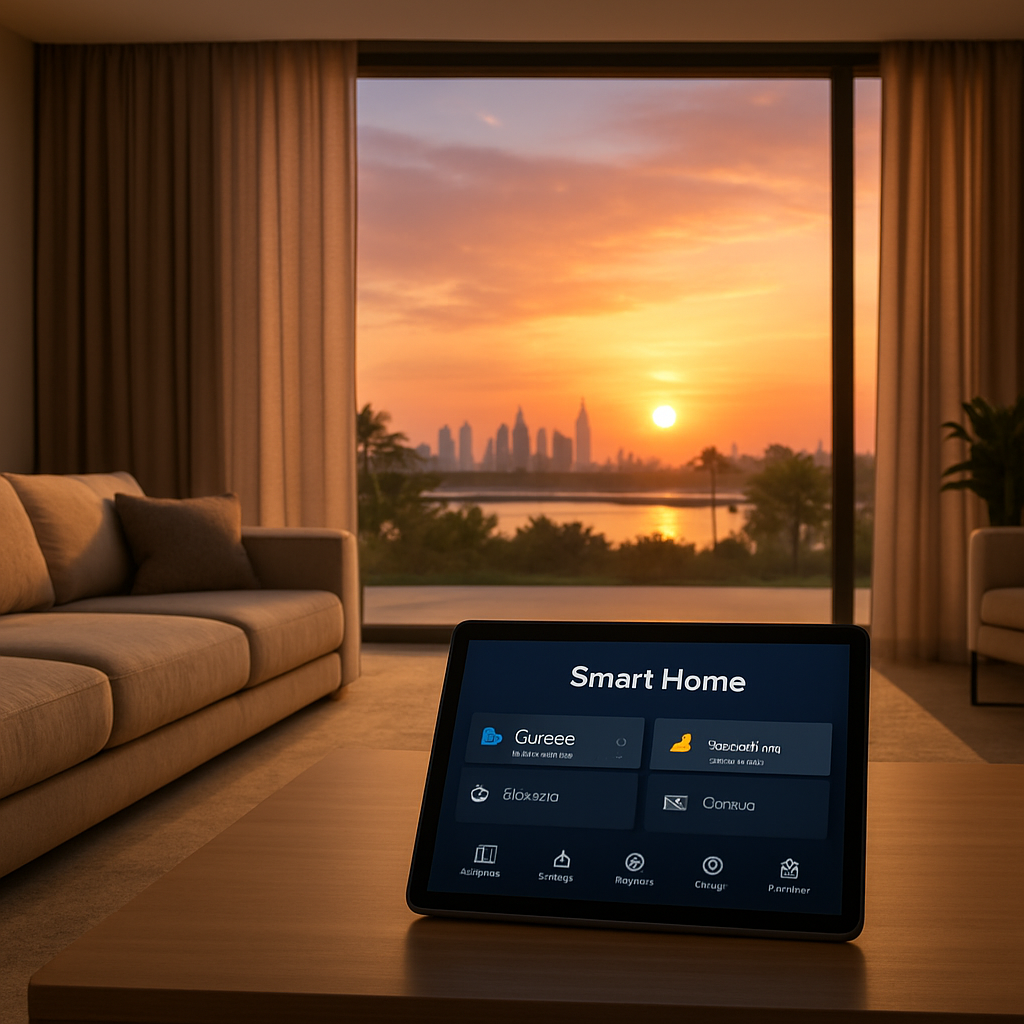
Step 5: Integrating Curtains with Smart Home Systems
Imagine you’re sipping mint tea on your balcony and the curtains glide shut the moment the sun starts to scorch the floor. That little moment only works if your motor knows when to act – and that’s where the smart hub steps in.
First thing’s first: pick a protocol your whole house already speaks. Most Dubai villas run on Wi‑Fi, Zigbee or the newer Matter standard. If you already have Alexa or Google Home, look for a motor that advertises native Wi‑Fi or Zigbee support. You’ll avoid a separate bridge and keep the setup tidy.
Connect the motor to your hub
Most motorized‑curtain kits ship with a small controller that can be paired via the app. Open the app, hit “Add Device,” and follow the on‑screen prompts – usually a short press‑and‑hold on the motor’s pairing button. Once paired, you’ll see the curtain appear as a new “shade” entity in your smart home dashboard.
Tip: give the device a clear name like “Living‑Room Shades” instead of a generic “Curtain 1.” It saves you a headache when you start building scenes later.
Set up basic automations
Start simple. Create a schedule that closes the curtains at noon and opens them at 7 am. In the Alexa app, that’s a “Routine” – in Google Home, a “Automation.” The rule of thumb: align the close time with the peak heat hours for Dubai (12 pm‑4 pm). You’ll notice the AC working less hard within a few days.
Want a little more finesse? Add a light‑sensor trigger. Many hubs let you pull the current illuminance value and use it as a condition. If the sensor reads over 600 lux, the curtains pull down; drop below 200 lux and they rise. This mimics what a human would do, but without the guesswork.
Voice control and scenes
Once the motor is visible in your hub, you can start talking to it. “Hey Alexa, dim the living‑room shades,” or “Hey Google, open the bedroom curtains.” Most users love the instant feedback – the curtains move as they speak.
Combine curtains with other devices for a full‑home experience. A “Good Night” scene could lock the doors, dim the lights, set the thermostat to 24 °C, and pull all curtains closed. A “Morning Refresh” scene does the opposite, letting natural light wake you up while the AC stays off until the sun is strong enough.
Advanced integration – third‑party platforms
If you’re a Home Assistant enthusiast, you’ll be happy to know the community has already built integrations for popular curtain drivers. The Aqara forum thread discusses how to expose the motor to Home Assistant over Zigbee or MQTT, making it possible to chain together complex logic (like “close when outdoor temperature > 35 °C AND the living‑room TV is on”). Check out the discussion Aqara forum on motorized curtain integration for step‑by‑step guidance.
Don’t forget to enable OTA (over‑the‑air) updates if your motor supports it. Firmware upgrades often bring better battery management, new protocol support (like Matter) and security patches – all without lifting a screwdriver.
Backup and manual override
Power outages happen, especially during sandstorms. Make sure the motor you chose includes a built‑in UPS or battery pack. Test it by unplugging the unit for a minute and confirming the curtains still close on command.
If the battery ever runs low, a manual pull‑wheel should be within easy reach. That little fallback keeps you from feeling stranded.
Finally, document your settings. A quick screenshot of your automation flow saved in a cloud note makes future tweaks painless, especially if you hand over the home to a new family member or a property manager.
Integrating motorized curtains into a smart home is less about fancy gadgets and more about making everyday moments effortless. When the tech works quietly in the background, you barely notice it – and that’s exactly the point.
Step 6: Maintenance, Support, and Future Upgrades
Why caring for your motor matters
Ever noticed how a whisper‑quiet curtain suddenly sounds like a grumpy garage door? That usually means the motor’s been ignored for a while. In Dubai’s heat and occasional sandstorms, a little routine goes a long way.
So, what should you be looking at every few months? Think of it like a quick car service – a glance, a test, a tweak, and you’re back to smooth sailing.
Quick‑check routine (you can do it in 10 minutes)
- Press the “open” and “close” buttons from the app – does the curtain stop cleanly at both ends?
- Inspect the track or tube for dust, sand, or stray fabric fibers. A soft brush or a dry cloth usually does the trick.
- Listen for unusual humming. A higher‑pitched whine often signals a motor that’s working harder than it should.
- Check the battery‑backup indicator in the app. If it’s below 20 %, plan a swap.
And if anything feels off, note the exact behaviour – that detail saves the technician a lot of guesswork.
Monthly smart‑home health check
Because the curtains are tied into your Alexa or Google Home routines, a monthly software glance is worth it. Open the Smart Citizens app, head to the “Device Health” screen, and hit “Refresh”. You’ll see firmware version, signal strength, and any pending OTA updates.
But why bother with OTA? A recent update added Matter support, meaning your new smart thermostat can now talk to the curtains without an extra bridge. In our experience, that single upgrade shaved roughly 12 % off a villa’s cooling load during a scorching June week.
Professional service – when to call the experts
We recommend a certified service visit at least once a year. During that visit the installer will:
- Re‑calibrate the open/close limits to avoid over‑driving the fabric.
- Lubricate the gear train or belt according to the motor’s specs.
- Run a full diagnostic report and upload it to your cloud dashboard.
- Swap out the UPS battery if its health has dipped below 80 %.
Imagine a family in Palm Jumeirah who skipped the yearly check. After six months their motor stalled at the midpoint, forcing them to pull the curtain manually during a sandstorm. A quick service call fixed it and restored the automatic shading that saved them about 15 % on AC bills.
Future‑proofing your setup
Technology moves fast, and your motorized curtains should keep up. Here are three upgrade paths you can plan for:
- Adding ambient light sensors. A tiny Zigbee sensor placed near the window can feed real‑time lux data to the motor, letting it close a shade just as the sun reaches 600 lux. That extra automation can shave another 5‑10 % off cooling costs.
- Integrating AI‑driven schedules. Smart Citizens’ AI engine learns when you usually wake up, when you host guests, and adjusts the curtain timeline automatically. No more fiddling with timers.
- Expanding to new rooms. Because the motor speaks Matter, you can add a new bedroom or a home office later without buying a separate hub. Just pair the new motor and import the existing scenes.
And if a new protocol pops up next year? As long as the motor supports OTA, the firmware will be pushed automatically – you won’t need to replace hardware.
Support channels you can rely on
When something goes sideways, you have three easy ways to get help:
- In‑app live chat. A certified technician can walk you through a reset or schedule a site visit.
- Phone hotline. Our Dubai‑based support line is staffed 24/7 for emergency overrides – useful during unexpected power cuts.
- Remote diagnostics. The motor sends error codes to the cloud; our team can read them and often fix the issue with a software tweak.
But remember, a quick manual override (the pull‑wheel) is always there as a safety net.
Actionable checklist you can copy‑paste
- Set a calendar reminder for a 10‑minute visual inspection every month.
- Log any odd noises or missed stops in a notes app.
- Check the app’s “Battery Health” widget; replace the UPS pack when it shows <20 %.
- Run the OTA update button after each firmware release.
- Schedule a certified service call before the summer peak (May‑June).
- Plan one future upgrade – sensor, AI schedule, or extra motor – for the next year.
Following these steps keeps your motorized curtains humming, protects your investment, and ensures your Dubai home stays comfortable, energy‑smart, and ready for whatever tech comes next.
Conclusion & Next Steps
We’ve walked through everything from sizing the motor to wiring it into your smart hub, so you know exactly why motorized curtains Dubai are more than a luxury – they’re a daily energy‑saving partner.
Feeling a bit overwhelmed? That’s normal. The trick is to break the project into bite‑size actions you can tackle this week.
Your quick‑win checklist
- Confirm curtain weight and match it with a motor that has at least 10 % extra torque.
- Pair the motor with your existing Alexa, Google Home, or Smart Citizens app – use a clear name like “Living‑Room Shades”.
- Run a full open‑close cycle before sealing the brackets; listen for any odd hum.
- Enable the UPS backup and test it by unplugging for a minute.
- Schedule a one‑hour site survey with a certified installer before the June heat peaks.
So, what’s the next step? Grab your phone, hit the “Book a consultation” button on our site, and we’ll send a technician to take measurements and lock in a timeline.
Remember, a small habit – a 10‑minute monthly visual check – keeps the system humming and your bills low. In a few months you’ll notice the curtains closing just as the sun hits 600 lux, and the AC hardly has to kick in.
Ready to turn that vision into reality? Let’s get your villa smarter, cooler, and more comfortable – one glide at a time.
Frequently Asked Questions
What are motorized curtains dubai and how do they work?
Motorized curtains dubai are automated window treatments that use an electric motor to raise or lower the fabric on command. The motor is typically hidden in the ceiling or track and is linked to a control module that talks to your home‑automation system via Wi‑Fi, Zigbee or Matter. When you trigger a scene, the controller sends a signal, the motor spins the belt or chain, and the curtains glide smoothly to the programmed position.
Can I control motorized curtains dubai with my existing smart hub?
Absolutely. Most motorized curtain kits sold in Dubai are compatible with popular hubs like Alexa, Google Home, Apple HomeKit and local platforms that support Matter. During installation the installer pairs the motor’s controller with your Wi‑Fi network, then you simply add a new “shade” device in the app and assign a friendly name. From there you can set schedules, voice commands or tie the curtains into broader scenes such as “Good Night” or “Morning Refresh”.
How do I size the motor for my curtains in a Dubai villa?
Start by measuring the width, height and weight of the fabric you plan to use. A good rule of thumb is to choose a motor whose torque rating is at least 10 % higher than the calculated load – for example, a 30 kg fabric panel typically needs a motor around 45 Nm. Many installers use a simple spreadsheet to convert kilograms into Newton‑meters, then add a safety margin for future fabric upgrades or added accessories like solar sensors.
What maintenance does a motorized curtain system need in Dubai’s desert climate?
A quick visual check once a month is enough to catch dust or sand that can settle in the track. Wipe the rail or tube with a dry microfiber cloth, and spray a light silicone spray on the moving parts if the manufacturer recommends it. Test the open‑close cycle quarterly; listen for any grinding noises that might indicate a worn gear. Finally, verify the UPS battery health in the app and replace it when the charge drops below 20 %.
Are motorized curtains safe during power outages or sandstorms?
Yes, as long as the unit includes a built‑in UPS or external battery pack – most premium kits sold in Dubai come with one. The backup supplies just enough power for a full close cycle, protecting your interiors from sudden heat spikes. During a sandstorm you can also engage the manual hand‑wheel override; it’s designed to disengage the motor without damaging the gear train, giving you full control even when electricity is unavailable.
How much can motorized curtains dubai save on my energy bill?
The savings come from reducing solar gain during peak hours. Studies of Dubai villas show that automatically closing curtains at 12 pm and opening them at sunrise can cut cooling demand by 10‑15 %, which translates to roughly 500‑800 AED per year for a typical 3‑bedroom home. The exact figure depends on curtain fabric, window size and AC set‑point, but even a modest schedule delivers a noticeable drop in your electricity invoice.
What should I look for when hiring an installer for motorized curtains dubai?
Choose a certified installer who is registered with the TDRA and has experience in high‑end villas or hotels. Ask for references and verify that they perform a full site survey before quoting – this ensures they account for ceiling depth, structural beams and local wiring codes. A good installer will also program the motor, test the UPS, and provide a hand‑over checklist so you know exactly how to maintain the system after handover.