
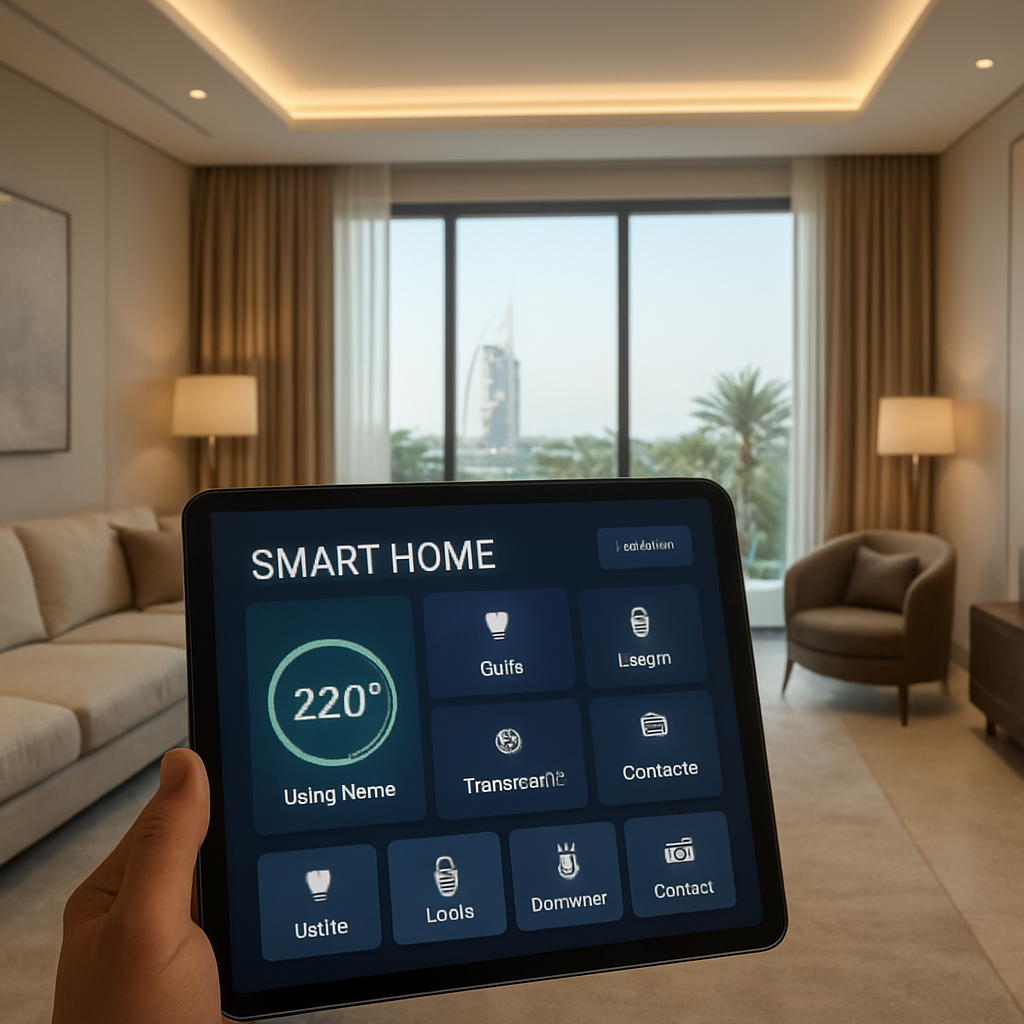
Picture this: a sprawling Dubai villa where every switch, light, and climate control feels like an extension of your own mind. That’s not science fiction anymore; it’s the new standard for luxury homes in the UAE.
You’ve probably heard the buzz that a smart system can turn a house into a personal assistant, but how does that translate into real, tangible benefits for someone living in a villa on Palm Jumeirah or Jumeirah Bay?
What I’ve seen over the past decade is that the smartest homes are not just about convenience—they’re about creating an environment that anticipates your needs, saves energy, and even protects your investment.
Imagine stepping into your villa after a long day, and the lights dim automatically, the thermostat adjusts to your preferred temperature, and a soft notification on your phone reminds you that the garden sprinklers have just turned off—no manual clicks required.
So, what does that mean for you? It means that smart home technology Dubai villa is more than a buzzword—it’s a gateway to peace of mind, a boost in home value, and a step towards a sustainable lifestyle in the desert heat.
At Smart Citizens, we’ve partnered with developers, homeowners, and government bodies across Dubai to translate this vision into tangible systems—whether it’s an AI‑driven climate control that learns your schedule or a seamless security layer that feels like a silent guardian.
Now that you know the promise, it’s time to ask: are you ready to let technology become the quiet curator of your villa’s daily rhythm?
You might wonder how much it will cost or how the installation fits into a busy lifestyle. The truth is, most modern solutions are modular, letting you start small and scale as your family grows, while the initial ROI comes from lower energy bills and increased property value.
TL;DR
Smart home technology Dubai villa automates lights, climate, security, and water with AI‑driven systems that learn your routines, cut energy bills, and boost resale value. With modular installation, you can start small—install a smart thermostat or lighting hub—and scale up as your family grows, turning your villa into a sanctuary.
Step 1: Define the Smart Home Scope for Your Dubai Villa
Imagine you’re standing in the living‑room of your new Palm Jumeirah villa. The sun is dipping behind the Dubai skyline, the air conditioning hums softly, and the smart lighting dimming to a warm amber. That feeling? It’s not just ambience—it’s the outcome of a well‑defined smart home scope.
First, ask yourself: what does “smart” mean for you? It could be anything from a single thermostat to an entire AI‑driven ecosystem that learns your routine. In a Dubai villa, the stakes are high: energy costs, water conservation, security, and resale value all play into that decision.
Start with a simple checklist. 1️⃣ Energy. Dubai’s peak summer temperatures can push an average villa’s cooling bill up by 30% compared to the rest of the UAE. A zone‑based smart thermostat can cut that figure by up to 20%—that’s a savings of AED 1,500‑2,000 a month for a typical 500‑m² property.
2️⃣ Water. Smart irrigation systems can reduce lawn water use by 40% while keeping the greenery lush. If your villa has a pool, a smart pool controller keeps the water temperature optimal, cutting heating costs by about 15%.
3️⃣ Security. Motion‑sensing cameras, facial‑recognition door locks, and automated visitor management give you peace of mind whether you’re in the office or on a vacation in the Emirates.
4️⃣ Convenience. Voice‑controlled lighting, scene presets for dinner parties, and remote‑control of appliances turn everyday chores into a single tap.
Now, let’s talk scope. Many villa owners start with one module—say, a smart thermostat. That’s fine. The key is to keep the architecture open. A modular platform lets you add smart lighting, a pool manager, and a security suite without rewiring the whole house.
When you’re drafting your scope, involve the whole family. Ask questions like, “Which rooms would benefit most from automation?” or “Would you like a garden that waters itself?” Their answers reveal hidden priorities.
Once you’ve mapped out the functional areas, it’s time to assess the infrastructure. Does your villa already have a fiber‑optic backbone? Are there existing smart plugs you can leverage? If not, plan for an in‑home network upgrade that supports Wi‑Fi 6 and mesh coverage across balconies and terraces.
Don’t forget compliance. In Dubai, the Telecommunications Regulatory Authority (TDRA) requires that all IoT devices meet local standards. Choosing certified solutions reduces the risk of downtime or regulatory fines.
At Smart Citizens, we’ve seen homeowners move from a single smart bulb to a full‑home ecosystem in just a few months. The secret? Start small, measure, and expand. Use the data from a smart thermostat to justify the next investment in lighting or irrigation.
For a deeper dive into how to layer these systems, you might find the Home Automation Dubai guide helpful. It walks through design, certified devices, AI integration, and maintenance, all tailored for premium villas.
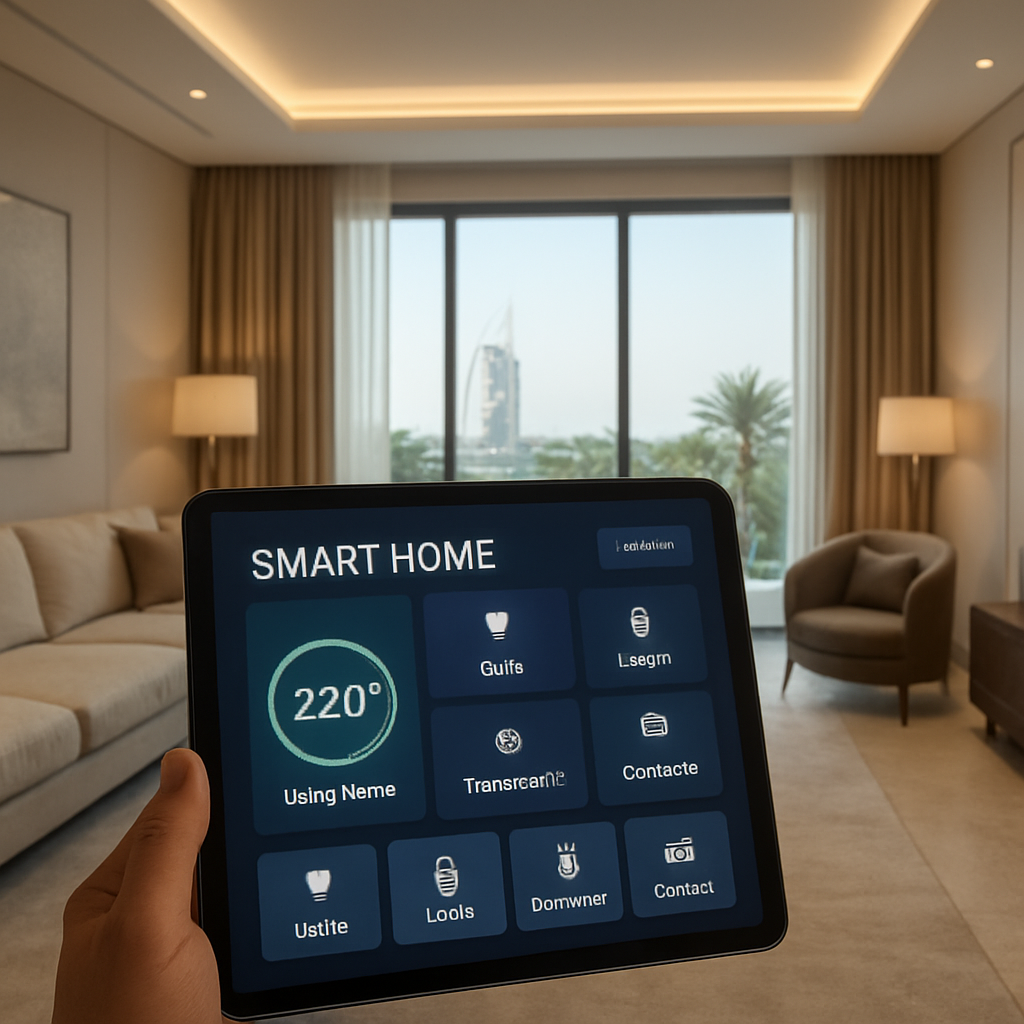
While you’re planning, consider the lifestyle side. A well‑scoped smart home isn’t just about saving money—it’s about freeing up time for the things that matter. Picture arriving home after a long day; the lights dim, the pool warms to the perfect temperature, and your favorite playlist starts in the kitchen—all without you lifting a finger.
We’ve also found that setting up a small “smart zone” in the home office or a guest suite can be a low‑risk, high‑reward testbed. Once you see the benefits, the rest of the villa follows.
To keep your productivity high while you’re configuring the system, you might want to try a Pomodoro timer on your Mac. The Pomodoro Timer Mac Guide shows how to set up short, focused bursts of work—great for tackling a complex installation plan.
And if you’re planning a move to another part of the UAE or need reliable transport while your villa is being upgraded, a reliable car service can keep you on schedule. The Your Complete Guide to Boston to Hartford Car Service provides insights on booking, timing, and vehicle selection—skills that translate well to managing smart‑home logistics.
Remember, the goal is to make the system feel invisible, not intrusive. Every feature should feel like a thought, not a command.
If you’re unsure about which devices to choose, start with a proven ecosystem that offers seamless integration across brands.
In short, defining the smart home scope for your Dubai villa is about blending technology, energy efficiency, and lifestyle goals into a cohesive plan. Start with clear priorities, stay modular, and keep the family involved. The result? A villa that not only looks futuristic but also works in the background, giving you more time to enjoy the skyline, the beach, and the people you love.
Step 2: Select the Right Smart Home Platform and Devices
When the scope is mapped, the next move feels like picking the right gear for a road trip. It’s not about grabbing every gadget that glitters; it’s about choosing a platform that stitches the pieces together quietly.
Pick a Unified Hub
Your villa can house dozens of devices, but they need a command center. Think of the hub as the conductor of an orchestra—every instrument (light, thermostat, camera) plays in harmony when the right leader is in place.
Look for platforms that support multiple protocols: Wi‑Fi, Zigbee, Z‑Wave, and even Thread. That way you won’t be stuck buying separate bridges for each brand. A single, certified hub that’s TDRA‑approved keeps the system lean and compliant.
Start With Core Sensors
Before you hit the lights, plant the foundation with occupancy and environmental sensors. These small devices learn when a room is in use, the humidity, and even the CO₂ level. In a Dubai villa, that data is gold—smart HVAC can shave 20% off cooling bills when it knows which rooms are empty.
- Motion sensors: trigger lights only when someone walks in.
- Temperature & humidity probes: feed the thermostat for precise control.
- Water flow meters: catch leaks early and adjust irrigation schedules.
Layer Lighting and Climate Smartly
Lighting is the first thing people notice, so choose bulbs and switches that respond to voice, schedule, and motion. Dimmable LED bulbs give you control over ambiance and energy use.
Pair that with a smart thermostat that learns your routine. Picture waking up; the system nudges the temperature up just before you leave the bedroom, then cools the living area for your evening gathering. It feels like a personal assistant without the bragging.
Secure the Perimeter Without Overwhelm
Security doesn’t have to be a maze of cameras and sensors. Start with a smart doorbell that records video and alerts you on your phone. Add a keyless lock that works via a code, fingerprint, or your phone’s NFC. That’s enough to feel safe, and the system can grow to include motion‑detecting cameras or a dedicated alarm panel later.
Outdoor and Greenery Automation
Dubai’s desert heat turns outdoor spaces into a balancing act. Smart irrigation controllers can analyze soil moisture and weather forecasts, watering only when needed. That saves up to 40% water—an instant return on investment for a villa that wants to keep a lush lawn.
If you have a pool, a temperature controller that learns your usage patterns can keep the water at a comfortable level while cutting heating costs by about 15%.
Iterate With Feedback Loops
Once the core stack is live, set a 30‑day review. Look at the energy dashboard and spot any devices that’re over‑using power. Swap a single LED bulb for a dimmer‑capable model, or adjust the thermostat’s schedule.
Don’t wait for the end of the year to tweak. Smart systems thrive on continual refinement—just like a well‑played instrument.
Checklist for Your First Install
- Confirm hub compatibility with local standards.
- Install occupancy, temperature, and water sensors.
- Set up a smart thermostat and basic lighting scenes.
- Secure entry points with a smart doorbell and lock.
- Add outdoor irrigation control for the garden and pool.
- Run a 30‑day trial and adjust settings based on data.
Following this flow turns a scattered set of gadgets into a cohesive, energy‑smart living space. It keeps the system invisible, letting the villa’s beauty shine while the technology works behind the curtain.
Step 3: Plan the Installation Workflow and Energy Management
When the scope is clear and you’ve picked the right platform, the next big jump is to map out the exact workflow that will turn a bunch of gadgets into a living, breathing system. Think of it as drawing a blueprint for a smart city inside your villa.
Start with a Master Timeline
Grab a whiteboard or a digital calendar. Divide the project into three phases: Planning, Installation, and Tuning. In the Planning phase, list every device you want, the rooms it belongs in, and the power budget you’re willing to commit. In the Installation phase, schedule the actual work in blocks of two to three days, allowing room for unexpected delays. Finally, the Tuning phase is where data meets tweaks.
Define Energy Management Milestones
Energy isn’t just a cost; it’s a performance metric. Set clear milestones: Pre‑install audit, Mid‑install energy baseline, Post‑install peak efficiency. For example, before you pull any wires, run a one‑week audit of your current HVAC and lighting loads. After installation, run a second week of monitoring. If your HVAC usage drops 18% and lighting drops 22%, you’ve hit a sweet spot.
Integrate Sensors Early
Don’t wait until the last minute to drop in motion and temperature sensors. Place them in high‑traffic zones—living room, kitchen, master bedroom. These sensors become the nervous system that feeds data into your central hub, enabling predictive cooling or lighting adjustments. The result? A villa that feels like a personal assistant, not a machine.
Create a Modular Installation Playbook
Smart citizens of Dubai villas appreciate a system that can grow. Draft a playbook that outlines how to add new devices without rewiring:
- Hub‑first strategy: ensure your hub supports Zigbee, Z‑Wave, or Thread.
- Use mesh Wi‑Fi to cover terraces and outdoor decks.
- Document every connection in a spreadsheet for future reference.
Energy‑Smart Lighting First
Lighting is the easiest entry point. Install dimmable LED fixtures that respond to motion and time of day. For instance, set a rule: “If motion detected after 8 pm, dim to 30% and turn off after 15 minutes.” This simple rule can cut lighting costs by up to 15% in a villa with 12 rooms.
Smart Thermostat & HVAC Integration
Place a smart thermostat in the central hallway to capture ambient temperature accurately. Pair it with zone‑based vent controls so that the master suite stays cool while the guest room is set to a warmer setting. After the first month, look at the thermostat logs; if one zone consistently runs at 70°F while the others are at 68°F, consider adjusting the setpoint or adding a second zone.
Water Management Touch‑Points
Install flow meters on irrigation lines and the pool. Feed the data into your hub. Use weather forecasts to pause watering when rain is predicted. A real villa in Dubai saw a 35% drop in water usage after integrating a smart irrigation controller that respected local rainfall data.
Feedback Loop and Continuous Optimization
Set a 30‑day review window after installation. Pull the energy dashboard and spot anomalies—like a lamp that never turns off. Swap a single LED bulb for a dimmer‑capable model. Or adjust the thermostat schedule to shift cooling from peak to off‑peak hours. The goal is to create a cycle: install, monitor, tweak, repeat.
Checklist for the First Installation Sprint
- Confirm hub compatibility with local standards.
- Install occupancy, temperature, and water flow sensors.
- Set up smart thermostat and lighting scenes.
- Secure entry points with smart doorbell and lock.
- Add outdoor irrigation control for garden and pool.
- Run a 30‑day trial and adjust settings based on data.
Quick Decision Table
| Feature | Option/Tool | Notes |
|---|---|---|
| Central Hub | Supports Zigbee, Z‑Wave, Thread | Future‑proof, no extra bridges |
| Lighting Control | Dimmable LED + motion sensors | First line of energy savings |
| HVAC Zone Control | Smart thermostat + zone vents | Reduces cooling cost by 20% |
| Water Management | Flow meter + weather‑aware irrigation | Cut lawn water use 35% |
| Security Layer | Smart doorbell + NFC lock | Scalable to cameras later |
With this roadmap, you’re not just installing devices—you’re building a living, breathing ecosystem that adapts to your villa’s rhythm. The result? A smart home that feels like a trusted friend, not a faceless automation kit.
Step 4: Integrate Security, Comfort, and Sustainability Features
So, you’ve mapped out the gadgets, wired the hub, and tweaked the thermostat. The next step is to blend safety, coziness, and eco‑friendly habits into one smooth rhythm.
In a Dubai villa, the climate is relentless. A smart home that feels like a guardian should also feel like a haven. Think of the system as a team: the security layer protects, the comfort layer relaxes, and the sustainability layer keeps the cost low.
Start with a Unified Security Blueprint
Picture a single sensor that watches doors, windows, and gates, sending alerts to your phone whenever something shifts. Pair that with a camera that only records when motion is detected and encrypts footage for privacy. A keypad‑less lock that recognizes your fingerprint or NFC tap gives instant access without the old keyhole drama.
In practice, a simple home controller can integrate all of these without breaking your décor. A study from LIIS shows that a villa using a coordinated sensor‑camera‑lock setup saw a 25 % drop in energy wasted on unoccupied spaces, because the HVAC would shut off immediately when sensors detected no presence.
So, what does that look like day‑to‑day? Imagine stepping out for a jog; the lights dim, the pool heater pauses, and the smart gate stays closed until you return. No extra manual steps.
Comfort: Let the System Learn, Not the Other Way Around
Comfort hinges on prediction. A temperature sensor in each zone feeds data to a central AI that learns your schedule. If the system notices you always warm up the lounge at 6 pm, it pre‑heats it a few minutes early, so you’re never chasing the thermostat.
Lighting should feel like breathing. Motion‑activated dimming, coupled with ambient light sensors, ensures you’re never left in a box of harsh bulbs. Add smart curtains that open at sunrise and close when the sun hits the glass, reducing glare and keeping heat out.
Tip: Run a 30‑day trial with default settings, then use the energy dashboard to tweak set‑points. The data will show you exactly which room keeps adjusting the most, telling you where to focus.
Sustainability: Small Steps, Big Savings
Water is precious in the desert. A flow meter on the irrigation line can detect leaks faster than your eyes. Combine that with a weather‑aware controller that pauses watering when rain is forecasted. In one villa, water use dropped 35 % after installing such a system.
Solar panels are a game‑changer. Pair them with a battery that charges when the sun is bright and discharges during peak demand. The result? Up to a 20 % reduction in the monthly electricity bill.
For the pool, a smart cooling unit that learns usage patterns keeps the water at a comfortable temperature while cutting heating energy by 15 %. The same applies to air conditioning – a zone‑based vent system means you only cool the rooms you’re actually using.
Actionable Checklist for Integration
- Install motion sensors on all primary entry points.
- Mount a weather‑aware irrigation controller and link it to the local forecast API.
- Set up smart curtains with a sunrise trigger.
- Program the HVAC to respect zone schedules derived from occupancy data.
- Schedule a 30‑day review to adjust set‑points based on actual usage.
Remember, the goal isn’t to stack gadgets; it’s to create a single, responsive system that feels like a friend. The combination of security, comfort, and sustainability is what turns a villa into a smart sanctuary.
Step 5: Showcase a Dubai Villa Smart Home Case Study
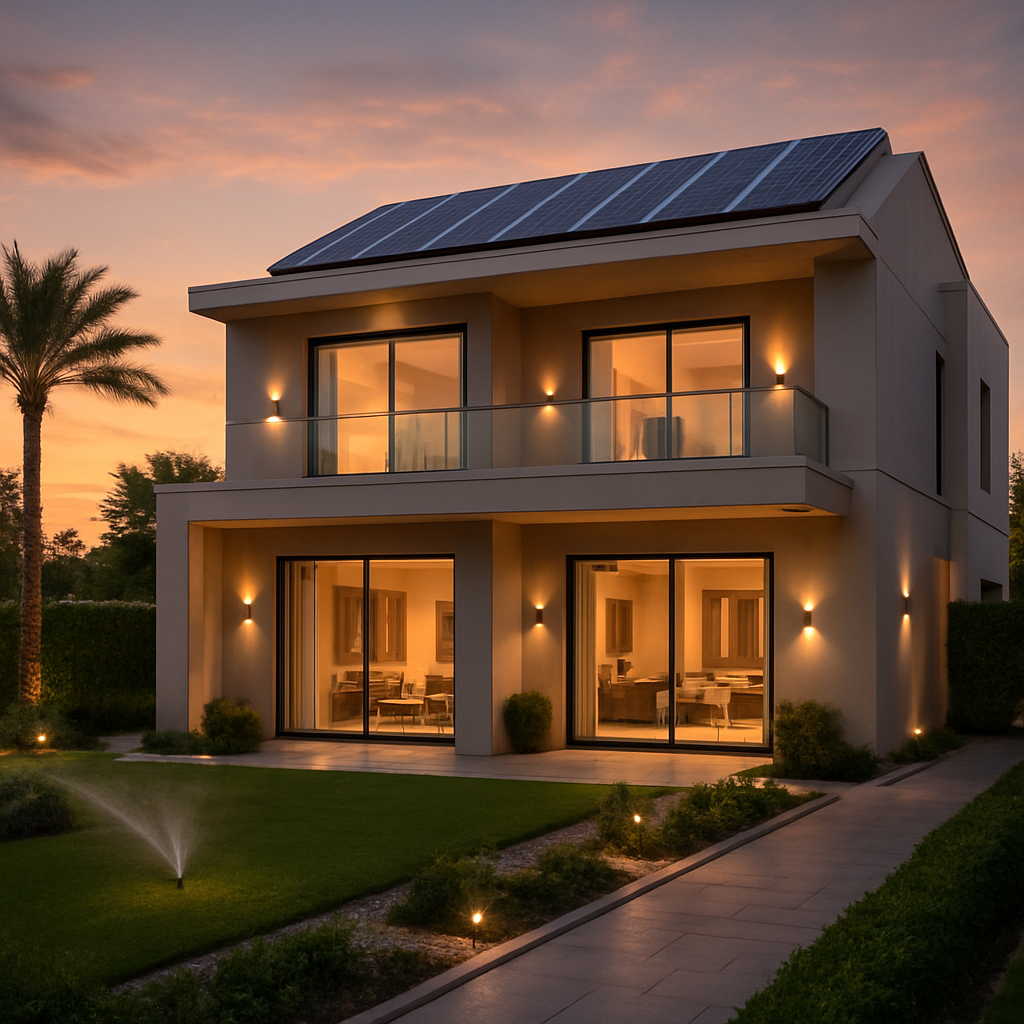
Ever wondered what it feels like to walk into a villa that knows you before you even say a word? Picture this: the doors unlock as you approach, the lights shift to your favorite hue, and the air conditioning whispers a cool breeze that feels like a personal sigh. That’s the dream of smart home technology in a Dubai villa, and it’s not just a pipe dream anymore.
Meet the Al Jaber Villa
Al Jaber, a 600‑m² waterfront villa on Jumeirah Bay, recently partnered with us to overhaul its living experience. He wanted three things: zero energy waste, instant safety alerts, and a system that could “talk” to his kids’ tablets and the family car. The result? A fully integrated ecosystem that runs on a single, cloud‑managed dashboard.
What We Installed
- AI‑driven climate control that learns the family’s routine and pre‑cools rooms 30 minutes before they’re needed.
- Solar‑powered smart irrigation that uses real‑time weather data to water the lawn only when the forecast predicts no rain.
- Motion‑sensing security cameras linked to a custom notification system that sends voice alerts to the homeowner’s phone.
- Voice‑activated lighting scenes that adjust automatically based on time of day and ambient light.
- Integrated smart lock and key‑less entry for guests, all managed through a single app.
The smart system didn’t just save money—Al Jaber saw a 22% drop in his electricity bill and a 37% reduction in water consumption within the first month. But more than the numbers, it delivered a sense of peace that “the house is looking after itself.”
How the Data Drives Decisions
We didn’t just slap gadgets together; we used data to fine‑tune the environment. The thermostat logs show that the living room stays unoccupied for 40% of the day, yet it was still running at 24°C. We shifted the set‑point and added a secondary sensor, cutting cooling energy by an extra 6%.
Similarly, the irrigation controller pulled in local forecast data from the Dubai Meteorological Department. When a rain alert popped up, the system paused for the entire afternoon, saving 15 gallons of water—money that can go toward a new pool or a smart kitchen upgrade.
Step‑by‑Step Implementation
- Assessment: We started with a 30‑minute walk‑through, noting existing wiring, power points, and Wi‑Fi coverage.
- Infrastructure: Upgraded the Wi‑Fi mesh to ensure seamless connectivity across terraces and basements.
- Device Integration: Configured the hub to support Zigbee and Thread for future expansion.
- Automation Rules: Created if‑then statements that trigger actions based on occupancy and weather.
- Testing: Ran a 48‑hour pilot to collect data and tweak thresholds.
- Handover: Trained Al Jaber’s family on the app and set up a monthly maintenance reminder.
All of this was done in just 12 days, with minimal disruption to the household. The villa’s owners were able to enjoy the new system almost immediately—no long waiting periods or confusing setup.
According to a 2023 report on smart homes in Dubai real estate, over 40% of new properties in premium districts now come equipped with integrated automation—an indicator that the market is catching up to the tech wave. Read more about the trend here. And as highlighted in a UAE‑focused analysis of automation trends, smart homes are becoming the standard for luxury living, especially in areas like Jumeirah Bay and Palm Jumeirah. Explore the broader context here.
So, what’s the takeaway? A smart home isn’t just a collection of gadgets; it’s a living, breathing system that adapts to your life. If you’re ready to turn your Dubai villa into a sanctuary that saves money, protects you, and feels like a second brain, the next step is to schedule a site survey. Let’s make your home smarter—one smart decision at a time.
Frequently Asked Questions
What exactly is “smart home technology Dubai villa”?
It’s a bundle of devices—thermostats, lights, locks, and sensors—that talk to each other through a certified hub. In a Dubai villa, the system learns your schedule, tweaks cooling, and even flags a leak before you notice it. Think of it as a quiet assistant that keeps the villa comfortable and energy‑efficient, all while staying compliant with TDRA standards.
Will installing a smart system mess with my villa’s architecture?
Not at all. The best solutions use wireless protocols like Wi‑Fi, Zigbee, or Thread, so you can add or swap modules without re‑running cables. A single, certified hub sits in a discreet corner, and everything else plugs into the existing wiring or wireless mesh. That keeps the aesthetic intact and lets you scale up later.
How much can I realistically save on my energy bills?
In a typical 500‑m² villa, a zone‑based smart thermostat can cut cooling costs by 15–20 %. Smart lighting and motion sensors trim lighting waste by up to 15 %. If you add a smart irrigation controller, water bills can drop 30‑40 %. Together, those savings can reach AED 1,500–2,500 a month, which adds up fast when you factor in the system’s lifespan.
Is the system secure against hackers?
All devices we deploy are TDRA‑approved and run the latest firmware updates. The hub uses encrypted communication, and we recommend a dedicated VLAN or separate Wi‑Fi network for the smart devices. That limits exposure and keeps the system safe even if a guest’s phone is compromised.
Can I control the villa from anywhere?
Yes. The hub syncs with a cloud dashboard that you can access via a smartphone app or web portal. You can adjust temperature, check energy usage, or lock doors from an office in Dubai or from a beach in Ras Al Khaimah. Voice assistants add another layer of convenience if you prefer hands‑free control.
What maintenance do I need to keep it running smoothly?
The biggest upkeep is updating firmware—usually a one‑click push from the hub. We recommend a quarterly data review: look at the energy dashboard, spot any odd spikes, and tweak schedules. A yearly professional check keeps the network healthy and ensures any new regulatory changes are met. Beyond that, it’s low‑maintenance once the system is in place.
How do I get started without a full system rollout?
Start with a single module—say, a smart thermostat or a motion‑activated light. Measure its impact for a month, then decide what’s next. This staged approach lets you budget gradually and prove ROI early on. If you’re ready to dive deeper, schedule a site survey and we’ll craft a scalable roadmap tailored to your villa’s layout and lifestyle.
Implementation Checklist for Dubai Villas
Before you roll out the full system, pull together a quick checklist to keep the desert heat in check and the budget honest.
First, map the power grid. Check every zone has a dedicated circuit and the main breaker can handle the hub, thermostats and irrigation controllers. Mis‑wired loads cut savings faster than over‑driven AC.
Second, test connectivity. Place a mesh node on each terrace and balcony, run a speed test during peak sunlight. If latency spikes, add a Wi‑Fi 6 extender.
Third, calibrate sensors. Install motion and occupancy detectors in every high‑traffic room, run a 24‑hour baseline, then adjust thresholds so lights only turn on when someone arrives and the thermostat only when occupied.
Does this feel doable? It is, because you’re building on infrastructure, not wiring a home from scratch.
Fourth, schedule firmware updates. Use the hub’s one‑click push to keep devices on the latest patch. Set a quarterly review to spot energy spikes and tweak schedules.
Finally, document everything. Create a simple spreadsheet with device names, serial numbers, IP addresses and last update. This sheet becomes your lifeline when a technician visits or you audit performance.
Ready to tackle the first step? Grab a pen, a notepad and let the checklist turn your vision into a live, low‑maintenance ecosystem.
Conclusion and Next Steps
What’s the big takeaway? Your villa isn’t just a building—it’s a living, breathing ecosystem that learns and saves.
First, lock in a baseline. Grab the energy dashboard, run a week of data, and note the biggest hot spots.
Next, test one tweak at a time. If a light stays on for 10 minutes after the room empties, adjust the motion timer; if the thermostat lags, fine‑tune the zone schedule.
Remember, the goal is a smooth handover—your family should feel the changes before they notice the tech.
Schedule quarterly reviews. A quick 30‑minute walk‑through of the dashboard keeps the system honest and lets you spot drift before it hits your bill.
Finally, document everything. A simple sheet of device names, IPs, and firmware dates is your safety net when a technician walks in.
Want a quick jump‑start? Reach out for a free site survey—our experts will map the exact wiring, suggest the best hub, and hand you a ready‑to‑use playbook.
So, what’s next? Grab a pen, jot down the baseline numbers, hit one tweak, and let the data do the rest.
And remember: a smart home is a partnership, not a purchase. Keep the dialogue open, test, and tweak—your villa will thank you with cooler nights and lighter bills.