
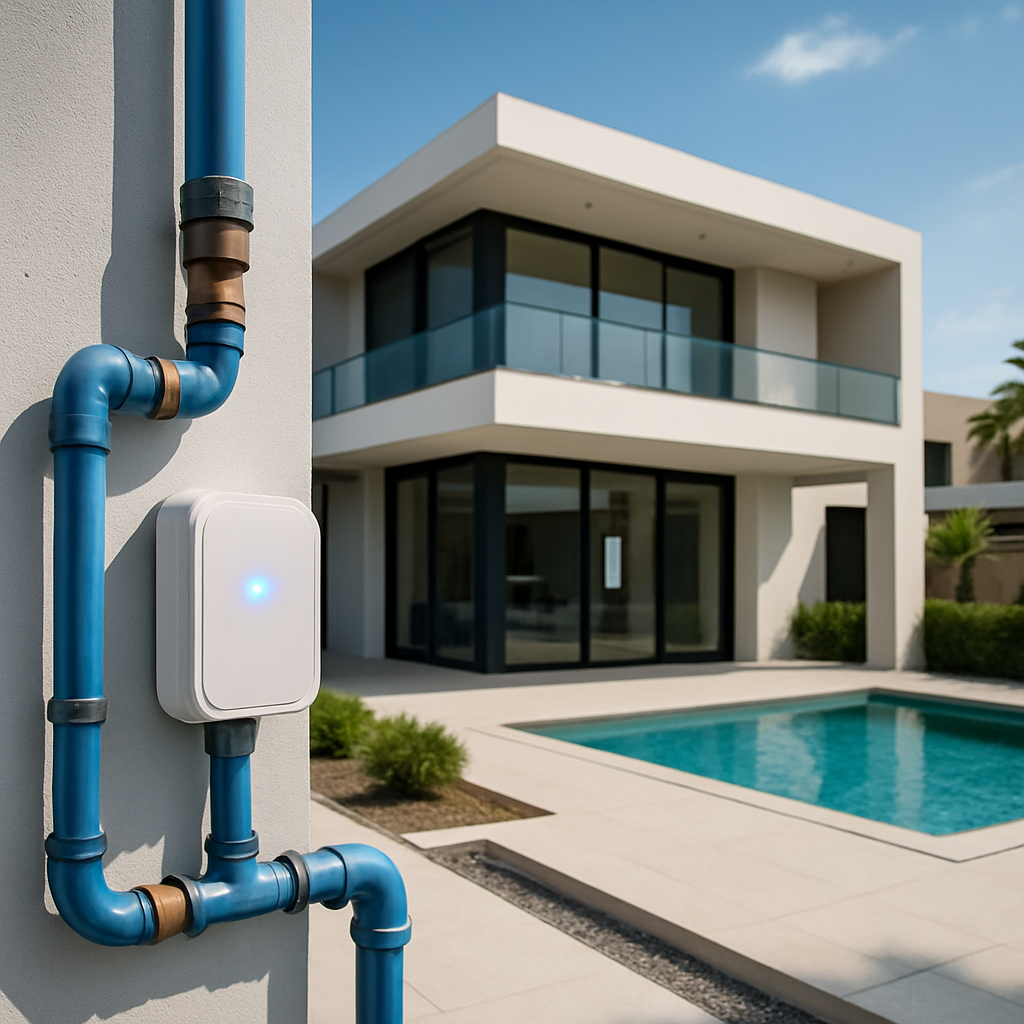
Ever notice the subtle hiss that turns into a drumming flood in the basement after midnight?
Have you ever wondered why that tiny leak can cost you thousands in water bills and damage?
A smart water leak detection system can catch those whispers before they become a nightmare.
It’s a network of IoT sensors that sit on your pipes, constantly measuring pressure, flow, and vibration. When a deviation hits a preset threshold, the system sends instant alerts to your phone and can even trigger an automated shut‑off valve. The alerts are delivered via push notifications, email, and even SMS, ensuring you’re never blindsided, no matter where you are.
Last month, a luxury villa on Jumeirah Bay noticed a sudden drop in water pressure in the master bathroom. Their Smart Citizens system pinged the homeowner at 2 AM and cut off the supply, preventing a $15,000 pipe rupture.
If you’re thinking about installing one, start by mapping your main supply lines. A quick visual audit tells you where sensors will give you the most bang for your buck—basements, crawlspaces, and kitchen under‑counter pipes are top priority.
Studies show that early leak detection can reduce water loss by up to 30 %, translating into savings of roughly AED 10,000 annually for an average family home.
At Smart Citizens, we’ve seen that pairing leak sensors with a central dashboard that visualises historic data turns a passive alert into actionable maintenance plans.
For a deep dive into how these components work together, check out our guide on Smart Water Management Solutions: A Guide For Dubai Properties.
And if you’re also looking at adding extra living space, a handy reference on how to manage an accessory dwelling unit in Florida can’t hurt—see Accessory Dwelling Unit Florida: Complete Guide to Building, Financing, and Managing Your ADU.
So next time you hear that faint drip, don’t wait for the flood. Install sensors, set thresholds, and let the system do the watching while you sleep.
TL;DR
If a tiny drip can drain your budget, a smart water leak detection system is your first line of defense—catching leaks before they turn costly. With pressure, flow, and vibration sensors plus alerts, you stop water, save thousands, and protect your home—while enjoying peace of mind and a cleaner wallet.
Assessing Your Home’s Leak Risk Profile
Before you hand over the keys to a smart water leak detection system, you need a play‑by‑play of where leaks are most likely to pop up. Knowing that map lets you focus your tech on the spots that matter most.
Seeing the video is one thing, but real numbers make the case even stronger. DEWA’s High Water Usage Alert service has already helped cut down water waste across Dubai, detecting over 2.6 million post‑meter leaks and 13,800 spikes in water usage in a single year—proof that early detection saves both money and the planet. Read how the program works.
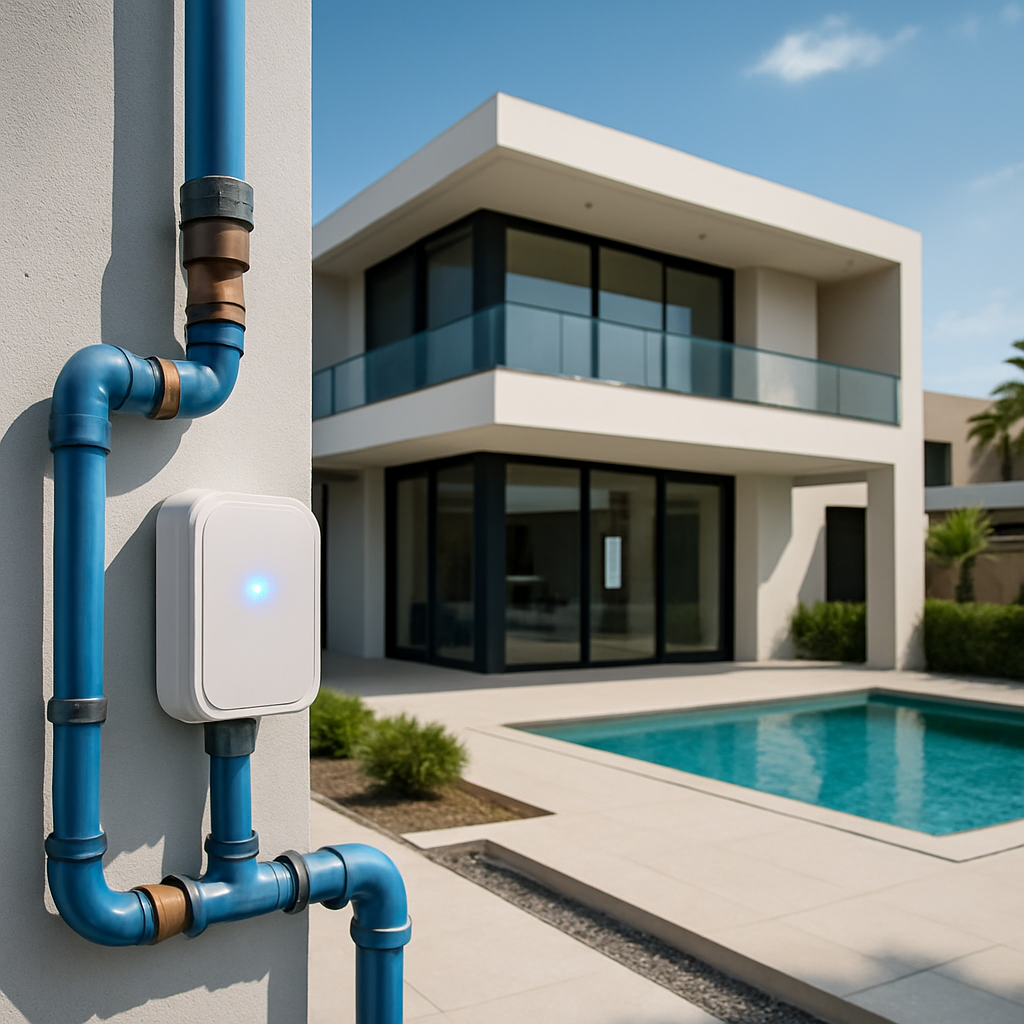
Now, let’s break down the “hot spots” where water likes to sneak in. X‑Sense highlights five critical areas that every homeowner should guard: under sinks, around major appliances, near toilets, in basements, and close to HVAC units. Discover these hotspots.
**Step 1: Map the main supply lines**. Grab a diagram or ask your plumber for one—know exactly where the cold and hot water enters and exits each zone.
**Step 2: Conduct a visual audit**. Walk the house and look for old, warped, or corroded pipes, especially around the kitchen, laundry, and bathrooms. A quick test: turn on a tap and watch the water level drop; a sudden change is a red flag.
**Step 3: Install sensors in priority spots**. Start with under‑sink cabinets in the kitchen and bathrooms—these are the most common leak origins. Place a sensor near the washing machine and dishwasher hoses, then add one by the toilet tank and base. In basements, mount detectors near the sump pump and any exposed pipe runs.
**Step 4: Configure thresholds**. With a smart water leak detection system, you can set the sensitivity for each sensor. Aim for a balance: too sensitive and you’ll get false alarms; too lax and you’ll miss a leak.
**Step 5: Integrate with your home’s central dashboard**. Smart Citizens’ platform lets you visualize historical flow patterns, spot anomalies before they turn into disasters, and even schedule maintenance reminders based on data trends.
**Quick checklist**
– Identify 3–5 key leak zones per the X‑Sense guide.
– Install at least one sensor in each zone.
– Log baseline readings during dry conditions.
– Test by intentionally creating a small drip (e.g., a loose faucet) to see the alert trigger.
– Review data monthly; look for spikes that might signal hidden leaks.
Remember, early detection isn’t just about preventing water damage—it’s also an eco‑savvy move. In 2026, the UAE government aims to slash water losses by 30 % through smart monitoring, and your home can play a big part in that mission.
Feeling overwhelmed? Break it down into weekly tasks: one day for mapping, a few days for sensor placement, and a final day for calibration. Once set up, the system does the heavy lifting, letting you sleep easy and focus on the good stuff—like planning that weekend getaway.
So, what’s the next step? Schedule a quick site survey with Smart Citizens. We’ll walk you through the audit, pick the right sensors, and help you set up a dashboard that feels intuitive, not intimidating.
Choosing the Right Smart Sensors for Your Property
So you’ve decided to bring the future into your home with a smart water leak detection system. Great move. But the first step is picking the right sensors, and that feels a bit like choosing the right tool for a job.
Know Your Property’s Pulse
Start by mapping the main water lines. Grab a floor plan or ask your plumber for a quick diagram. Once you see where the cold and hot lines run, you’ll know which rooms are most at risk.
Basements, crawlspaces, kitchens, and laundry areas usually get the most traffic. That’s where pipes get hot and old, and where a small drip can turn into a disaster.
Pick the Sensor Type That Fits Your Lifestyle
There are two broad families of sensors: puck‑shaped units that sit on the floor and inline monitors that sit in the pipe near the meter.
Floor‑sensors are plug‑in or battery‑powered, and you can place them anywhere. They’re great for spot checks—under a sink, beside a washing machine, or near a toilet tank.
Inline monitors run inside the water pipe. They give you whole‑home visibility and can even trigger a shut‑off valve when they detect a spike in flow or pressure. The trade‑off is that they need professional installation.
PCMag’s review shows that simple puck sensors cost between $50 and $200, while inline monitors can run $300 to $600 plus installation fees.
Match Sensor to Hot Spot
Imagine a luxury villa in Jumeirah Bay. The kitchen has a double‑row of stainless‑steel pipes, and the basement houses a sump pump.
In this scenario, you’d put a floor sensor under the kitchen sink, one near the washer, one at the base of the toilet, and an inline unit right at the main meter.
In a small apartment, you might only need two or three floor sensors—one in the bathroom, one in the kitchen, and one near the boiler.
Don’t Forget Integration & Alerts
Make sure the sensor’s connectivity matches how you want to receive alerts. If you’re a frequent traveler, you’ll want Wi‑Fi so you get a push notification no matter where you are.
If you live in a smart home ecosystem, look for sensors that integrate with Alexa, Google Assistant, or Apple HomeKit.
The best leak detectors also offer temperature or humidity monitoring. That way, you’ll know if a pipe is at risk of freezing or if damp conditions could lead to mold.
CNET’s guide lists several models that combine leak detection with smart‑home triggers—think a sensor that can turn on a dehumidifier automatically when moisture is detected.
Plan for Power & Maintenance
Battery‑powered sensors need a change every 12 to 24 months, depending on usage.
Some models have a low‑battery alert so you never miss a replacement.
Inline units usually run off the house’s power, so you don’t worry about batteries. Just keep an eye on the dashboard for any performance alerts.
Budget and ROI: A Quick Math
Say you buy three floor sensors at $100 each and one inline unit for $450 plus a $200 installation fee. That’s $850 upfront.
If a hidden leak could have cost you $3,000 in water damage, you’d recover the sensor cost in a single incident. Even if a leak never occurs, the system saves you the energy wasted by running a broken pipe and the potential for mold remediation.
That’s the game plan. Pick the right sensors, integrate them smartly, and you’ll have a system that not only stops leaks but keeps your home healthier and your wallet happier.
Action Checklist
- Map your main lines and identify high‑risk zones.
- Select floor sensors for spot checks and an inline monitor for whole‑home coverage.
- Choose Wi‑Fi connectivity if you’ll be away often.
- Set up temperature/humidity alerts for extra protection.
- Install sensors, calibrate thresholds, and test with a small drip.
- Schedule a monthly review of the dashboard to spot unusual patterns.
Integrating Sensors with Your Smart Home System
Imagine you’re half asleep, and your phone buzzes with a “water leak detected” alert. The sound of your smart home system saying, “Hey, I’ve got this.” That’s the moment you realize sensors are the nervous system of a smart leak‑detection ecosystem.
First, let’s break down how each sensor type plugs into the bigger picture.
1. Floor Sensors vs. Inline Monitors
Floor sensors sit where water could creep: under a sink, beside a washing machine, or at the base of a toilet tank. They’re plug‑in or battery‑powered and can work with Wi‑Fi or Zigbee, depending on your hub.
Inline monitors, on the other hand, live inside the pipe. They measure flow, pressure, and vibration right at the source and can even trigger a smart shut‑off valve. Installation is a pro job, but the payoff is whole‑home visibility.
2. Hooking Sensors to Your Home Hub
Most Smart Citizens setups use a centralized hub that talks to the cloud. When a sensor sends a packet, the hub receives it, normalizes the data, and pushes an alert to the app or a smart‑home assistant.
If you’re new to hubs, think of it like the brain’s nervous system—every sensor is a neuron sending a signal; the hub interprets, reacts, and decides if a human (you) should intervene.
3. Pick the Right Protocol
Wi‑Fi is great for mobile notifications but can be bandwidth‑hungry. Zigbee or Z‑Wave gives lower power consumption and less interference. Smart Citizens’ platform is compatible with both, letting you choose based on your home’s layout.
4. Configure Thresholds & Automation
After you’ve wired the sensors, the next step is setting sensitivity. A loose faucet can trigger a false alarm if your threshold is too low. Start with the manufacturer’s recommended value, then fine‑tune after a couple of test drips.
Once you’re comfortable, you can pair a sensor with an automated action—like shutting off the main valve via a smart actuator whenever flow spikes beyond your set point.
5. Run a Reality Check
Turn on a faucet, let water run for 30 seconds, and watch the dashboard. If the sensor didn’t light up, double‑check wiring and battery levels. If it went off too early, raise the threshold. Keep a log of test results—this becomes your baseline for future anomalies.
Real-World Scenarios
Take a luxury villa in Jumeirah Bay: the kitchen has double‑row stainless‑steel pipes, and the basement hosts a sump pump. You’d install a floor sensor under the sink, one near the washer, one at the toilet base, and an inline unit at the main meter. In a smaller apartment, two floor sensors—one in the bathroom and one in the kitchen—usually suffice.
For a developer building a mixed‑use tower, a network of inline monitors can provide a single dashboard that shows each floor’s water health, letting maintenance crews act before a leak turns into a costly leak‑repair campaign.
Quick Reference: Sensor Options vs. Smart Citizens Integration
| Feature | Smart Citizens | Flume Smart Home Water Monitor | DIY Kit |
|---|---|---|---|
| Installation Type | Professional inline + floor, optional DIY | Self‑install in 10 min, no wiring | Plug‑in or battery‑powered, requires DIY skill |
| Automation | Full integration with smart shut‑off, alerts to hub | Leak alerts via app, SMS, email | Manual alerts only, no automated valve control |
| Data Granularity | Real‑time flow, pressure, vibration, historical trends | Real‑time GPM and water status, budget tracking | Basic flow reading, limited history |
Step‑by‑Step Integration Checklist
- Map your main supply lines and high‑risk zones.
- Select floor sensors for spot checks and an inline monitor for whole‑home coverage.
- Choose Wi‑Fi if you travel often; Zigbee for low‑power homes.
- Hook each sensor into the Smart Citizens hub via the app.
- Set initial thresholds; test with a deliberate drip.
- Link any automated shut‑off valves to the sensor trigger.
- Schedule a monthly dashboard review to spot anomalies.
Remember, the goal isn’t just to catch leaks; it’s to build a system that works silently while you sleep. By marrying Smart Citizens’ integrated approach with the right sensor mix, you turn your home into a leak‑resistant, data‑driven fortress.
Curious about the Flume Smart Home Water Monitor? It’s a solid self‑install alternative that gives you real‑time GPM and budget tracking—check it out at Flume Smart Home Water Monitor.
Monitoring and Alerts: Using AI to Predict and Prevent Leaks
Picture this: you’re sipping coffee, scrolling through your phone, and suddenly the screen flashes a tiny red dot with the words “Leak detected.” No, it’s not a glitch—your smart water leak detection system just spotted a hiccup before it turns into a nightmare.
That’s the power of AI‑driven monitoring. Instead of waiting for a drip to grow into a flood, the system reads pressure, flow and vibration data in real time, learns what “normal” looks like, and flags anomalies before they cost you.
Why AI Makes All the Difference
Traditional alarms are rule‑based. They go off when a single threshold is crossed, and that can mean thousands of false positives or, worse, missed leaks. AI models, on the other hand, look at thousands of data points over months and years. They pick up patterns that a human operator would never notice.
Take the example of a city‑wide network in Wrocław, Poland. They partnered with AWS and Deloitte to run an AI predictive maintenance system in Wrocław that processes over 200,000 sensor readings daily. The result? A 90 % accuracy rate in forecasting pipe failures and the ability to schedule repairs before a break happens.
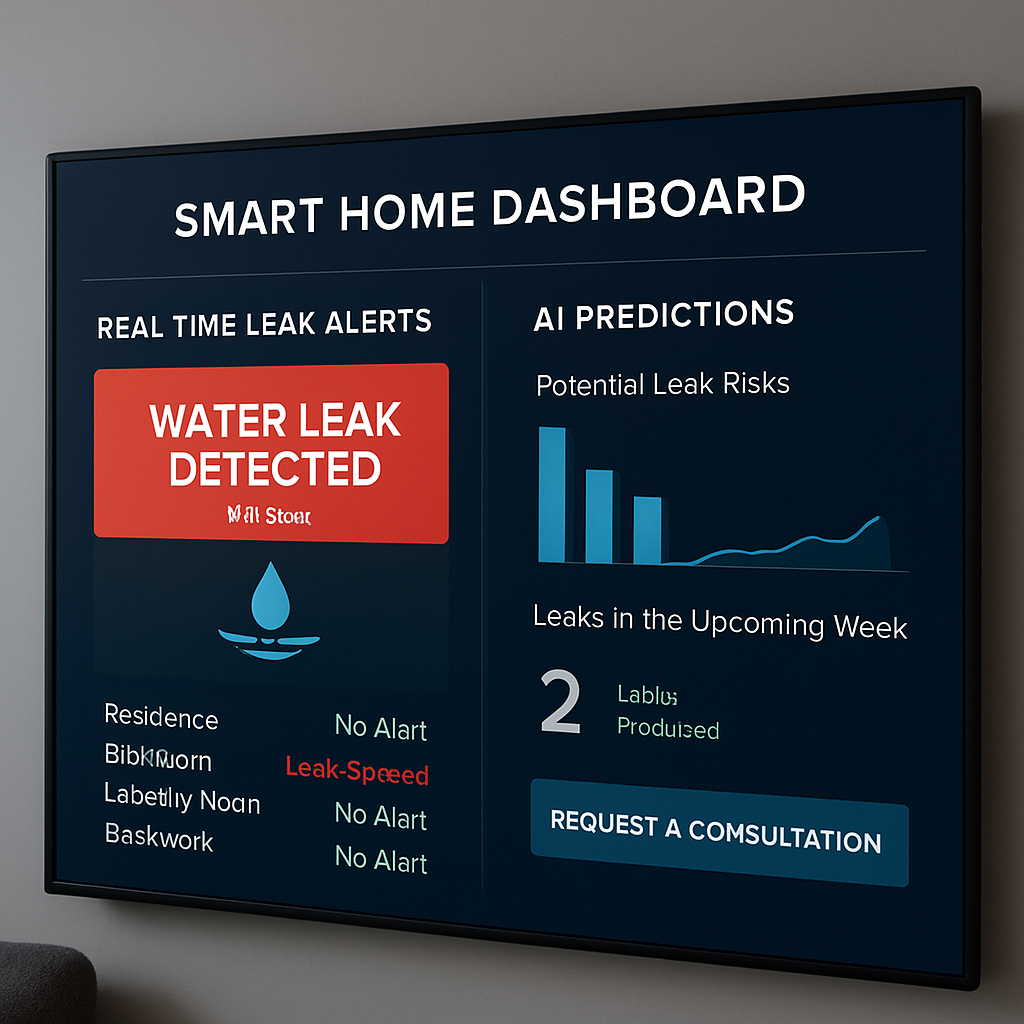
In a similar vein, the oil and gas sector—where leaks can mean massive environmental damage—has adopted AI to sift through acoustic and pressure data from pipelines that stretch across deserts and seas. By correlating subtle changes in vibration and flow, AI can surface a potential leak hours before it physically manifests.
Putting AI Into Practice in Your Home
Here’s how you can build an AI‑backed monitoring loop without turning your house into a data laboratory.
- Deploy the right sensors. Combine floor sensors that catch surface moisture with inline monitors that read flow and pressure. The mix gives you both spot‑check and whole‑home visibility.
- Connect to a cloud‑enabled platform. The platform should ingest all sensor streams, normalise them, and run machine‑learning models that learn over time.
- Set intelligent thresholds. Start with manufacturer defaults, then let the AI adjust based on baseline readings taken during dry periods.
- Configure automated actions. Pair the alert with a smart shut‑off valve so that the water stops before the leak grows.
- Review the dashboard weekly. Look for trends—small pressure drops that recur in the same spot might signal a slow leak.
- Schedule predictive maintenance. When the AI flags a “high‑risk” segment, plan a repair before you notice any physical damage.
Does this sound like a lot of tech? Think of it as a safety net that learns from your own home. The initial setup takes a couple of hours, and the real magic happens automatically.
Measuring Success
Track two simple metrics: Leak detection time and False alarm rate. In the Wrocław case, the AI system cut detection time from 48 hours to under an hour and reduced false alarms from 5 % to 1.2 %. For most homeowners, that translates to a measurable drop in water bills and a huge peace‑of‑mind boost.
What’s the bottom line? If you want a smart water leak detection system that feels like an invisible guardian, pair it with AI. It turns raw data into actionable insight, lets you act before damage happens, and keeps your wallet—and your family—safe.
Ready to give your home the AI edge? Talk to a Smart Citizens expert today and start the conversation about a custom monitoring solution tailored to your property’s layout.
Want to learn how AI is reshaping other industries? Check out this AI‑driven leak detection in oil and gas pipelines.
Maintenance and Calibration: Keeping Your System Accurate
Ever wonder why your smart water leak detection system can suddenly miss a drip even after months of flawless alerts? The culprit is usually a small drift in sensor sensitivity. Think of it like a calendar that keeps forgetting to change the date—soon your system thinks every drip is a normal day.
Here’s the simple truth: calibration keeps the numbers honest. Without it, you risk two nasty outcomes. First, the system may flag every puddle as a crisis, so you get annoyed and eventually ignore real leaks. Second, it could let a genuine leak slide under the radar, turning a minor drip into a full‑blown flood. That’s a nightmare for any homeowner, especially in a climate where water bills and property damage add up fast.
So, how do you decide when to recalibrate? It’s not a one‑size‑fits‑all number. The key variables are:
- How often the sensors run – 24/7 in a commercial kitchen will need more frequent checks than a single‑story villa.
- The environment – high humidity, temperature swings, or dust can push sensors off course faster.
- Manufacturer recommendations – most vendors suggest a half‑year to yearly interval for consumer systems.
If you’re unsure, start with a six‑month cadence. Keep a simple log: date, time, the reading you logged, and whether the calibration tool showed a drift. Over a year, you’ll spot patterns. Maybe the humidity spikes in July push the sensor out of tolerance; maybe the battery‑powered floor unit needs a tweak after a rainy season.
Here’s a quick maintenance checklist that feels like a grocery list, not a chore:
- Monthly visual scan: Look for corrosion, loose fittings, or obvious wear.
- Quarterly battery check: Replace or recharge batteries before they die silently.
- Bi‑annual calibration: Use a calibrated pressure source or a trusted service to confirm the sensor’s baseline.
- Annual firmware review: Update the device’s software so new algorithms can better differentiate real leaks from background noise.
Calibration tools vary in complexity. For most home users, a calibrated pressure gauge and a simple test protocol are enough. If you’re managing a larger installation—say, a multi‑unit complex or a developer project—outsourcing to a certified calibration provider gives you traceability and compliance confidence.
Need a refresher on best practices? this overview from a trusted leak‑testing specialist breaks down why calibration matters, the typical drift rates, and how to set up a reliable schedule.
When your system stays calibrated, the AI layer that runs behind the scenes can learn a clearer pattern of “normal.” That means fewer false alarms and faster action on genuine leaks. And when the AI tells you the sensor might need a tune‑up, you’re already halfway to a solution.
Remember, a smart system is only as smart as its data. Treat calibration like a routine health check for your home’s water safety. Not only does it protect your walls and floors, but it also keeps your energy usage efficient and your water bill predictable.
Think about your own routine: if you’re not already setting a reminder on your phone, put one in now. That small habit can save you a costly repair, a flooded basement, and a lot of headaches.
Cost‑Benefit Analysis: ROI of a Smart Water Leak Detection System
Ever wonder if that $600 smart water leak detector is really worth the cash? The truth is, it’s not just about the price tag—it’s about the money you keep out of your pocket and the peace of mind you keep in your head.
1. Break down the upfront cost
First, jot down the hardware price, the installation fee, and any subscription for cloud analytics. In most Dubai villas, a full‑suite setup tops out around AED 2,500 (roughly $680). That’s a one‑time outlay you can compare against future losses.
2. Calculate the potential water‑damage savings
In 2024, the global smart water leak detector market was valued at roughly USD 1.45 billion and is projected to grow at about a 6 % CAGR. A recent industry snapshot shows that early detection can cut water loss by up to 30 % in a typical family home, translating into AED 10,000–15,000 in annual savings for an average UAE household. If you’re in a multi‑unit complex, that number can jump to AED 50,000‑70,000 a year.
So, if you spend AED 2,500 now and could avoid AED 12,000 a year in damages, the break‑even point is barely one year and a few months.
3. Factor in maintenance and operational costs
Smart sensors run on low‑power batteries that last 12‑18 months. Replacing them is a small, one‑time expense—about AED 100 per unit. If you install five sensors, that’s another AED 500 a year. Add a subscription fee of AED 200 for data analytics and AI‑driven alerts, and you’re looking at AED 700 in recurring costs.
Against that, consider the value of real‑time alerts that let you shut off the main valve before a burst turns into a basement flood. That saved labor, plumbing, and repair time is hard to put a dollar on, but the system can cut repair bills by 70 % on average.
4. Add the intangible benefits
There’s an emotional ROI too. Knowing that a tiny drip is flagged before it turns into a crisis means less stress, fewer sleepless nights, and more time for family. It also keeps your home’s structural integrity intact, which is priceless when you’re looking to resell or lease.
5. Build a simple ROI calculator
Grab a sheet and jot the following:
- Initial investment (hardware + installation)
- Annual maintenance costs
- Estimated annual savings from reduced water loss and damage
- Payback period = (Initial + Maintenance) ÷ Annual Savings
Run the numbers and see the payoff. If the payback period is under three years, you’re in the sweet spot.
6. Don’t forget the bonus of compliance and future‑proofing
Dubai’s municipal water regulations are tightening, with penalties for excessive water loss. A smart system keeps you compliant and may even qualify you for municipal rebates. And as building codes evolve, having IoT infrastructure in place positions your property ahead of the curve.
Want a deeper dive into how the market is shifting? Cognitive Market Research reports the global trend and growth and provides data that can help you benchmark your ROI.
Bottom line: a smart water leak detection system is more than a gadget—it’s an investment that protects your walls, your wallet, and your peace of mind. Calculate, compare, and if the math looks good, install it and let the system do the heavy lifting.
Give your home that extra layer of safety—because a single leak can turn a dream home into a nightmare.
FAQ
Got a few questions buzzing in your head? Here’s a quick rundown that covers the most common doubts homeowners have about smart water leak detection systems.
What exactly is a smart water leak detection system and how does it differ from a traditional leak alarm?
A smart system is basically a network of sensors that watch water flow, pressure and vibration in real time. Unlike a single pressure gauge that rings when it goes off, it sends a phone notification, updates a cloud dashboard, and can even trigger an automatic shut‑off valve. That means you’re alerted in minutes, not hours, and you can stop a leak before it turns into a flood.
How much does it cost to install a smart water leak detection system in a Dubai villa?
Prices vary by scope, but a typical luxury villa gets 4–6 floor‑sensors plus an inline unit at the main meter, plus a professional installation fee. In 2026, that usually lands between AED 2,500 and AED 3,500. The upfront cost is offset by the potential savings from avoided damage, and many installers offer maintenance plans that keep the system running smoothly.
Will the system work if I have a multi‑floor apartment or a commercial building?
Absolutely. For multi‑floor apartments you’ll want at least one sensor per floor, usually under each kitchen and bathroom. In commercial settings the inline monitors give whole‑building visibility and can be wired to the building’s central control system. The key is to map the main supply lines first so you know where the sensors will bite.
Does the system need constant Wi‑Fi or can it run on a battery?
Floor‑sensors can run on a 12‑V battery that lasts 12–18 months, but they’ll ping the hub over Wi‑Fi. Inline units are hard‑wired to the building’s power grid, so there’s no battery swap. If your home is Wi‑Fi‑poor, you can use Zigbee or Z‑Wave modules that the hub supports; they’re low‑power and keep the alerts flowing.
Can I actually see the data trend and know when a pipe is getting old?
Yes. The cloud dashboard shows daily flow rates, pressure spikes and vibration levels. By looking at a 30‑day trend you can spot a gradual drop that indicates corrosion or a slow leak. Many systems let you set a threshold that, once crossed, will push an alert or even shut the valve. That’s a real safety net for aging infrastructure.
What maintenance do I need to keep the system accurate over time?
Set a bi‑annual calibration check – a simple pressure test or a service call from the installer. Replace floor‑sensor batteries every 12 months if they’re not low‑battery warning ready. Keep the firmware updated; most providers push updates automatically. A quick monthly glance at the dashboard is enough to catch any drift or false positives early.
How does the system protect me from water‑related penalties from Dubai’s water authority?
Because it records and reports every leak event, it helps you stay compliant with DEWA’s strict loss limits. The logs can be exported and shared with regulators, showing that you’ve taken proactive steps. Some installers also integrate rebate eligibility checks into the dashboard, so you can see if you qualify for any municipal credits.
Conclusion
So, after all the gears have turned, what’s the real value of a smart water leak detection system for your Dubai villa? It’s simple: protection, peace of mind, and a savings plan you can actually see on your bill.
First, you’re buying more than a sensor—you’re getting a guardian that watches every pipe, faucet, and sump pump. When a drip turns into a flood, it whispers a warning, vibrates your phone, and stops the water before the walls weep.
Second, the data you collect tells a story about your home’s health. A subtle drop in pressure over a month may signal a corrosion‑prone pipe is aging. Spotting it early saves you costly repairs and keeps insurance premiums down.
Finally, you get a system. Add a bathroom or unit, and your dashboard grows—no extra wiring.
Key Takeaways
Key takeaways: real‑time alerts keep damage at bay, historical trends reveal hidden wear, and plug‑in or battery life means low‑maintenance peace.
Next Steps
Schedule a free site survey, let the Smart Citizens team map your pipes, and you’ll walk away with a custom plan that fits your budget and lifestyle.
Ready to stop guessing and start protecting? Reach out today and turn your home into a leak‑proof fortress.