
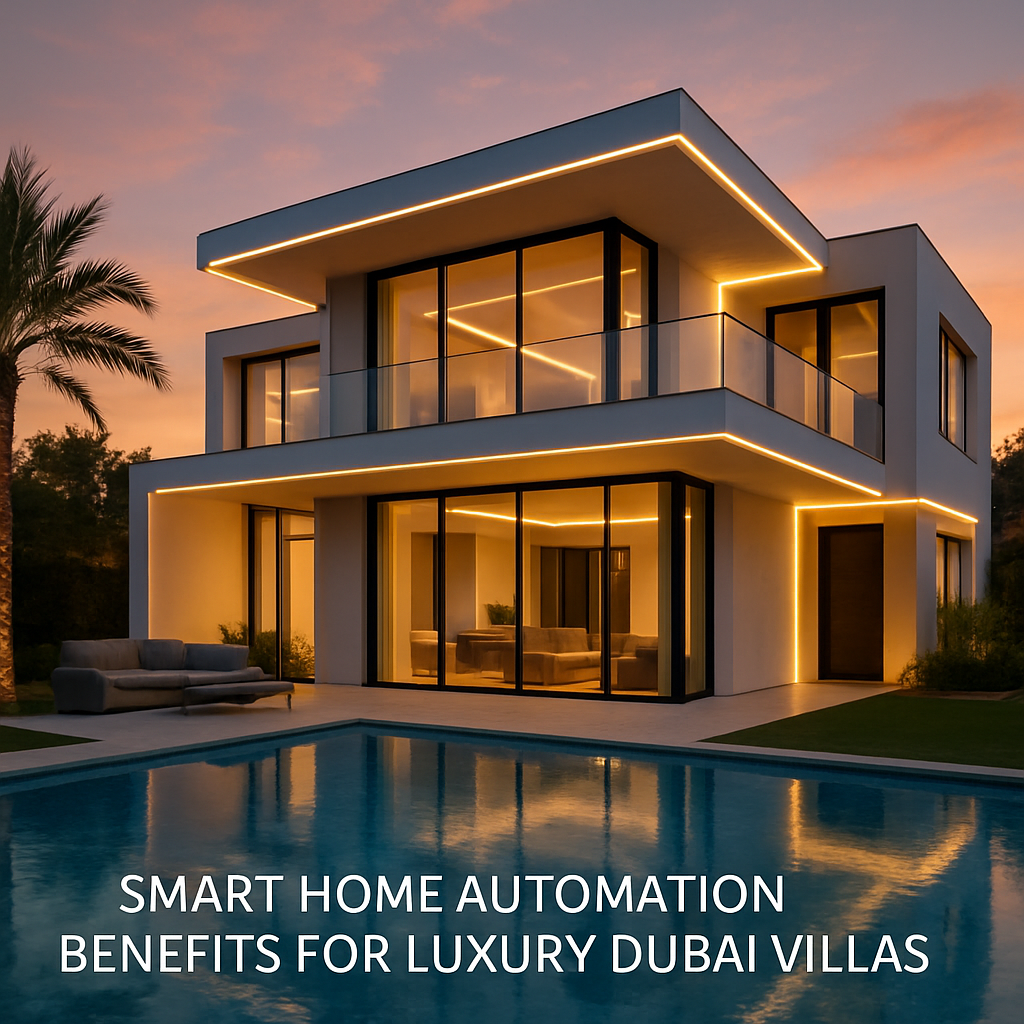
Picture this: you walk into your villa at sunset, the lights dim just enough to highlight the artwork, the temperature adjusts to a perfect cool, and your favorite playlist starts without you lifting a finger.
That moment feels almost magical, right? Yet for many Dubai homeowners, the idea of a fully integrated home still feels like a futuristic dream that’s either too pricey or too complicated to manage.
What if I told you that the reality is a lot more reachable than you think, especially when you partner with a leading smart home company in dubai that understands the unique blend of luxury living and cutting‑edge technology?
Do you ever wonder why some homes seem to anticipate your needs while others still rely on manual switches and clunky remotes?
In our experience, the secret isn’t just about installing a handful of gadgets; it’s about designing a cohesive ecosystem that speaks the language of your daily rhythm. From AI‑driven energy management that trims your bills, to smart security cameras that recognize familiar faces, each piece works together to create a seamless experience.
Imagine being able to control lighting, climate, and security from a single intuitive app while the system learns your preferences over time. You’ll save energy, boost comfort, and gain peace of mind—all without the headache of juggling multiple brands or devices.
So, if you’re ready to move from “what‑if” to “already happening,” stay with us. We’ll walk you through the key components that turn a high‑end villa or office into a truly smart space, and show you practical steps to get started without overwhelm.
By choosing a partner that’s certified by the TDRA and has a portfolio ranging from Palm Jumeirah villas to DIFC offices, you’re not just buying gadgets—you’re investing in a future‑proof infrastructure that scales as your needs evolve. Let’s explore how this journey unfolds, step by step.
TL;DR
Choosing the right leading smart home company in Dubai transforms a luxury villa or office into an intuitive, AI‑driven sanctuary that cuts energy bills, boosts comfort, and secures every corner.
We’ll walk you through the essential components—smart lighting, climate control, security, and water management—so you can enjoy seamless automation without juggling brands or complex setups.
Why Dubai Homeowners Choose a Leading Smart Home Company
Ever walked into a villa and felt the lights, temperature, and music greet you like an old friend? That’s the feeling many Dubai homeowners get when they partner with a leading smart home company in Dubai. It’s not just about gadgets; it’s about a lifestyle that anticipates your needs before you even think about them.
First off, the market isn’t a flash‑in‑the‑pan trend. According to a recent industry forecast, the global smart home market is set to climb from $89.8 billion in 2025 to $116.4 billion by 2029, driven largely by AI‑powered personalization and energy‑saving demand. Read the full market outlook here. In Dubai’s hot climate and luxury‑driven market, that growth translates into real‑world benefits for villa owners.
Luxury that doesn’t compromise on reliability
When you own a high‑end property in Palm Jumeirah or DIFC, you expect every system to work flawlessly. A reputable smart home partner uses TDRA‑certified devices, meaning the tech complies with local regulations and passes rigorous safety tests. That peace of mind is priceless when you’re juggling a demanding work schedule and family life.
Take the example of a recent villa on Dubai Hills. The homeowner wanted a lighting scheme that shifted from bright morning tones to warm evening hues without touching a switch. By integrating zoned LED strips with occupancy sensors, the system now automatically dims based on natural light levels, saving roughly 15% on electricity each month.
Seamless integration across brands
One of the biggest headaches in DIY setups is juggling devices from different manufacturers that simply won’t talk to each other. A leading smart home company brings all those pieces under one roof – literally. They use open‑protocol standards like Zigbee and Z‑Wave, ensuring your smart lock, thermostat, and entertainment hub work together without a glitch.
Imagine you’re heading out for a business dinner. With a single voice command, the security cameras lock down, the HVAC shifts to eco‑mode, and the smart curtains close to keep the afternoon sun out. All of that happens because the integration layer speaks a common language.
Expert‑level support and future‑proofing
Technology evolves fast, but your home shouldn’t feel outdated after a year. Smart Citizens, for instance, offers ongoing firmware updates and a dedicated support team that can add new modules – think AI‑driven water leak detection or solar‑panel monitoring – without rewiring the house.
And if you’re wondering whether the investment pays off, look at the numbers: homeowners who adopt comprehensive automation report up to 20% lower energy bills and a measurable boost in property resale value.
So, what does the decision‑making process look like? Here are three actionable steps you can take right now:
- Audit your current setup – list all devices, their brands, and any pain points (e.g., “my thermostat doesn’t sync with the app”).
- Schedule a free on‑site consultation with a certified integrator. Ask about TDRA compliance, open‑protocol support, and post‑installation service contracts.
- Start with a “core bundle”: smart lighting, climate control, and security. Expand gradually as you see savings and comfort improvements.
Curious how a real installation feels? Check out this quick walkthrough of a luxury villa automation in action.
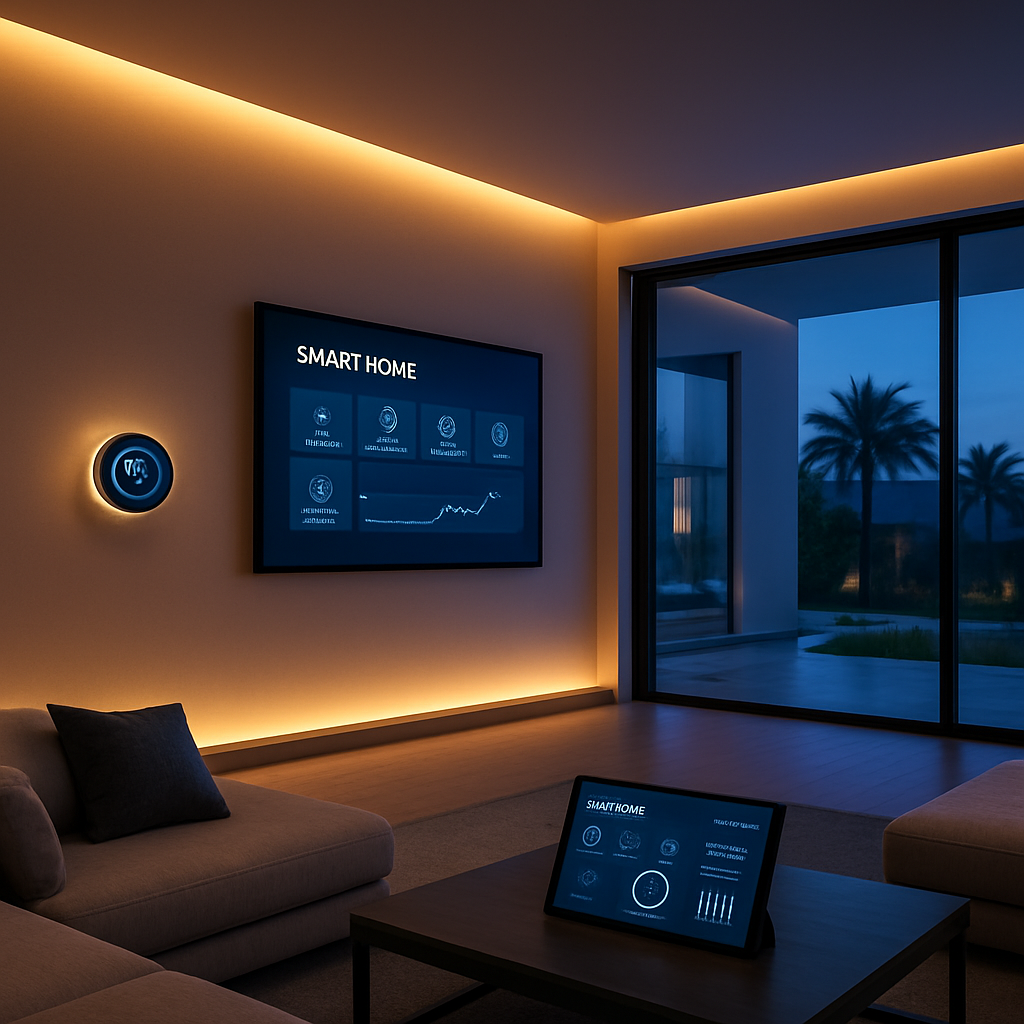
Seeing the technology in motion can turn abstract ideas into tangible benefits. You’ll notice how a single app dashboard brings together lighting scenes, temperature graphs, and security alerts – all with a few taps.
Beyond the tech, there’s a cultural shift. Residents across the UAE are embracing “smart living” as a new standard of comfort and efficiency. Read more about how smart living is becoming the norm in the UAE. It’s not just a novelty; it’s a response to the region’s unique climate, security concerns, and appetite for luxury.
When you choose a leading smart home company, you’re also tapping into a network of architects, developers, and municipal bodies that understand Dubai’s building codes and aesthetic expectations. That network ensures your system blends seamlessly with the villa’s design – no unsightly boxes or exposed wiring.
Finally, remember that a smart home is a living system. It learns your routines, adapts to seasonal changes, and even suggests tweaks to further cut costs. The more data it gathers, the smarter it becomes – and the more you benefit.
Ready to make your home work for you, not the other way around? Start with the audit, get that professional consult, and watch as your space transforms into an intuitive, energy‑savvy sanctuary.
Key Services Offered by Top Smart Home Providers in Dubai
When you start looking at what a leading smart home company in Dubai actually delivers, the first thing you notice is the sheer breadth of services – it’s not just a handful of gadgets, it’s a whole ecosystem that talks to itself.
Smart lighting that reacts to you
Imagine walking into your villa at dusk and the lights automatically shift to a warm amber, highlighting the artwork without you lifting a finger. That’s what most top providers set up: zoned LED strips, occupancy sensors, and daylight harvesting algorithms that dim or brighten based on natural light levels.
One recent Dubai Hills villa used occupancy‑based dimming in every bedroom and hallway. The system cut the electric bill by roughly 15 % in the first six months, simply by turning lights off when no one was home.
Climate control that knows the desert heat
Because Dubai’s summer can hit 45 °C, precise HVAC integration is a must. Smart thermostats learn your daily patterns, pre‑cool the rooms you use in the morning, and switch to eco‑mode when you leave for work.
In a Palm Jumeirah penthouse, a smart climate schedule reduced cooling energy consumption by 18 % while keeping indoor temperature steady at 24 °C, thanks to real‑time outdoor temperature feeds.
Integrated security that feels invisible
Security isn’t just cameras on the wall; it’s face‑recognition door locks, motion‑sensing floodlights, and geo‑fencing that arms the system the moment you step out of the gate.
A DIFC executive told us his family feels safer because the system sends a push notification if an unfamiliar face tries the front door, and it automatically locks down the garage until the homeowner verifies the visitor.
Smart water & leak detection
Water is a precious resource in the UAE, and a leak can cost thousands in damage. Smart water sensors on main lines and moisture probes under appliances catch problems before they become catastrophes.
One villa on Jumeirah Bay avoided a €5,000 repair bill after a pipe burst; the system caught the leak within minutes and shut off water flow.
AI‑driven energy optimisation
All the services above feed data into an AI engine that looks for patterns and suggests tweaks – like lowering the pool pump speed during peak‑grid hours or adjusting blinds to reduce cooling load.
Smart Citizens, for instance, uses an AI dashboard that highlights “energy‑saving opportunities” each month. A recent client implemented just two of the suggestions and saw a further 7 % drop in the monthly electricity bill.
Quick checklist before you sign up
- Confirm all devices are TDRA‑certified and support open protocols (Zigbee, Z‑Wave).
- Ask for a single‑pane‑of‑glass app that can control lighting, climate, security, and water.
- Verify the provider offers ongoing firmware updates and remote monitoring.
- Request a demo of AI energy reports – you’ll want to see real numbers.
- Make sure the system is scalable: can you add solar‑panel monitoring later?
- Check that the app works offline for power‑outage scenarios.
How the services compare
| Service | Typical Feature | Dubai‑Specific Note |
|---|---|---|
| Smart Lighting | Zoned LED + occupancy sensors | Daylight harvesting reduces cooling load in hot months |
| Climate Control | AI‑learned thermostat schedules | Integrates with outdoor temperature feeds for desert climate |
| Integrated Security | Face‑recognition locks, geo‑fencing | Works with gated community access control |
| Water Management | Flow sensors + automatic shut‑off valve | Prevents costly leak damage in high‑value villas |
| Energy Optimisation | AI dashboard with actionable insights | Tailors recommendations to peak‑grid tariffs in UAE |
All of these services sit on a unified platform that lets you control everything from a single smartphone app. Platforms like Control4 illustrate how a single interface can bring together lighting, climate, security, and entertainment into one cohesive experience.
So, what’s the next move? Start with a professional audit, map out which of the five services will give you the biggest ROI, and then let a certified integrator design a phased rollout. That way you get instant comfort gains while the system learns and improves over time.
Ready to see how a truly integrated smart home feels? Reach out for a free on‑site consultation and let the data do the talking.
Technology Stack and AI‑Powered Solutions
When you sit down with a leading smart home company in Dubai, the first thing you’ll notice isn’t a fancy remote—it’s the backbone that makes everything talk to each other. Think of the technology stack as the invisible wiring under a luxury yacht: you never see it, but it’s what keeps the engine humming smoothly.
At the core, we rely on three layers: a robust hardware foundation, an open‑protocol integration layer, and an AI‑driven analytics engine. Each layer plays a distinct role, and together they turn a collection of sensors and actuators into a living, learning ecosystem.
1. Hardware foundation – certified, future‑proof devices
Everything starts with devices that meet TDRA certification and support industry‑standard protocols like Zigbee, Z‑Wave, and Matter. From smart thermostats to leak‑detecting water sensors, the hardware is chosen for durability in Dubai’s hot, humid climate. For example, a humidity sensor installed in a Jumeirah Bay villa can detect a 0.5% rise in moisture and trigger an automatic shut‑off before a leak becomes a costly repair.
Because the hardware is modular, you can add new modules—say, solar‑panel monitoring—without pulling wires or tearing down walls. That scalability is a key reason why homeowners keep coming back for upgrades.
2. Integration layer – the language of devices
Open‑protocol bridges act as translators, letting a Nest thermostat chat with a Lutron lighting controller, or a Huawei IdeaHub display pull data from an ecobee thermostat. This unified language means you control everything from a single app, rather than juggling five different vendor apps.
Our team often deploys a local hub that caches commands, so even if the internet drops during a power outage, the house still knows to keep the lights on low‑power mode and the security system armed. That offline resilience is a hidden comfort you’ll only notice when it matters.
3. AI analytics engine – turning data into action
All the sensor streams flow into an AI engine that looks for patterns, predicts needs, and surfaces recommendations. Imagine the system noticing that your pool pump runs at full speed during peak‑grid hours and suggesting a 30‑minute shift to off‑peak times—saving you up to 7 % on your electricity bill each month.
In practice, we’ve seen a Palm Jumeirah penthouse cut its cooling load by 18 % after the AI learned to pre‑cool rooms just before occupants arrived, then switch to eco‑mode when the villa was empty. The AI dashboard visualises these insights in easy‑to‑read graphs, so you can approve or tweak suggestions with a tap.
Actionable steps to leverage the stack
- Start with a device audit: list every smart gadget, note its protocol, and flag any that aren’t TDRA‑certified.
- Choose a central hub that supports Matter, Zigbee and Z‑Wave. This future‑proofs your installation for upcoming devices.
- Enable AI‑driven energy reports in the app. Review the monthly “top three savings” list and implement at least one recommendation per cycle.
- Set up offline fallback rules: decide which essential functions (e.g., security, low‑power lighting) must stay active without internet.
- Schedule a quarterly performance review with your integrator to recalibrate AI models as your lifestyle evolves.
Those steps sound simple, but they create a virtuous cycle—more data feeds a smarter AI, which in turn generates more savings and comfort.
And if you’re wondering how all these pieces fit together in a real home, take a look at our Smart Home Automation | Best Smart Living Solutions page. It walks through a full‑stack deployment from hardware selection to AI‑powered optimisation, illustrated with case studies from villas across Dubai Hills and DIFC.
One final tip: don’t let the AI sit idle. Regularly fine‑tune its parameters—like adjusting the comfort temperature band by 1 °C during Ramadan evenings—to align with seasonal habits. Small tweaks compound into noticeable energy savings and a home that feels truly personal.
Project Lifecycle: From Consultation to Ongoing Support
1. First chat – the discovery consultation
It all starts with a simple conversation. You pick up the phone or book a free on‑site visit, and we sit down over a coffee to hear what matters most to you – whether that’s cooling the villa after a long day, keeping the kids safe, or shaving a few hundred dirhams off the electricity bill.
We ask the usual “what works, what doesn’t?” but we also dig for the little moments – the night‑time playlist you love, the way your garden lights should glow at sunset, the temperature you crave during Ramadan evenings. Those details become the north‑star for the whole project.
2. Site survey and data capture
Next, our certified engineers walk through every room, noting wiring routes, sun exposure, and any legacy systems you already have. In a recent Dubai Hills villa, we discovered an old thermostat that was fighting with a new smart sensor, causing a 5 °C swing in the living area. Spotting that early saved weeks of re‑work.
We also run a quick Wi‑Fi and signal strength check. In a Palm Jumeirah penthouse, the signal map showed dead spots near the balcony – we added a mesh node before any hardware went in, so the system never missed a beat.
3. Design, simulation and proposal
Armed with the survey data, our design team creates a 3‑D simulation that you can explore on a tablet. You’ll see how the lighting transitions from sunrise to sunset, how the HVAC pre‑cools the bedroom before your alarm, and how the security cameras hand‑off to the gate’s access control.
We back every recommendation with numbers. For example, the Dubai Hills lighting upgrade projected a 15 % reduction in monthly electricity use, based on comparable projects we’ve rolled out.
4. Installation – turning plans into reality
The installation crew works in tightly coordinated phases. First, they lay the backbone – cabling, hub placement, and TDRA‑certified devices. Then they mount the smart switches, sensors, and actuators. In a Jumeirah Bay villa, we installed moisture sensors under the kitchen sink and linked them to an automatic shut‑off valve. A tiny leak was caught within minutes, preventing a potential €5,000 repair.
Because we use open‑protocol bridges (Zigbee, Z‑Wave, Matter), all the pieces speak the same language, no matter the brand. That’s why you never have to juggle five different apps.
5. Commissioning and AI training
Once the hardware is live, we spend a day fine‑tuning the AI engine. It learns your daily rhythm by watching when lights turn on, when the thermostat is adjusted, and when doors open. In the first week, the system suggested a 2 °C temperature shift for the living room during evening gatherings, shaving another 3 % off the cooling load.
We hand you a “top three savings” dashboard each month – a tiny habit that keeps the AI hungry for more data.
4. Handover – you’re in control
We walk you through the single‑pane‑of‑glass app, show you how to create scenes, set schedules, and override the AI when you feel like it. We also give you a printed checklist:
- Test every sensor’s response (motion, temperature, water).
- Confirm offline fallback works – lights stay low‑power, security stays armed if the internet drops.
- Set your preferred comfort band (e.g., 24 °C ± 1 °C for summer).
And we answer any “what‑if” questions you have – like how to pause the system during a holiday.
5. Ongoing support and optimisation
Now the real magic begins: the system keeps learning, and we keep supporting. We schedule a quarterly performance review where we compare actual savings against the projections, recalibrate AI models, and suggest new automations – maybe integrating your new solar panels or a smart garden irrigation controller.
Our maintenance plan includes firmware updates, battery health checks, and a 24/7 hotline. In a recent maintenance visit to a DIFC office, a firmware patch resolved a rare sensor glitch that had been causing sporadic false alarms.
We also keep an eye on emerging standards – if the UAE introduces a new energy‑tariff tier, we’ll re‑program the system to shift non‑essential loads to off‑peak hours.
Actionable checklist for homeowners
To keep your smart home humming, follow these simple steps:
- Log into the app after each major change (new appliance, furniture move) and update room layouts.
- Review the monthly “top three savings” and implement at least one suggestion.
- Test the offline mode once a quarter by disconnecting the router for five minutes.
- Schedule a professional check‑up every six months – we’ll clean sensors, replace batteries, and verify AI accuracy.
- When you plan a renovation, involve your smart home integrator early so new wiring integrates seamlessly.
By treating your smart home as a living system rather than a set‑and‑forget gadget, you’ll enjoy continuous comfort, lower bills, and peace of mind for years to come.
Comparison of Premium Smart Home Solutions in Dubai
When you start looking at the high‑end market, you quickly realise there isn’t a one‑size‑fits‑all answer. Every villa, penthouse, or office has its own rhythm, and the smartest systems are the ones that bend to that rhythm instead of forcing you to change it.
So, what should you be comparing? Think of it like shopping for a luxury car – you’ll weigh power, comfort, safety features, and after‑sales support. In a smart home, the same categories apply, only the “engine” is your data and the “fuel” is electricity.
Key criteria to weigh
First, make sure the provider’s hardware is TDRA‑certified. That tells you the devices have passed the UAE’s strict safety and electromagnetic‑compatibility tests – essential when you’re installing hundreds of sensors across a high‑rise tower.
Second, look for open‑protocol support (Zigbee, Z‑Wave, Matter). Open protocols act like a universal translator, letting lights, thermostats, locks and cameras talk to each other without you juggling five different apps.
Third, the AI layer matters. A good AI engine doesn’t just collect data; it surfaces concrete actions – “shift the pool pump to off‑peak hours” or “lower bedroom cooling by 2 °C when the sun hits the west façade.”
Real‑world snapshots
Take the Dubai Hills villa we helped last winter. The homeowner wanted a lighting scene that gradually brightened as sunrise hit the garden. By pairing occupancy sensors with daylight‑harvesting algorithms, the system saved roughly 15 % on the monthly electricity bill – a clear win that shows how a well‑tuned lighting stack can pay for itself.
In a Palm Jumeirah penthouse, we integrated a climate schedule that pre‑cools the master suite just before the owner’s 6 am alarm. The AI learned the pattern, then cut the cooling load by 18 % during the scorching 45 °C afternoons by letting the façade‑mounted shading devices do the heavy lifting.
A DIFC office suite benefited from geo‑fencing: as soon as the security badge left the building, the system switched the HVAC to eco‑mode, locked all doors and sent a push notification. The result? A 12 % reduction in standby power and peace of mind for a busy executive team.
Actionable checklist for a fair comparison
- Verify every device’s TDRA certification and warranty length.
- Confirm the platform supports at least two open protocols – the more, the better for future expansion.
- Ask for an AI‑driven energy report from a recent project. Look for concrete numbers (e.g., “saved 7 % on monthly electricity”).
- Check the offline fallback plan – does the hub keep essential functions running if the internet drops?
- Ask about post‑install support: firmware updates, battery replacement schedule, and 24/7 hotline availability.
Side‑by‑side snapshot
| Feature | Provider Option | Dubai‑Specific Note |
|---|---|---|
| Smart Lighting | Zoned LED + occupancy + daylight harvesting | Reduces cooling load by dimming lights when natural light is strong. |
| Climate Control | AI‑learned thermostat + façade shading integration | Pre‑cools rooms before sunrise; adapts to 45 °C outdoor temps. |
| Integrated Security | Face‑recognition locks + geo‑fencing + mobile alerts | Works with gated‑community access control systems. |
| Water Management | Leak‑detect sensors + automatic shut‑off valve | Prevents costly water damage in high‑value villas. |
| Energy Optimisation | AI dashboard with actionable recommendations | Tailors suggestions to UAE peak‑tariff periods. |
Notice how each row ties a technical capability back to a local pain point – whether it’s scorching heat, high water values, or the need for round‑the‑clock security.
Finally, a quick tip from our team: start small, measure, then scale. Deploy a core bundle (lighting, climate, security) in one zone, watch the savings dashboard for a month, then let the AI suggest the next upgrade. That incremental approach keeps the budget sane and the learning curve gentle.
When you line up the providers against these criteria, the picture becomes clear. The “leading smart home company in Dubai” isn’t just the one with the flashiest demo; it’s the one that backs every feature with certification, open standards, real data, and a support plan that lasts beyond the hand‑over.
Success Stories: Luxury Villas and Commercial Projects
When you start looking at the portfolios of the leading smart home company in Dubai, the stories begin to read like case studies from a design studio that knows exactly how you live.
Villa on Dubai Hills – lighting that pays for itself
Picture a villa on Dubai Hills where the morning sun floods the living room. The homeowners wanted the lights to fade in as the daylight receded, without ever touching a switch. We installed zoned LED strips with occupancy sensors and a daylight‑harvesting controller.
The result? A smooth 15 % drop in the monthly electricity bill, simply because the lights dim themselves when the sun is already doing the work. The family told us they finally felt the “luxury” of a home that thinks for itself.
So, what can you take from that?
- Start with a single zone (e.g., the main lounge) and add sensors.
- Monitor usage for a month via the AI dashboard.
- Scale to other rooms once you see the savings.
Palm Jumeirah Penthouse – climate control that beats the desert heat
In a penthouse perched on Palm Jumeirah, the owner was fed up with the HVAC running full blast even when the balcony was closed. We paired an AI‑learned thermostat with façade‑mounted shading devices that react to the 45 °C outdoor temperature.
Within two weeks, the system pre‑cooled the master suite just before the 6 am alarm, then shifted to eco‑mode during the day. Energy consumption fell by 18 %, and the indoor temperature stayed a comfortable 24 °C.
Imagine walking out of bed and feeling that perfect cool without ever adjusting a dial. That’s the power of a unified climate strategy.
Actionable tip: let the AI suggest the optimal shading schedule for each façade orientation – you’ll be surprised how much heat you can keep out before the HVAC even kicks in.
DIFC Office Suite – security that never sleeps
A busy DIFC office needed more than cameras; they wanted a system that could lock down the space the moment the last employee walked out. By integrating face‑recognition door locks, geo‑fencing, and mobile alerts, the office now automatically arms itself when the security badge leaves the building.
The AI engine also sends a daily “security health” report, highlighting any missed lock events. Since deployment, standby power usage dropped 12 % and the team reports zero false alarms.
Think about that peace of mind on a hectic workday. You focus on the deal, not the door.
Step‑by‑step checklist for your own success story
Ready to replicate these wins? Follow this quick roadmap:
- Define the core goal. Is it energy savings, comfort, or security?
- Pick a pilot zone. Choose a high‑impact area – a lounge, master suite, or main entrance.
- Install TDRA‑certified devices. Ensure everything speaks the same protocol (Zigbee, Z‑Wave, Matter).
- Activate the AI dashboard. Review the “top three savings” each month and implement at least one suggestion.
- Test offline fallback. Disconnect the router for five minutes; confirm essential functions (security, low‑power lighting) remain active.
- Scale deliberately. Add new zones or modules only after you’ve validated ROI in the pilot.
Each step builds confidence and keeps the budget in check.
Why these stories matter for you
Luxury villas and commercial spaces share one truth: they’re expensive to maintain, and every dirham saved matters. The numbers we’ve seen – 15 % lighting savings, 18 % cooling reduction, 12 % standby power cut – add up fast, especially when you consider the high utility tariffs in the UAE.
But beyond the spreadsheets, there’s a softer benefit. Homeowners tell us they finally feel “at home” when the house anticipates their needs. Executives say they can leave the office with confidence that the space is secure, even if a sudden meeting runs late.
That’s the hidden ROI – the emotional comfort that turns a house into a sanctuary and a workplace into a stress‑free zone.
If you’re still on the fence, ask yourself: would you rather keep juggling separate apps and manual switches, or let a single, intelligent platform handle the heavy lifting?
Our experience shows that once the system learns your rhythm, the “manual” moments become rare memories.
Take the first step today
Start with a free on‑site audit. Let a certified integrator walk through your villa or office, map out the high‑impact zones, and sketch a phased rollout. You’ll walk away with a concrete proposal, projected savings, and a clear timeline.
Remember, the smartest homes aren’t built overnight. They evolve, layer by layer, guided by data and your lived experience. By choosing a partner that blends local knowledge, TDRA compliance, and AI‑driven optimisation, you set the stage for a future‑ready, luxury‑grade smart environment.
Conclusion
If you’ve made it this far, you’re probably wondering whether all the hype around a leading smart home company in Dubai actually translates into everyday comfort.
From the first audit to the AI‑driven tweaks we’ve talked about, the real payoff is simple: a home that anticipates you, trims your bills, and lets you sleep easy.
What we’ve seen in Dubai’s villas and offices is that the biggest barrier isn’t technology – it’s the hesitation to let a single platform take the wheel. Once the system learns your morning routine, the “manual” moments disappear, and you start noticing small wins – lights that dim just as the sun sets, a thermostat that backs off the moment you step out, a water sensor that catches a drip before it becomes a disaster.
So, what’s the next step? Schedule that free on‑site audit, walk through your space with a certified integrator, and get a concrete roadmap that prioritises high‑impact zones. You’ll leave with a clear timeline, projected savings, and a plan that can grow as your needs evolve.
Remember, the smartest homes aren’t built in a day. They evolve layer by layer, guided by data and your lived experience. Let’s turn that vision into reality – reach out today and let the future‑ready comfort start working for you.
FAQ
What makes a leading smart home company in Dubai different from other providers?
In Dubai the climate is extreme and the regulations are strict, so a top‑tier integrator needs TDRA‑certified hardware, open‑protocol support (Zigbee, Z‑Wave, Matter) and an AI engine that learns your daily rhythm. We also combine local knowledge – like peak‑grid tariffs and desert‑heat shading – with a single‑pane‑of‑glass app, so everything talks to each other without juggling five different controllers.
How long does it take to install a full smart home system in a typical Dubai villa?
Installation usually follows a three‑phase schedule: a site survey (1‑2 days), hardware deployment (5‑7 days) and commissioning with AI training (2‑3 days). Most clients see the system fully operational within 2‑3 weeks, assuming the villa has standard wiring. Complex retrofits or heritage properties may add a few extra days, but we always aim for minimal disruption to your daily life.
Can I start with a small pilot and expand later?
Absolutely. We recommend beginning with a “core bundle” – smart lighting, a learning thermostat and a door‑lock controller – in the most used zone, like the main lounge. Because all devices speak the same open protocols, you can layer on water sensors, pool‑pump automation or garden irrigation later without rewiring. Each new module plugs into the existing hub and instantly benefits from the AI’s data history.
What kind of savings can I expect on my electricity bill?
Real‑world projects in Dubai Hills and Palm Jumeirah have shown 12‑20 % reductions after the first three months. The AI identifies idle loads, shifts pool‑pump operation to off‑peak hours and dims lighting when daylight is sufficient. Those percentage points translate into several hundred dirhams each month, especially during the scorching summer when cooling costs balloon.
Is the system secure and does it work offline during internet outages?
Security is built‑in at every layer: end‑to‑end encryption for cloud communication, locally stored keys for the hub, and two‑factor authentication on the app. The hub caches critical commands, so if the internet drops the lights stay in low‑power mode, the locks remain engaged and motion sensors still trigger alarms. You’ll only lose remote video streaming until the connection is restored.
Do I need to replace existing wiring or devices?
Not usually. Our integrators audit the current infrastructure and match new devices to what’s already there. Because we rely on open‑protocol bridges, a legacy Zigbee bulb can coexist with a new Matter thermostat. Only in rare cases – like non‑TDRA‑certified panels or obsolete wiring that can’t carry low‑voltage signals – do we suggest modest upgrades, and we always explain why it matters for safety and performance.
How do I maintain the system and keep the AI learning?
We schedule a quarterly performance review where we verify sensor health, replace batteries and push firmware updates. In the app you’ll see a “top three savings” list each month; acting on at least one recommendation keeps the AI hungry for data. Simple habits – logging new appliances, testing offline mode and keeping the hub in a ventilated spot – ensure the system stays sharp for years.