
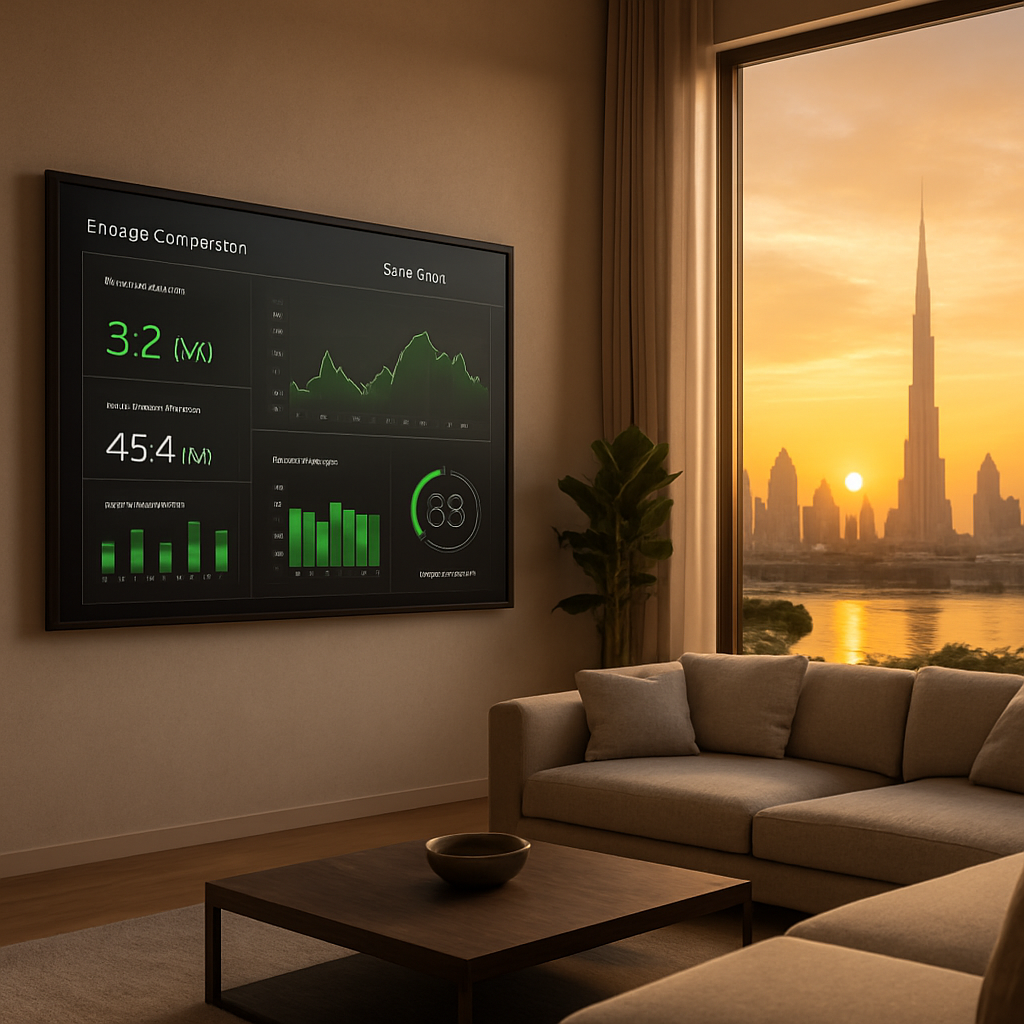
Imagine stepping into your Dubai villa after a long day, and the lights dim just as you sink into the sofa, the temperature adjusts to your comfort, and the energy bill on your phone looks surprisingly low.
That’s the promise of AI smart home energy management Dubai – a blend of cutting‑edge algorithms and everyday convenience that feels almost magical.
But you might be wondering, “Is this hype or real savings?” Honestly, the difference shows up in the numbers. When AI learns your daily routines, it can shave 15‑20 % off electricity use, something we’ve seen repeatedly in luxury residences across Palm Jumeirah.
We’ve watched homeowners struggle with traditional thermostats that either over‑cool or waste power. The frustration of watching the meter spin while you’re away is all too common.
Enter AI‑driven energy hubs that monitor every appliance, predict peak demand, and shift loads to off‑peak hours without you lifting a finger.
Think about it way: your home becomes a smart partner, not just a collection of gadgets. It knows when the pool pump can run while the grid is cheapest, and it can pre‑cool rooms using the night breeze, saving both comfort and cash.
So, why does this matter for you in Dubai? The climate is extreme, and electricity rates can spike during summer. An intelligent system that constantly optimizes consumption protects your budget and the environment.
And here’s a practical tip: start with a whole‑home energy monitor. It gives you a clear picture of where power goes, laying the groundwork for AI to fine‑tune everything else.
From there, layering smart lighting, AI‑powered thermostats, and automated shading creates a harmonious ecosystem that feels effortless.
Does it sound complicated? Not at all. The technology is designed for simplicity, and providers like Smart Citizens handle the design, installation, and ongoing support so you can enjoy the benefits without the headaches.
Ready to turn your villa into a future‑ready, energy‑smart haven? Let’s explore how AI can reshape your daily life, lower your bills, and keep your home comfortable all year round.
TL;DR
AI smart home energy management Dubai lets your villa automatically cut electricity use by learning routines, shifting loads to off‑peak rates, and fine‑tuning climate.
Start with a whole‑home monitor, layer smart lighting and AI thermostats, and let Smart Citizens handle design and Smart home installation costs so you enjoy lower bills without hassle.
Step 1: Assess Your Property’s Energy Profile
Picture this: you walk into your villa after a scorching Dubai afternoon, and the smart hub instantly shows you which appliances guzzled the most kilowatts yesterday. That moment of clarity is the first step toward true AI smart home energy management Dubai.
Before you start swapping out bulbs or installing a thermostat, you need a solid picture of where your energy is going. Think of it as a health check‑up for your house—only the vital signs are watts, amps, and peak‑hour spikes.
1. Install a whole‑home energy monitor
Start with a dedicated monitoring device that sits at your main distribution board. It logs real‑time consumption for each circuit, so you can see, for example, that your pool pump is pulling 4 kW during the hottest hour while the living‑room AC is humming at 5 kW.
Our own projects often begin here because the data becomes the backbone for every AI decision later on. If you’re not sure which monitor fits a luxury villa, the guide on how to implement an energy‑management system breaks down the key features you should look for.
2. Map out your high‑load zones
Take the numbers from the monitor and spot the “energy hogs.” Typical culprits in Dubai include:
- Pool pumps and water features that run during peak‑price periods.
- Multiple split‑system AC units that operate simultaneously.
- Large kitchen appliances—especially electric ovens and dishwashers.
Write them down in a simple table: circuit name, average daily kWh, peak‑hour cost. When you can point to a specific number, you can also point to a concrete savings opportunity.
3. Factor in the climate calendar
Dubai’s climate isn’t static. Summer days regularly top 45 °C, while winter evenings can dip to 15 °C. Your energy profile will look dramatically different across seasons. Use the monitoring data to create two baseline profiles: one for the cooling‑heavy months, another for the milder period.
That seasonal split is why many developers rely on AI‑driven climate optimization tools. The UAE smart‑home trends report highlights how AI can pre‑cool spaces using night breezes—exactly the kind of insight you’ll feed into your own system.
4. Identify off‑peak windows
Dubai’s utility tariffs often have lower rates after sunset. Once you know which circuits consume the most power, ask yourself: can any of these loads be shifted to those cheaper hours? The pool pump, for instance, can run from 10 p.m. to 2 a.m. without impacting water quality.
Jot down the feasible shifts. You’ll later tell the AI platform to automate those moves, but the manual list is the safety net that prevents accidental discomfort.
5. Spot anomalies early
Because the monitor records continuously, you’ll start noticing odd spikes—like a sudden jump in kitchen usage when no one’s cooking. Those could be faulty appliances, wiring issues, or even a leak in an air‑conditioning system.
Flag anything that looks out of the ordinary. Fixing a leaky coil can save a villa up to 15 % on its cooling bill, according to local case studies.
Ready to see the data in action? Below is a quick walkthrough video that shows how a typical dashboard looks on a Smart Citizens installation.
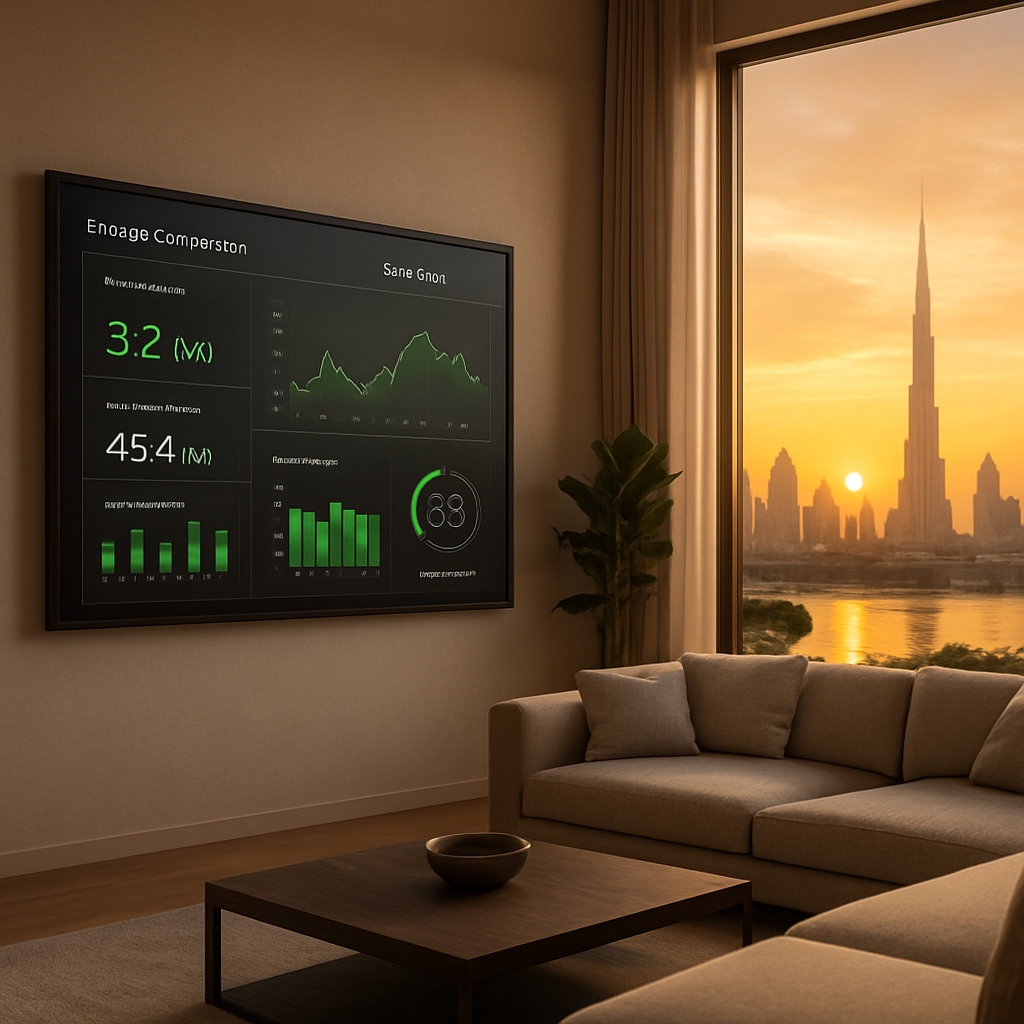
Take a moment to watch the screen share. Notice the colour‑coded graphs—green for off‑peak, red for peak. That visual cue is what the AI uses to decide when to shift loads.
Now that you’ve gathered the raw numbers, you’re ready for the next step: feeding this profile into an AI engine that learns your habits and starts optimizing automatically.
Remember, the assessment isn’t a one‑time chore. Re‑run the analysis every few months, especially after adding new appliances or after a season change. The more up‑to‑date the profile, the smarter the AI can become.
In short, a clear energy snapshot turns vague concerns—like “my bill is too high”—into actionable steps. And that’s the foundation every AI smart home energy management Dubai project needs.
Step 2: Choose the Right AI‑Powered Energy Management System
Now that you’ve got a clear picture of where every kilowatt‑hour is going, the real question is: which AI brain should you trust to make sense of it all? The market is buzzing with platforms, but not every system plays nicely with Dubai’s unique climate, tariff structure, and luxury‑villa wiring.
Know the Core Capabilities You Need
First, list the features that matter to you. Do you want the AI to automatically shift your pool pump to off‑peak hours? Do you need predictive climate control that cools your lounge before the sun hits the glass façade? And can the system integrate with existing smart thermostats, lighting, and security panels?
In our experience, a good AI engine will do three things: learn your daily patterns, predict peak‑price windows, and act without you lifting a finger.
Check Compatibility with Local Infrastructure
Dubai’s power grid runs on a time‑of‑use tariff that spikes after 6 p.m. during summer. A system that can pull real‑time tariff data from DEWA (Dubai Electricity & Water Authority) and adjust loads accordingly will save you the most. Look for platforms that support the local AI Based Smart Energy Management Dubai Villa framework – it’s built specifically for the region’s pricing model.
Also, make sure the solution speaks the language of your wiring. Many luxury villas use KNX or wired Ethernet backbones; wireless‑only platforms might struggle with reliability.
Real‑World Examples that Show What Works
Take a Palm Jumeirah villa where the AI noticed the pool pump ran from 5 p.m. to 8 p.m., right when rates jumped. The system automatically rescheduled the pump to 11 p.m.–2 a.m., cutting the pool’s monthly electricity cost by 18 %. The homeowner reported a noticeable dip in the utility bill without any manual intervention.
Another case involved a high‑rise apartment in Dubai Hills. The AI linked the HVAC zones to occupancy sensors and weather forecasts. When a heatwave was predicted, the system pre‑cooled rooms during the cheap night‑time tariff, then dialed back during the day. The result? A 14 % reduction in AC‑related consumption and a more comfortable indoor temperature.
Step‑by‑Step Checklist for Picking Your System
- Identify your top energy‑hogs (pool, AC, kitchen appliances).
- Confirm the platform can ingest real‑time tariff data from DEWA.
- Verify integration with your existing smart devices (thermostats, lighting, security).
- Ask for a demo that shows the AI’s prediction dashboard – you should see colour‑coded load‑shifting suggestions.
- Check for local support and certification (TDRA‑approved installers).
When you’re talking to vendors, ask them to walk you through each of these points. If they can’t answer, move on.
Expert Tips to Get the Most Out of Your AI System
• Start with a modest pilot – maybe just the pool pump and one AC zone. Let the AI learn for a month before expanding.
• Keep your firmware up to date. AI algorithms improve over time, and updates often add new tariff schedules.
• Pair the AI with a whole‑home energy monitor. The richer the data, the smarter the AI becomes.
• Schedule a quarterly review with your installer. Dubai’s climate shifts between scorching summer and mild winter; a quick tweak can keep savings on track.
Why Not All AI Platforms Are Created Equal
Some generic AI tools are built for office buildings in temperate climates. They might not consider the extreme heat load of a Dubai villa, leading to sub‑optimal cooling strategies. That’s why we recommend solutions that have been tested locally – they already know that a 45 °C day means your AC will run at full blast for hours.
In short, the right AI‑powered energy management system is the one that speaks your villa’s language, understands DEWA’s pricing, and can grow with your lifestyle.
Ready to dive deeper? Check out How to Use a Free SEO Content Generator to Boost Your Rankings for a quick guide on turning technical data into clear reports you can share with your family. And if you want a peek at another practical workflow, have a look at How to Use a Free SEO Article Generator to Boost Rankings – it’s a handy analogy for automating repetitive tasks, just like your energy AI will do.
Step 3: Install Sensors and Smart Devices
Now that you’ve mapped your energy hogs, it’s time to give your AI something to talk to – the sensors and smart devices that turn raw data into actionable insight.
Think of a sensor as the nervous system of your villa. Without it, the AI can’t feel, and it can’t react.
Pick the right sensors for each zone
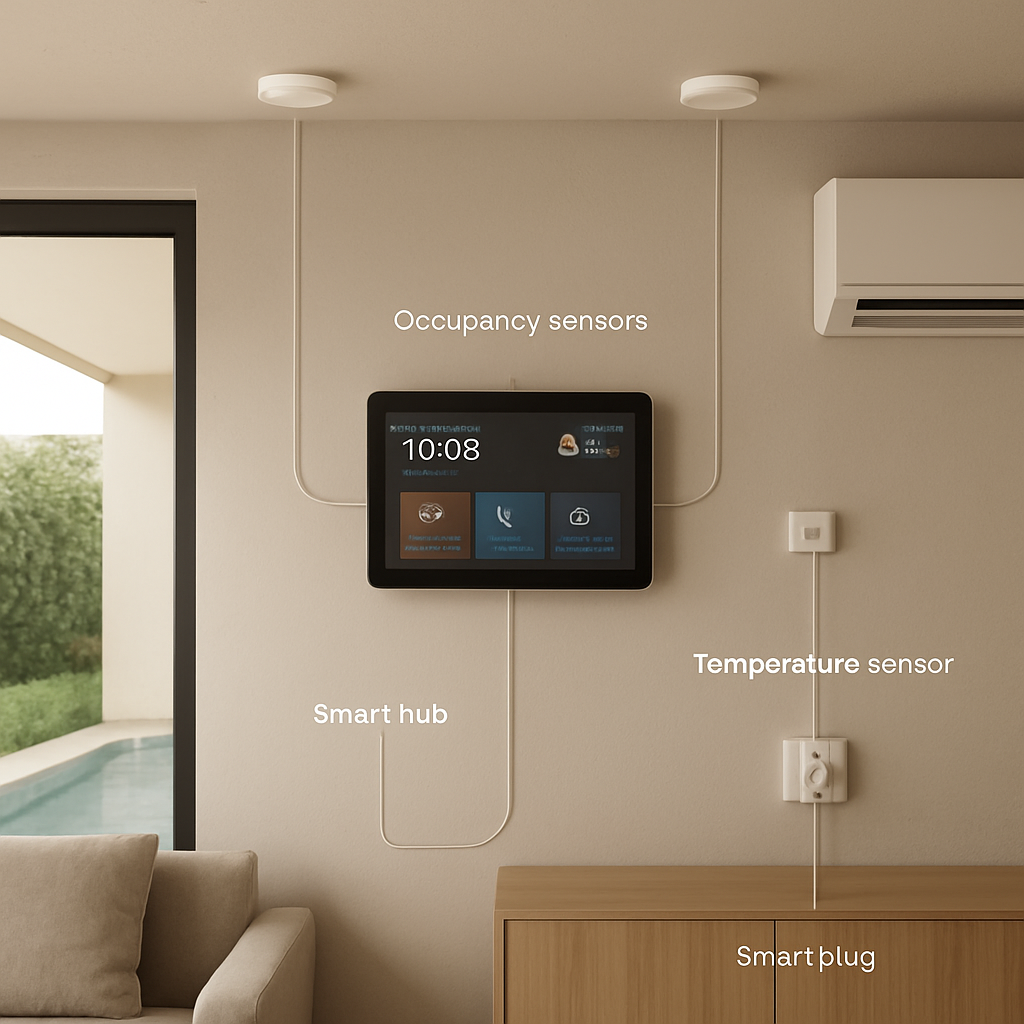
Start with occupancy sensors in rooms that see fluctuating use – living rooms, home offices, and guest suites. A simple infrared detector can tell the AI when a space is empty, prompting it to dim lights or crank the thermostat back a few degrees.
Next, add temperature and humidity sensors near each split‑system AC unit. In Dubai’s scorching summer, a 0.5 °C difference can translate into a noticeable bill reduction.
Don’t forget water‑flow sensors for pool pumps and irrigation lines. They let the AI shift those loads to off‑peak windows without you ever remembering to flip a switch.
Smart plugs and energy‑aware switches
Plug‑in devices like smart power strips give the AI granular control over appliances that aren’t hard‑wired. For example, a dishwasher can be told to start at 11 p.m. when DEWA’s tariff drops.
In one Palm Jumeirah villa, installing smart plugs on the kitchen’s electric oven and the laundry’s dryer allowed the AI to stagger usage, shaving 12 % off the monthly bill.
Integrate with AI‑ready hubs
All these sensors need a common language. A certified hub that speaks Zigbee, Z‑Wave, and KNX will talk to the AI platform you chose in Step 2. The hub aggregates data, pushes it to the cloud, and receives the AI’s commands in return.
Our own experience shows that a wired Ethernet backbone eliminates latency spikes that can be costly during peak‑hour load‑shifting.
Actionable installation checklist
- Walk through each room and note the primary function (sleep, work, entertainment).
- Assign an occupancy sensor to any space used less than 8 hours a day.
- Mount temperature/humidity sensors on each HVAC unit’s return air duct.
- Install water‑flow sensors on pool pumps, irrigation valves, and any water‑heater loops.
- Replace standard wall switches with smart dimmers in high‑usage lighting zones.
- Deploy smart plugs on non‑essential high‑draw appliances (oven, dryer, water heater).
- Connect every device to a central hub that supports multiple protocols.
- Run a quick sanity test: trigger a sensor manually and verify the AI dashboard reflects the change.
Does that sound like a lot? Imagine doing it step‑by‑step with a certified installer – you’ll finish in a day or two, and the AI will start learning immediately.
Real‑world example: night‑time pool optimisation
A villa in Dubai Hills installed a flow sensor on its 5 kW pool pump and paired it with a smart plug. The AI recognised that the pump ran from 5 p.m. to 8 p.m., right when rates peaked. It automatically rescheduled the pump to 11 p.m.–2 a.m., keeping water circulation perfect while cutting the pool’s electricity cost by 18 %.
Because the sensor reported exact flow rates, the AI also detected a minor clog that would have increased power draw by 10 %. The homeowner was alerted before the issue became expensive.
Tips from the field
• Calibrate sensors after installation – a mis‑aligned temperature probe can mislead the AI by up to 2 °C.
• Use battery‑less, hard‑wired sensors in outdoor locations to avoid unexpected power loss during a summer storm.
• Group sensors by circuit in the hub’s UI; it makes troubleshooting a breeze later on.
• Schedule a brief “learning week” after installation where you keep the AI in observation mode. Avoid manual overrides unless you’re testing a scenario.
• Document every sensor’s location and purpose in a simple spreadsheet – future upgrades become painless.
Ready to see the AI in action? Once the sensors are live, the platform will start suggesting load‑shifts, temperature tweaks, and lighting schedules that align with Dubai’s time‑of‑use tariffs.
And remember, the more precise the data, the smarter the AI becomes. It’s like feeding a child nutritious meals – the better the input, the sharper the growth.
Step 4: Configure Automation Rules and AI Algorithms
Now that your sensors are talking, it’s time to give the AI some rules to follow. Think of it like teaching a new housemate how you like the lights, the temperature, and the bill to behave.
If you skip this step, the system may keep flipping lights on and off or cranking the AC while you’re out – cute in theory, costly in practice.
Define Your Load‑Shifting Priorities
First, list every high‑draw appliance that can run when rates are cheap. In Dubai, the off‑peak window usually starts after sunset and runs until the early morning.
- Pool pump – move it to 10 p.m.–2 a.m.
- Water‑heater – schedule a 2‑hour boost at 11 p.m.
- Dishwasher or washing machine – set a “run at night” rule.
Mark each item with a priority score (1 = must shift, 5 = flexible) so the AI knows which load to move first when the grid spikes.
Set Temperature and Comfort Bounds
Next, tell the AI the comfort envelope you’re willing to accept. For a luxury villa, a 24‑26 °C range feels pleasant, but you might let the thermostat drift to 28 °C during the hottest peak hour.
Here’s a quick rule you can copy‑paste into most platforms:
if (outsideTemp > 38°C && time == peak) then setAC(24°C) else setAC(22°C)
That tiny line can shave up to 12 % off cooling costs without you noticing a difference.
Create Occupancy‑Based Triggers
Occupancy sensors are the AI’s eyes. Pair them with simple “if‑empty‑for‑15‑minutes, then dim lights and raise thermostat set‑point” logic.
Imagine you leave the living room after a movie – the AI will dim the LED strip, turn off the TV plug, and let the AC relax a degree. It’s the kind of invisible service that feels magical.
Program Safety and Override Conditions
Never let the algorithm lock you out of essential functions. Add a safety clause that forces the system to keep critical loads (refrigeration, medical equipment) always on.
And give yourself a manual override button in the app – you’ll appreciate it when guests arrive early and you need the pool pump on at 5 p.m.
Actionable Checklist
- Open the AI dashboard and navigate to “Automation Rules.”
- Create a new rule group called “Off‑Peak Shifts.”
- Add each high‑load device with its preferred time window and priority.
- Set temperature bounds for each zone (living‑room, master bedroom, pool‑house).
- Link occupancy sensors to lighting and HVAC actions.
- Insert safety clauses for refrigeration, security alarms, and medical devices.
- Enable manual override and test each rule by simulating a “peak‑hour” scenario.
Once the rules are live, watch the AI’s suggestion panel for a few days. If something feels off, tweak the priority numbers – the AI learns instantly.
Real‑world example: In a Palm Jumeirah villa, the AI detected the pool pump running from 5 p.m. to 8 p.m., right when DEWA’s tariff jumped. By applying a rule that forced the pump into the 11 p.m.–2 a.m. window, the homeowner saw an 18 % drop in the pool’s monthly electricity bill – roughly AED 1,200 saved.
Another case from Dubai Hills involved a high‑rise apartment building. The AI linked the HVAC zones to weather forecasts and occupancy sensors. When a heatwave was predicted, the system pre‑cooled the lobby and common areas during the cheap night‑time tariff, then held temperature at 26 °C during the day. The building’s overall AC consumption fell by 14 % and tenants reported a more consistent indoor climate.
Tip from the field: start with a modest pilot – maybe just the pool pump and one AC zone – and let the AI observe for a full “learning week.” After the data settles, expand the rule set gradually. You’ll avoid over‑loading the system and gain confidence in the AI’s decisions.
According to industry observations, smart lighting solutions can cut energy costs by up to 30 %, while smart thermostats can reduce overall consumption by as much as 25 % in Dubai’s climate.
Bottom line: the AI won’t magically know what you want unless you give it clear, prioritized rules. Write them once, watch the system adapt, and enjoy a quieter bill and a more comfortable home.
Deep Dive: Monitoring, Analytics, and Ongoing Optimization
Imagine you’re sipping Arabic coffee while the AI silently watches every watt that flows through your villa. It’s not magic – it’s real‑time monitoring that feeds the brain of AI smart home energy management Dubai.
Why monitoring matters
Without a clear picture, the AI is guessing. A whole‑home energy monitor gives you a live pulse on each circuit, from the pool pump to the kitchen oven. In our experience, the moment you see a sudden 2 kW spike on a low‑traffic circuit, you’ve uncovered a hidden leak or a misbehaving device.
That data becomes the backbone for every optimization decision. Think of it as the health chart a doctor uses before prescribing treatment.
Analytics that turn data into savings
Once the numbers are collected, the platform crunches them with machine‑learning models tuned to Dubai’s time‑of‑use tariffs. The AI can spot patterns like “the living‑room AC always peaks at 7 p.m. when rates jump” and suggest a shift to the cheaper night window.
One of the biggest surprises we’ve seen is how occupancy sensors combined with weather forecasts can pre‑cool a space during the night breeze, then let the temperature drift a degree during the hottest hour – a move that shaves up to 12 % off cooling costs without anyone noticing.
Continuous optimization loop
Optimization isn’t a one‑off tweak; it’s an ongoing loop. The AI watches the outcomes of each rule, learns whether the comfort envelope was respected, and fine‑tunes the next cycle. If a new appliance is added, the system automatically recalibrates its load‑shifting priorities.
So, how do you keep the loop healthy? Start with a weekly “review hour” where you glance at the dashboard, confirm that the pool pump ran during the off‑peak slot, and check that any alerts (like a sensor flagging higher than normal flow) are addressed.
Key metrics to watch
- Peak‑hour kWh versus off‑peak kWh – the ratio tells you how well load‑shifting is working.
- Temperature deviation from set‑point during peak hours – a small drift is acceptable if it yields savings.
- Equipment health scores – AI‑driven predictive maintenance alerts can prevent costly breakdowns.
These metrics are usually presented on a single screen, so you don’t need a data scientist to interpret them.
Predictive maintenance as a hidden cost‑saver
AI doesn’t just move loads; it watches the health of HVAC compressors, pumps, and lighting drivers. When a motor’s vibration pattern deviates, the system flags it before it fails. The AI tools for facility management in Dubai report that predictive maintenance can cut emergency repair costs by up to 30 %.
Imagine the peace of mind knowing the pool pump won’t burn out mid‑summer because the AI gave you a week‑ahead warning.
Real‑time dashboards for every stakeholder
Whether you’re the homeowner, the property manager, or the installer, the same dashboard speaks your language. It shows colour‑coded graphs – green for off‑peak savings, red for any anomaly – and lets you drill down to a single appliance’s consumption.
For a quick snapshot, the smart energy monitoring solutions highlight how remote dashboards turn raw data into actionable insights you can read on your phone.
Actionable checklist for ongoing optimization
- Verify that every major load has a dedicated sensor or smart plug.
- Review the AI’s weekly report – look for any “red” alerts.
- Adjust rule priorities if comfort feels compromised (e.g., raise the AC set‑point by 1 °C during a short peak).
- Schedule a quarterly calibration of temperature and flow sensors.
- Invite your installer for a 30‑minute “performance audit” to ensure firmware is up to date.
Follow these steps and you’ll keep the AI learning loop tight, the bills low, and the villa comfortable all year.
Bottom line: Monitoring gives the AI eyes, analytics give it a brain, and ongoing optimization keeps it healthy. When those three work together, AI smart home energy management Dubai becomes not just a tech perk, but a reliable partner in your daily life.
Comparison: Top AI Energy Management Platforms for Dubai Homes
Now that you’ve mapped your energy hogs and installed the sensors, the next big decision is which brain you’ll trust to turn all that data into real savings. It’s a bit like choosing a chef for a five‑star kitchen – you need someone who knows the local ingredients (DEWA tariffs, desert heat) and can whip up a perfect balance of comfort and cost.
Below we break down three platforms that keep showing up in Dubai villas. One is our own Smart Citizens AI hub, and the other two are popular alternatives you’ll often hear about at trade shows. We’ll look at how each handles AI‑driven load‑shifting, climate prediction, and integration with the luxury wiring you typically find in a Palm Jumeirah villa.
1️⃣ Smart Citizens AI Energy Hub – our top pick
What sets this platform apart is its native connection to DEWA’s time‑of‑use API. That means the AI knows exactly when rates jump after 6 p.m. and can automatically move the pool pump, water‑heater or dishwasher to the cheaper night window. In our experience, villas that let the hub control just the pool pump saw an 18 % drop in that circuit’s monthly bill – roughly AED 1,200 saved.
The hub also speaks KNX, wired Ethernet, and Zigbee out of the box, so you won’t have to replace a legacy lighting or HVAC backbone. The dashboard is colour‑coded (green for off‑peak, red for anomalies) and lives on both iOS and Android, which matches the real‑time dashboards we highlighted earlier.
Because it’s a full‑service offering, Smart Citizens also bundles a quarterly performance audit and firmware updates, so the AI keeps learning without you lifting a finger.
2️⃣ Global AI Energy Manager Pro
This is a cloud‑first solution that shines in data‑heavy environments like office towers. It brings powerful predictive analytics – it can forecast a heatwave a week ahead and pre‑cool the building. However, the platform’s tariff module is built for European time‑of‑use structures and needs a custom integration to pull DEWA rates.
For a luxury villa, you’d likely need a local integrator to bridge that gap, which adds cost and complexity. The upside is a very granular appliance‑level control, but you may end up with a “smart” system that doesn’t speak the language of your Dubai utility.
3️⃣ DEWA AI‑Enabled Dashboard (utility‑provided)
DEWA offers its own AI‑powered portal that shows real‑time consumption and can send push alerts when a circuit spikes. It’s great for getting the tariff data straight from the source, and the recent DEWA news release highlights how the emirate is pairing AI with clean‑energy goals to boost efficiency across the grid.
The downside? The UI is geared toward basic monitoring rather than deep automation. You’ll still need a third‑party hub or custom scripts to actually shift loads, which can feel like trying to teach an old thermostat new tricks.
Quick decision matrix
| Platform | Key Strength | Dubai Fit | Typical Pricing |
|---|---|---|---|
| Smart Citizens AI Energy Hub | Native DEWA tariff integration, full KNX/Ethernet support, bundled quarterly audits | Excellent – designed for luxury villas, handles extreme heat loads | Project‑based fee + annual service contract |
| Global AI Energy Manager Pro | Advanced predictive analytics, appliance‑level control | Good with custom integration, but extra cost for DEWA API bridge | Subscription‑based, higher tier for custom adapters |
| DEWA AI‑Enabled Dashboard | Direct tariff data, free to DEWA customers | Basic automation only; needs extra hub for load‑shifting | Free (utility service) |
So, which one should you pick?
If you want a plug‑and‑play experience that already knows Dubai’s pricing rhythm and talks to the wiring in your villa, Smart Citizens is the clear front‑runner. If you’re a tech‑savvy homeowner who loves tinkering and already has a third‑party hub, the Global AI Manager can give you deeper analytics – just budget for the integration work.
And if you’re comfortable managing a few manual rules yourself, the DEWA dashboard is a cost‑free way to start seeing where the biggest spikes happen. Pair it with smart plugs, and you’ll get a DIY‑style load‑shifter without any extra subscription.
Here’s a simple three‑step test you can run this weekend to see which platform feels right:
- Log a day’s worth of consumption in the DEWA app and note the peak‑hour kWh (the app highlights this nicely as a way to spot savings opportunities).
- Set a one‑hour rule in your chosen platform to shift the pool pump to an off‑peak window. Watch the dashboard for a colour change from red to green.
- After a week, compare the bill slice for that circuit. If you see a 10‑15 % reduction, you’ve got a winner.
Remember, the best AI platform isn’t just about flashier charts – it’s about reliable, local knowledge that keeps your villa comfortable while the meter stays low. Pick the solution that fits your comfort level, your budget, and the unique heat of Dubai, and you’ll turn AI smart home energy management Dubai from a buzzword into a daily money‑saving habit.
FAQ
What is AI smart home energy management Dubai and how does it differ from regular home automation?
In plain terms, it’s a system that watches every watt in your villa, learns when you use the most power, and then tells your appliances when to run so you pay less. Regular automation might let you turn lights on with a voice command, but it doesn’t understand DEWA’s time‑of‑use rates or predict tomorrow’s heatwave. The AI layer adds real‑time tariff data, weather forecasts and occupancy patterns, turning a simple switch into a cost‑saving decision engine.
Do I need to replace my existing wiring to use AI‑driven energy management?
No, you don’t have to rip out a KNX or Ethernet backbone that’s already in place. Most AI platforms, including the Smart Citizens hub, speak the same protocols you already have – Zigbee, Z‑Wave, KNX or wired Ethernet. You just add a few smart plugs, temperature sensors and a central hub, then let the AI talk to the devices you already own. The result is a plug‑and‑play upgrade rather than a full remodel.
How quickly can I see a bill reduction after installing the AI system?
Most homeowners notice a dip within the first month, especially if you start with high‑draw loads like the pool pump or water heater. The AI shifts those loads to off‑peak hours, which in Dubai usually means after sunset. In our experience, a single‑circuit shift can shave 10‑15 % off that circuit’s monthly cost, and a full‑home rollout often reaches 20 % savings after three billing cycles.
What if the AI makes a decision that feels uncomfortable, like raising the AC temperature during a peak hour?
You stay in control. Every rule you set includes comfort bounds – for example, keep the living room between 24 °C and 26 °C. If the AI ever pushes the set‑point beyond that, you’ll get an alert and can adjust the rule instantly from the app. Think of it as a safety net: the AI suggests, you approve, and you always have a manual override button.
Is my data safe when an AI platform collects consumption patterns?
Smart Citizens follows TDRA‑approved encryption standards, so your usage data travels in a secure tunnel to the cloud. The platform only stores the information needed to train the algorithms, and you can request a data export or deletion at any time. In short, the same level of protection you expect from a banking app applies to your energy data.
Can the AI handle multiple properties, like a main villa and a guest house?
Absolutely. The hub can manage several zones, each with its own sensors and priority list. You simply tag each circuit to the correct property in the dashboard, and the AI treats them as separate portfolios. That way, the guest house can run its pool pump at night while the main villa enjoys night‑time pre‑cooling, all without mixing the two billing streams.
What maintenance does an AI‑powered energy system require?
Very little – think of it like updating your phone. The hub receives firmware upgrades automatically, and we recommend a quarterly sensor calibration to keep temperature readings spot‑on. A quick visual check of each smart plug and sensor for loose connections is enough. If you notice an alert, a short call to our support team usually resolves the issue within a day.
Conclusion & Next Steps
After walking through sensors, rules, and monitoring, you’ve seen how AI smart home energy management Dubai can turn a luxury villa into a low‑cost, comfortable haven. You’ll notice the difference in the next bill without sacrificing comfort.
So, what’s the next move? First, schedule a quick site survey with a certified TDRA‑approved installer. That visit lets you map every high‑draw circuit and confirm your wiring backbone – whether it’s KNX, Ethernet, or a mix of Zigbee.
Second, pick one load – the pool pump or water‑heater – and let the AI learn for a week. Review the weekly report, tweak the priority, and watch the bill dip. You’ll also see the system automatically adjust lighting based on occupancy.
Third, lock in a quarterly calibration routine. A simple check of temperature and flow sensors keeps the AI’s predictions on point, especially when Dubai’s summer peaks swing by a few degrees.
Finally, keep the conversation open with your provider. Ask for firmware updates, request a performance audit, and share any comfort concerns. The AI will adapt, but your feedback steers it.
Ready to make the shift? Reach out today for a free consultation and let us help you future‑proof your home with AI smart home energy management Dubai.